
 Support
 Sign In
 Cart
Cart


If you work with industrial mobility solutions, Hamilton Casters is a name you’ve probably heard tossed around more than once. This is a company that’s been in the caster game since 1907—still family-owned, still churning out some of the toughest, most dependable casters, wheels, and material handling gear you’ll find anywhere in North America. Hamilton’s bread and butter? Heavy-duty industrial casters and wheels, all made right here in the USA, with offerings that stretch from light-duty dollies to behemoths built for jaw-dropping loads.
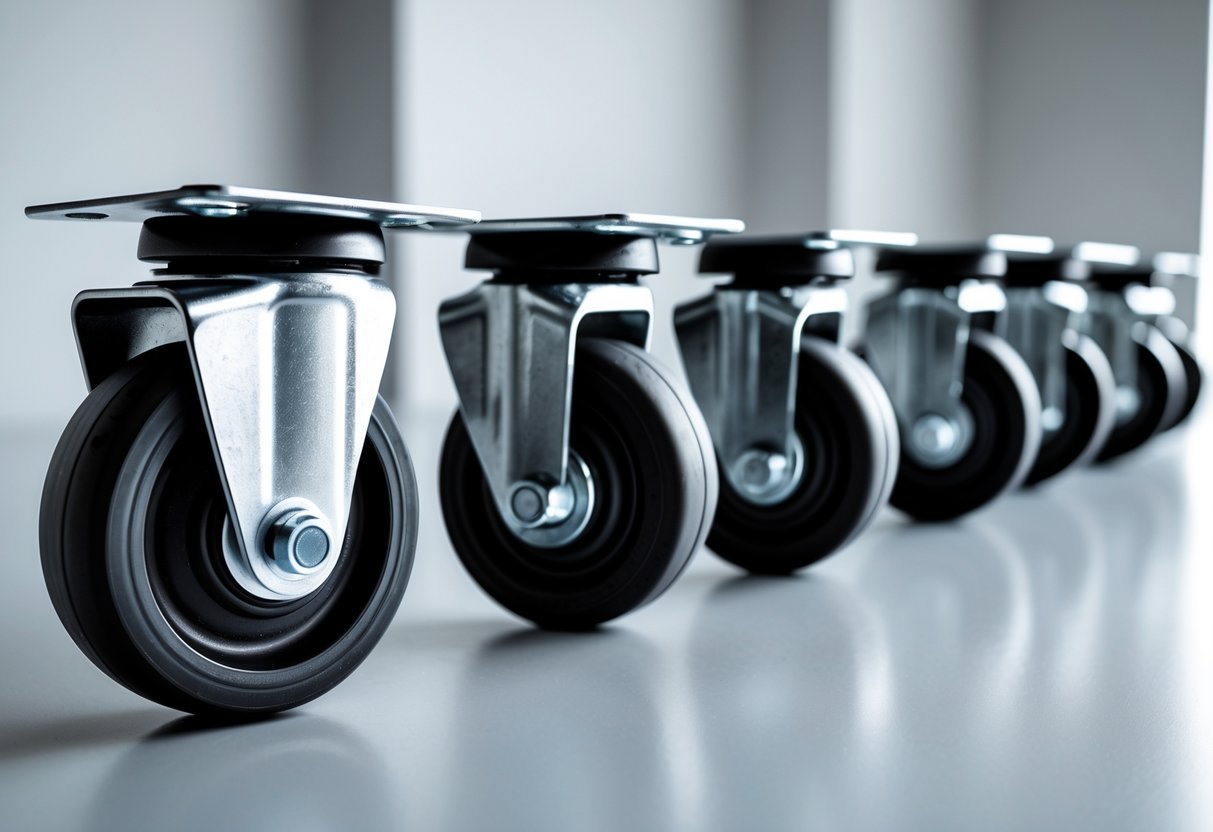
Let’s get into what really makes Hamilton stand out in the caster world. We’re talking about their knack for engineering, their relentless focus on quality, and a product lineup that’s honestly kind of overwhelming (in a good way). They’ve managed to hold onto 98% of their customers—no small feat in our industry—thanks to things like maintenance-free designs and lifetime-guaranteed components.
If you’re spec’ing out a new warehouse, setting up a manufacturing floor, or just tired of swapping out busted casters every few months, knowing what Hamilton brings to the table can save you a lot of headaches. We’ll break down their main product lines, highlight some of their more clever innovations, and throw in some tips on picking the right casters for whatever industrial chaos you’re wrangling.
What Are Hamilton Casters?
Hamilton casters are the real workhorses in the caster world—industrial-grade, USA-made, and designed by a fourth-generation family business that lives and breathes heavy-duty solutions. They’re not just pumping out casters; they’re building wheels, carts, and trailers that can take a beating in environments where a lesser caster would just give up.
Company History and Legacy
So, Hamilton kicked off in 1907 and, somehow, they’re still family-run after all these years. Their reputation? Pretty much built on making industrial casters that don’t quit, even when you throw them into the harshest applications.
What’s kept them going? Relentless focus on heavy-duty applications and sticking to American manufacturing. Over time, they’ve rolled out specialized stuff like Duralast polyurethane wheels and their Spinfinity maintenance-free casters—both of which are pretty popular with folks who hate downtime.
They’re proud of their 98% customer retention rate (honestly, who wouldn’t be?), and industry surveys rank them high for quality, technical know-how, on-time delivery, and solid customer support—things that matter when your operation can’t afford to slow down.
American Manufacturing and Quality Standards
All of Hamilton’s caster production happens stateside—something they’ve never budged on. That’s not just a talking point; it means tighter quality control and faster turnaround when you need something custom.
Their engineering is all about surviving nasty conditions—think blood, brine, salt, grease, oils, chemicals, you name it. Hamilton casters are built to keep rolling where most would seize up or fall apart.
If you’re moving anything from light loads to massive machinery, their Maxi-Duty series can handle up to 20,000 pounds per caster. We’re talking 8.5″ x 8.5″ mounting plates and forged steel swivels—definitely not your average hardware store caster.
Industries and Applications
Hamilton’s gear pops up in all sorts of heavy industries: shipbuilding, manufactured housing, auto plants, aerospace—the kind of places where you can’t mess around with cheap wheels.
Their lineup covers:
- Dual wheel casters for spreading out those monster loads
- Stainless steel casters for places that eat up regular steel
- V-groove and flanged wheels for track-guided setups
- Pneumatic casters when you need a little shock absorption
- Custom platform trucks and in-plant trailers
You’ll see Hamilton casters in facilities where “just buy new ones every year” isn’t an option. They’re for operations that care more about reliability and uptime than pinching pennies on initial cost.
Product Lines and Key Features
Hamilton’s product range is, honestly, pretty deep. They’ve got casters for everything from basic carts to gear that’ll see molten metal and 40,000-pound payloads. If your application is weird, extreme, or just plain tough, they’ve probably got something for it.
Heavy Duty Casters Overview
Their heavy-duty lines are where Hamilton really flexes. The Maxi-Duty (MD) Series is a staple—handling 3,000 to 23,000 pounds per caster. Picture these under giant jigs in shipyards, mobile homes, or aerospace tooling. Features like HPI™ swivel tech and heat-treated raceways mean they’ll outlast most of what’s on the market.
The Extended Service (ES) Series is another beast, with integrally forged kingpins (lifetime guarantee, by the way). These are the go-to for in-plant trailers, towline carts, AGVs—anywhere you need something that just keeps going.
Dual wheel casters are a favorite for maxing out capacity without making your equipment skyscraper-tall. Diameters range from 3-1/4″ to 16″, and they spread weight so your floors (and your bearings) last longer.
Stainless Steel Casters and Corrosion Resistance
Some environments chew up regular casters in no time. Hamilton’s stainless steel options are built to shrug off blood, brine, salt, grease, oils, and all sorts of nasty chemicals. That’s why you’ll find them in food plants, marine settings, pharma, and chemical processing.
These stainless models are made for washdowns and anywhere strict cleanliness is non-negotiable. They’re tough, easy to keep clean, and they don’t rust out after a few months like bargain imports.
Material selection here is all about longevity. The casters don’t lose their load rating or rollability, even when they’re getting hosed down with caustics or rolling through saltwater.
Shock Absorbing and High-Heat Solutions
Hamilton has a knack for solving the “my casters keep breaking” problem. Their shock absorbing casters use springs or elastomeric bits to soak up impacts—protecting both your gear and your floors. The Duralast polyurethane wheels are a solid choice for anyone worried about vibration, noise, or floor marks. They’re tough, quiet, and help your operators stay sane in noisy plants.
If you’re dealing with high heat—think foundries or ovens—Hamilton’s got casters with special materials and heat-resistant lubricants. These won’t melt, seize, or go out-of-round when things get toasty. Bearings and wheels are spec’d to keep rolling even when the temperature climbs.
Types of Casters and Wheels
Hamilton’s catalog covers a ton of ground: forged steel monsters for brutal loads, polyurethane wheels for delicate floors, and pretty much everything in between. Each type is engineered with a specific pain point in mind.
Steel Casters and Forged Construction
Steel casters are the backbone of heavy-duty industrial mobility. Drop-forged steel means you’re getting casters that can take real abuse—way beyond what cast iron or stamped steel can handle.
Forging compresses and aligns the grain of the metal, so you end up with casters that can handle anywhere from 1,200 to 10,000+ pounds each. You’ll see these in steel mills, foundries, and plants where downtime isn’t an option.
Forged steel wheels come with machined crowns for easier rolling and swiveling. Bearings are usually a combo of main load and thrust types, so you get smooth rotation even when you’re maxing out the load. Plus, steel casters don’t care about impacts, heat, or corrosive gunk—they just keep going.
Polyurethane Wheels and Floor Protection
Polyurethane wheels are the go-to when you care about both load and your floors. They don’t mark up polished concrete or tile, and they’re way quieter than steel or hard rubber.
Poly absorbs shocks and keeps things quieter, which is a big deal in busy warehouses. It holds up across a pretty wide temperature range and shrugs off most chemicals. We recommend these for spots with finished floors or where you want to keep noise down.
Load ratings run from 250 up to 1,500 pounds per wheel, depending on size. The material bounces back after compression, so you don’t get that “flat spot” problem. And they roll smooth—less effort to get things moving.
Swivel Casters for Enhanced Maneuverability
Swivel casters do what the name says: they spin 360° around a vertical axis, letting you change direction on a dime. The raceway assembly is built with precision bearings to handle both vertical and rotational forces.
Install these at corners or wherever you need to snake through tight aisles. Swivel configurations are a must for maneuverability, especially if you’ve got narrow spaces or need to pivot heavy loads. Kingpin or kingpinless? Depends on whether you want max durability or easier maintenance. You can get swivel locks if you want the option to “park” your cart. Pairing swivels up front with rigids in the rear gives you predictable tracking—think shopping cart, but way more robust.
Dual Wheel Casters for Maximum Capacity
Dual wheel casters are all about spreading the load. Two wheels side-by-side means higher capacity, lower floor pressure, and better stability—especially over rough patches or expansion joints.
Each wheel takes part of the load, which means your bearings last longer and you’re less likely to chew up your floor. These are common in heavy manufacturing where you might be pushing 2,000 to 12,000 pounds per caster. The wider stance keeps things upright, even if the floor’s not perfect or your load shifts. If one wheel hits debris, the other keeps rolling—no sudden stops or tipping.
Innovations and Custom Solutions
Hamilton doesn’t just crank out standard casters—they’re always tinkering with new designs to solve real-world problems. Their engineering team is obsessed with reducing maintenance and making life easier for operators.
Maintenance-Free Designs
The Spinfinity line is a good example: sealed precision bearings that never need greasing. No more crawling under equipment with a grease gun or worrying about dirt and water ruining your wheels.
Maintenance-free casters are huge for food and pharma, where you can’t risk contamination from lubricants. Sealed bearings mean less downtime, fewer headaches, and more time actually moving stuff. They’re built to handle heat, chemicals, and big loads—basically, all the stuff that kills regular casters. Hamilton’s custom engineering crew can tweak these designs for whatever weird specs you throw at them. Advanced CAD tools, in-house prototyping—it’s all part of the package if you need something built to order.
Ergonomic Caster Options
Ergonomics is a big deal in our business, and Hamilton’s on it. Their ergonomic casters are designed to cut down the force needed to get heavy carts rolling or change direction.
They offer a mix of wheel materials and tread profiles—polyurethane is a favorite for its low rolling resistance and noise reduction. The right combo here can make a massive difference in reducing worker fatigue and injuries. Hamilton can dial in wheel size, swivel radius, and mounts to optimize for your specific application. That’s especially useful in places like warehouses or hospitals, where staff are constantly pushing and pulling heavy loads.
Industrial Mobility Products
Hamilton doesn’t just stop at casters and wheels—they build full mobility systems like trailers and heavy-duty carts, integrating their wheel technology with seriously robust frames. If you need to move massive loads across your facility without drama, these systems are worth a look.
In-Plant Trailers and Material Handling
When it comes to keeping things moving inside the plant, in-plant trailers are honestly the unsung heroes of the whole operation. We build these trailers specifically to haul heavy loads, but they still need to snake around tight corners and through narrow aisles. That’s why we always spec out Hamilton’s industrial-grade casters and wheels—let’s be real, if you want smooth rolling over all sorts of floor surfaces, you can’t cut corners on the running gear.
Our trailers hook up seamlessly to tow tractors or can be moved by hand, depending on the workflow. It’s all about keeping materials flowing efficiently from one end of the facility to the other. We reinforce every trailer with heavy-gauge steel, so they stand up to the daily grind—dings, bumps, and all. Load ratings? We’ve got a range, since not every operation is moving the same stuff.
We’re big believers in maintenance-free caster tech—it really cuts down on downtime and keeps labor costs in check. You’ll see our in-plant trailers pulling their weight everywhere from distribution centers to assembly lines. If you need to keep material moving, you need a trailer that won’t quit.
Carts and Specialty Transport Equipment
Our cart lineup covers the basics and then some: platform carts, shelf carts, wagons, even johnson bars for the odd oversized load. We design these manual carts for the realities of the shop floor—hand-pushed, maneuverable, and ready for whatever you throw at them. Platform carts are perfect for awkward, bulky items, while shelf carts give you a little vertical advantage when you’re moving lots of smaller stuff.
A few things we always focus on:
- Ergonomics: Because nobody wants a sore back at the end of the shift
- Heavy-duty wheels: Each cart gets wheels rated for its real-world load
- Modularity: You might need bins today, a flatbed tomorrow—why not both?
- Durability: We don’t skimp on welds or materials
We build these carts with the same standards we use on our premium caster lines. They end up in all kinds of industries, wherever folks need to move materials without plugging in a motor.
Selecting and Purchasing Hamilton Casters
Honestly, picking the right caster isn’t as simple as grabbing whatever fits. You’ll want to size up your load requirements, think about where the equipment’s going to live, and consider how much rolling you actually need to do. Pricing? It’s all over the map depending on the spec and how many you’re after.
Choosing the Right Model for Your Needs
First step, always: figure out your total load weight, including the cart itself. Divide by the number of casters, but don’t forget to tack on a safety margin—usually 25-50%—since weight never distributes perfectly. And don’t sleep on wheel diameter; bigger wheels make a world of difference when you’re pushing heavy loads. It’s easier on your team and cuts down on strain injuries.
Your environment really dictates material selection. Got high temps? You’ll need heat-resistant wheels and special lubricants. Wet or corrosive? Stainless steel or sealed bearings are the way to go. Poly treads are great for keeping floors quiet and scuff-free, but if you’re maxing out capacity, cast iron or forged steel wheels are hard to beat.
Shock loading is another thing people overlook—when a load drops or a wheel slams over a floor joint, the force spikes way above normal. We always recommend casters rated well above your calculated needs to handle those surprises.
And don’t underestimate floor conditions. Hard wheels will chew up concrete over time, but softer treads can snag debris and metal shavings. We’ve put a lot of R&D into compounds for our Ergo-Glide and ErgoTech wheels to help keep junk from embedding and messing up the ride.
Pricing, Availability, and Bulk Discounts
You’ll find Hamilton casters stocked by most authorized distributors—think industrial supply outfits, dedicated caster shops, and, of course, plenty of online sources. Pricing’s all over the map, honestly: light-duty models might run you anywhere from $15 up to $50, while the serious, extra heavy-duty stuff can jump to $200, $800, or even more. It’s all about the load rating, wheel size, bearing setup, and whether you’re going poly, steel, or something more niche.
Bulk orders? That’s where things get interesting. Volume discounts usually kick in around 10 or 25 units, and if you’re looking at 100 pieces or more, the price breaks get a lot more attractive. Lead times can be a bit of a moving target—if you’re after a standard rig, we can usually get those out the door in a few days. Custom builds or special material requests, though, might take anywhere from two to four weeks. It’s worth planning ahead if you’ve got a unique spec.
Most of our distributors have solid tech support teams who’ll help you double-check your choices before you pull the trigger. If you’re not 100% sure on specs, just give the sales engineers a ring at 888-699-7164. Better to spend a few minutes upfront than end up with the wrong caster for your application—trust us, that headache’s not worth it.


