
 Support
 Sign In
 Cart
Cart


Ground support casters are a whole different breed of heavy-duty wheels meant to handle the rough-and-tumble reality of outdoor equipment movement—think aviation, military, and the grittier side of industrial work. These aren’t your run-of-the-mill casters; they’re engineered to shrug off weather, take a beating from uneven pavement, and roll under loads that’d make most wheels weep. What sets them apart? It’s the details—precision bearings, pneumatic tires, and beefed-up swivel assemblies that keep things rolling when the going gets tough.
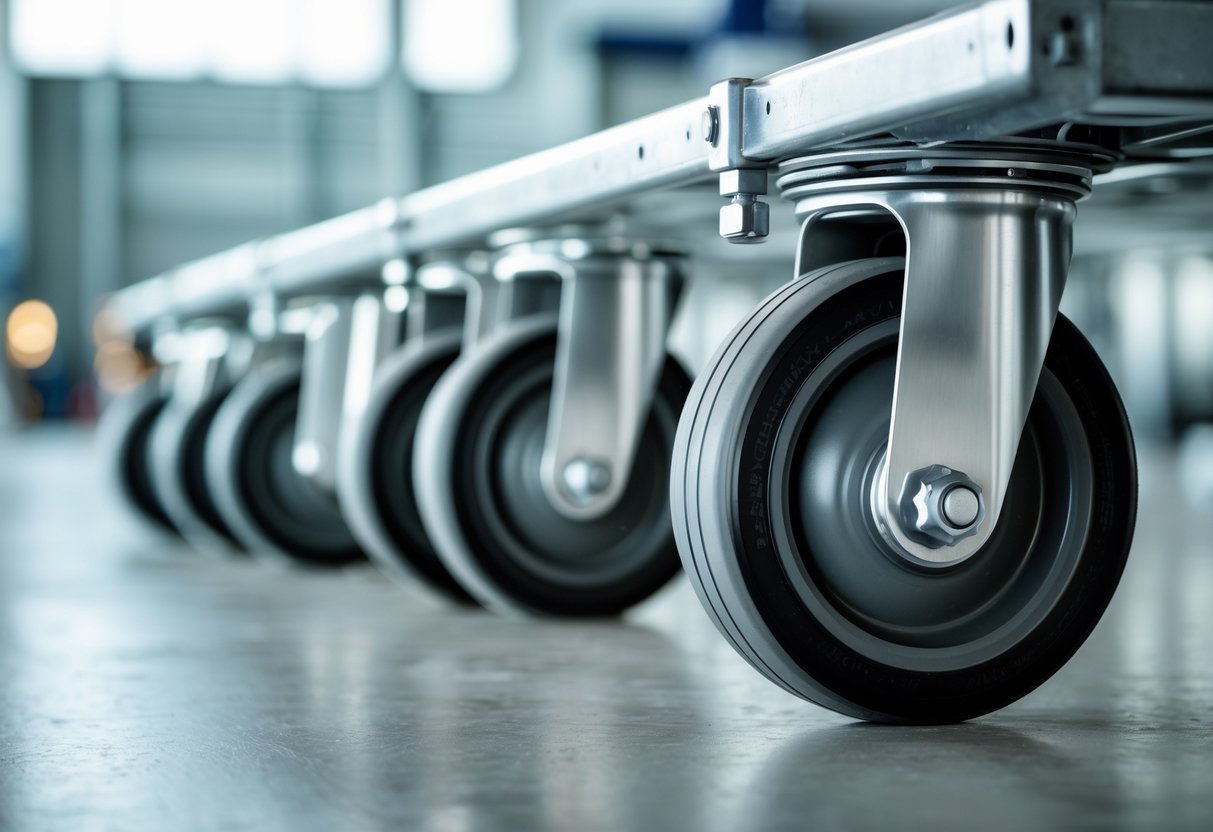
Ground support casters can handle up to 8,400 pounds each, and their shock-absorbing wheels help protect expensive gear while still keeping things mobile on rough ground. There’s a lot of nuance in how we as manufacturers hit that sweet spot—material choices, construction techniques, and bearing setups all matter. The right caster doesn’t just move stuff; it keeps your operation efficient, your equipment alive longer, and, frankly, your crew a lot safer.
Knowing the specs and what each feature brings to the table is half the battle when you’re picking the right caster for your ground support setup. There’s a world of difference between pneumatic and semi-pneumatic, and don’t get me started on the importance of a solid brake system or a reliable swivel. Let’s dig into what really matters for ground support casters.
What Are Ground Support Casters?
Ground support casters are, at their core, heavy-duty wheel assemblies built for the punishment of aviation and airport work. They’re the unsung heroes that let you move heavy equipment all over tarmacs, hangars, and pretty much anywhere you find concrete and steel—and they do it while handling brutal temperatures, rough surfaces, and non-stop heavy loads.
Definition and Purpose
When we talk about ground support casters, we mean heavy-duty assemblies made for ground support equipment (GSE) in aviation. These casters are built to move loads anywhere from 300 to north of 8,000 pounds per wheel, and they do it with reinforced frames, specialty bearings, and wheels that are chosen for the job at hand.
Their main job? Letting cargo dollies, maintenance stands, baggage carts, and all sorts of GSE roll over surfaces that would destroy lesser wheels. You’ll usually find sealed double ball race bearings inside, keeping out grit and junk that could lock things up. Wheels might be solid rubber, pneumatic, or semi-pneumatic—each one with its own pros and cons for load rating and shock absorption.
Safety isn’t an afterthought, either. You’ll see toe guards or wings to keep feet safe and keep stuff from jamming up the works. Forks are beefy—3.5mm thick or more—so you’re not bending them every time you hit a pothole.
Role in Ground Support Equipment
Ground support casters are, honestly, the backbone of GSE mobility. They let workers muscle heavy gear across airport surfaces—sometimes thousands of pounds at a time. You’ll spot them under baggage tugs, container dollies, and pallet loaders, helping haul freight between planes and terminals.
They’re just as crucial for maintenance stands and platforms. Techs need to move equipment around aircraft for inspections and repairs, and those casters have to keep things steady—even when rolling over expansion joints or dealing with weathered concrete. Quick repositioning between gates or storage? That’s all on the casters.
Stair casters are a whole category on their own, letting boarding stairs roll into place and then lock down for safety. And those low-profile carts that snake through cargo holds? Specialized casters make that possible.
Industry Standards for Ground Support Applications
Aviation is a tough industry, and the casters need to be up to the job. We’re talking about surviving -40°F winters and 150°F summer tarmacs—so materials and bearings have to hold up, no matter what. Load ratings aren’t just a sticker on a box; they’re tested under real-world, moving conditions.
You’ll see forged steel as the gold standard for high-capacity jobs. Why? It’s stronger than welded or cast steel and shrugs off the chemicals and fluids you find around aircraft. Bearings are sealed to keep out jet fuel, hydraulic leaks, and de-icers—stuff that’ll wreck lesser components.
Another big thing: modularity. Most ground support casters are designed so you can swap out wheels or bearings without scrapping the whole assembly. That’s a lifesaver for maintenance teams who don’t have time for downtime.
Key Types of Ground Support Casters
Ground support isn’t one-size-fits-all. The job dictates the caster, whether you need cushioning for rough tarmac or rock-solid stability at speed. Here’s a look at the main types you’ll run into.
Full Pneumatic Casters
Full pneumatic casters use air-filled tires, which means top-tier shock absorption for sensitive cargo. They’re a favorite for moving delicate stuff where vibration is the enemy.
The way these tires flex and conform to the ground spreads out weight and smooths out the ride. You’ll see them on cargo dollies and maintenance stands where you absolutely can’t afford to jostle the load.
Downside? You’ve got to keep an eye on air pressure and watch for punctures. They aren’t built for speed, so they’re best in controlled airport settings, not racing across the tarmac.
Solid Pneumatic Casters
Solid pneumatic casters are kind of the best of both worlds. They give you cushioning without the hassle of flats or constant pressure checks. The solid rubber construction mimics the feel of air tires but won’t leave you stranded with a blowout.
They’re reliable, especially where downtime just isn’t an option. We rate these from 300 lbs. on a 6″ x 2″ wheel all the way up to 7200 lbs. with a 21″ x 6″ setup.
If you want something lighter but still tough, semi-pneumatic designs are an option. They’ve got hollow ribs to cut weight but still handle debris and temperature swings like champs.
Forged Steel Swivel Casters
If you’re after maximum strength and maneuverability, forged steel swivel casters are the heavy hitters. Forging makes the metal denser and more durable than casting, so these casters can take a pounding day in, day out.
Inside, you’ll find precision bearings—ball race or tapered roller—that let you swivel under serious weight without binding up. Operators can pivot heavy gear in tight spots without breaking a sweat.
You’ll see forged steel paired with different wheel types depending on the job. They’re built for the constant abuse of airport life and still deliver the steering precision you need around aircraft.
Specialty Ground Support Casters
Sometimes, the standard stuff just doesn’t cut it. Spring-loaded casters are a lifesaver on uneven ground, letting each wheel move independently for better stability.
Kingpinless designs ditch the old-school kingpin, spreading stress out and cutting down on maintenance headaches in high-use environments. These are built for the long haul.
Low-profile casters are a must for carts that need to fit into tight spaces, like cargo holds. And when you need to lock equipment in place, options with wheel brakes, swivel locks, or floor locks get the job done, especially on ramps or inclines.
Critical Features and Specifications
Ground support casters are only as good as their components. Things like swivel design, bearing quality, and mounting hardware all add up to durability and performance when it counts.
Swivel Construction and Design
Swivel construction is where it all starts. Drop forged steel mounting plates are the go-to for strength—they hold up to repeated impacts and the kind of abuse you see on the tarmac.
The horn base and mounting plate form a rigid backbone for the swivel. Forged steel means fewer weak spots, so you’re not dealing with failures under shock loads.
Kingpin size varies—3/4″ for the smaller wheels, up to 1-1/4″ for the big boys. The kingpin isn’t just stuck in there; it’s forged right into the plate, so you don’t have to worry about it loosening up or breaking off after a few rough days. This one-piece forging is way more reliable than welded or pressed designs.
Bearings: Tapered Roller and Thrust
Tapered roller bearings are the workhorses for high-capacity casters. They spread weight out over a bigger area than ball bearings, which means they last longer and can handle more abuse.
A precision tapered thrust bearing acts as backup, soaking up those sideways forces when the caster swivels under load. Without it, you’d see premature wear and rough rotation.
Dual bearing systems—combining tapered roller and thrust bearings—are the gold standard once you go over 1,000 pounds per caster. Each bearing handles the forces it’s best at, so you get smoother operation and longer life.
Mounting Plates and Kingpins
The mounting plate takes the brunt of the load, and drop forging makes it tough enough for ground support. Forged steel packs the grain tight, giving you higher tensile strength than welded or stamped plates—so you’re not dealing with warping or cracks.
Mounting holes need to match up with standard gear, usually in a four-bolt pattern. Plate thickness ramps up with capacity—1/4″ for lighter stuff, 3/4″ when you’re maxing out the load.
Kingpin size is tied to capacity too: 1″ for 1,000–3,000 lbs, 1-1/4″ for the big stuff. Forged kingpins won’t separate from the plate, unlike pressed assemblies that can fail when you least expect it.
Load Raceways and Large Diameter Raceways
The load raceway is where the magic happens. Hardened steel balls or rollers ride in a machined track, spreading out the weight and keeping things rolling smoothly.
Bigger raceways mean higher capacity—6-8″ for mid-range loads, 10-12″ for the monsters. Two raceways (main and secondary) share the load, so you don’t get binding or rough spots even when you’re maxed out.
All raceway surfaces are hardened up to HRC 58-62, so they don’t wear down or deform, even with constant use in harsh environments.
Key Performance Factors
Ground support casters have to take a beating—shock absorption, rolling effort, and weather resistance are all non-negotiable if you want gear that holds up shift after shift.
Shock Absorption and Cushioning
Pneumatic and semi-pneumatic casters are a must for ground support—especially when you’re dealing with unpredictable surfaces and hefty loads. The air- or foam-filled construction basically acts as a shock absorber, soaking up vibrations and impacts that would otherwise rattle your equipment and cargo during transit.
From our experience, pneumatic wheels really shine when you’re hauling sensitive gear across tarmac, concrete, or any of those rough surfaces you’ll find in aerospace and military environments. The way these wheels compress under load helps spread the weight evenly, which takes stress off both the caster and whatever you’re moving. Semi-pneumatic casters come close in terms of cushioning, plus you don’t have to worry about flats—always a bonus.
Wheel diameter is a big deal when it comes to cushioning capability. Bigger wheels just roll over obstacles better and soak up more shock than the smaller ones. In ground support, you’ll see wheels anywhere from 6 inches all the way up to 21 inches, and the load ratings scale right along with that—from a few hundred pounds to over 7,000 per caster.
Low Rolling Resistance Tread
If you want to keep operators happy and equipment moving at a decent clip, you need low rolling resistance tread. The right tread design means you’re not fighting the caster every time you push or pull a load. Material and tread pattern both play into how easily a wheel rolls over different surfaces.
We like to spec treads that strike a balance between grip and rollability. Usually, that means smooth or just barely textured rubber compounds. For ground support, where you’re often dealing with several thousand pounds per load, materials like TerraTech Black Rubber hit that sweet spot—plenty of traction on wet or dry, but you’re not burning extra calories just trying to move the thing.
Maintenance matters too. Lubrication fittings are there for a reason—keep those bearings and swivels greased and you’ll avoid the friction creep that can bring a perfectly good caster to a grinding halt.
Durability in Harsh Environments
Ground support casters don’t get an easy life. They’re expected to perform, whether it’s freezing cold or blazing hot on the tarmac. That’s why we’re picky about materials—no one wants to see a wheel crack, harden, or go mushy because the temperature shifted.
These casters also have to stand up to aviation fuels, hydraulic fluids, de-icers—you name it. Stainless hardware and chemical-resistant wheel compounds are pretty much non-negotiable if you want your investment to last. We’re talking reinforced brackets, precision bearings, and a build that shrugs off the kind of abuse that would eat lesser casters alive. Speeds up to 10 mph? No problem, as long as you’re running the right hardware.
Major Manufacturers and Brands
This isn’t a commodity market—ground support caster manufacturing is all about specialization. The top players bring industry know-how, proprietary materials, and a focus on aviation and industrial specs that you just don’t get anywhere else.
Ground Support Products Corporation (GSP)
Ground Support Products Corporation is one of those names you hear a lot in aviation GSE circles. They’ve carved out a niche with casters and wheels built for aircraft maintenance stands, tow gear, and cargo handling rigs. GSP’s not just about meeting the bare minimum—they’re chasing those tough aviation safety standards and building products that hold up on the ramp, not just in theory.
Their lineup covers everything from lighter-duty maintenance gear to casters that can take the punishment of towing heavy aircraft. We’ve seen their quality control firsthand, and it’s solid—these casters just keep working, whether you’re inside a hangar or out on the apron dealing with spilled fuel and wild temperature swings.
Innovative Technologies and Patents
Materials matter, and in ground support, it’s not just about picking from a catalog. Polyurethane, rubber, nylon, cast iron, steel—each has its place. Polyurethane, for example, is a go-to for hangar floors where you want to avoid surface damage but still need to carry serious weight.
Some manufacturers have gone a step further, developing their own wheel compounds that shrug off chemical exposure. There’s also been good progress in swivel designs—lowering rolling resistance and making it easier to maneuver those massive loads. Bearings have come a long way too, stretching out service intervals so you’re not constantly swapping parts.
Industry Partnerships and Supply Chains
The ground support caster world is all about relationships. Manufacturers work closely with aviation OEMs, airports, and maintenance outfits. Caster Concepts, Aerol, and others supply to GSE builders, who then integrate these casters into the bigger systems you see on the ramp.
Compatibility isn’t just a buzzword—it’s a necessity. We’re talking about matching casters to specific aircraft types and handling protocols. Manufacturers often collaborate directly with airlines and ground handling teams to come up with custom solutions. That partnership doesn’t end at delivery—aftermarket support is a huge part of the equation, with replacement parts and tech help to keep everything rolling.
Common Applications and Use Cases
Ground support casters pull a lot of weight—literally and figuratively—in airport operations. From towing aircraft to moving baggage and supporting military logistics, these wheels have to handle wild loads, rough weather, and all kinds of surfaces, from tarmac to concrete to hangar floors.
Ground Support Towing Operations
Aircraft towing gear leans heavily on casters that can take a beating—think several tons per wheel. Towbarless tractors and standard tow vehicles both need casters that can handle anywhere from 5,000 to 20,000 pounds, and still keep things pointed in the right direction.
You’ll usually see pneumatic or solid pneumatic wheels in the 12 to 21-inch range on these rigs. Bigger wheels mean less rolling resistance and better protection for sensitive aircraft parts. Swivel mechanisms need to offer smooth 360-degree rotation, but they can’t compromise stability—nobody wants a runaway tow.
Extreme temperatures are par for the course. We’re talking -40°F to 150°F, so you need materials and lubricants that won’t fail you when the weather turns nasty.
Airline Baggage Carts and Dollies
Baggage handling is relentless—carts get loaded, unloaded, and pushed around nonstop. Most standard carts use 4 to 8-inch wheels, rated for 300 to 1,200 pounds each. Swivel casters are common for maneuvering in tight spaces, like inside cargo holds or terminal corridors.
Cargo dollies are a different animal. Belt loaders and container dollies often need bigger wheels—10 to 16 inches—to handle rough tarmac and keep fragile cargo safe from too much vibration. For these jobs, we’re big fans of maintenance-free kingpinless designs; they cut down on service headaches and keep things moving.
Heavy Duty and Military Applications
When it comes to military ground support gear, things get, well, pretty demanding. We’re talking about casters that have to handle brutal loads—aircraft maintenance stands, engine carts, munitions rigs—sometimes you’ll see over 10,000 pounds resting on a single caster. That’s not exactly your average warehouse dolly.
Honestly, in these environments, solid pneumatic wheels are usually the go-to. They’ve got just enough give to soak up shocks, but they aren’t going to pop or go flat if you roll over debris. And corrosion resistance? Absolutely non-negotiable. With all that salty air around naval bases or carriers, anything less than a top-tier finish and robust metallurgy just won’t cut it.
Military specs tend to be pretty particular: reinforced frames, sealed bearings (because who wants sand or water grinding up their investment?), and non-marking treads to keep hangar floors and sensitive aircraft surfaces from getting chewed up. For some of the real heavy lifters, we see load ratings topping out around 7,200 pounds per caster. That’s a lot of weight, but hey, that’s the job.


