
 Support
 Sign In
 Cart
Cart


Manufacturing casters are more than just wheels—they’re specialized assemblies designed to move heavy equipment, machinery, and materials around industrial facilities. Honestly, they’re the unsung heroes of operational efficiency, letting teams safely shift hefty loads across factory floors, warehouses, and even food processing plants. Picking the right caster isn’t just a matter of grabbing the first one you see; you’ve got to think about load requirements, your environment, and what your operation actually needs.
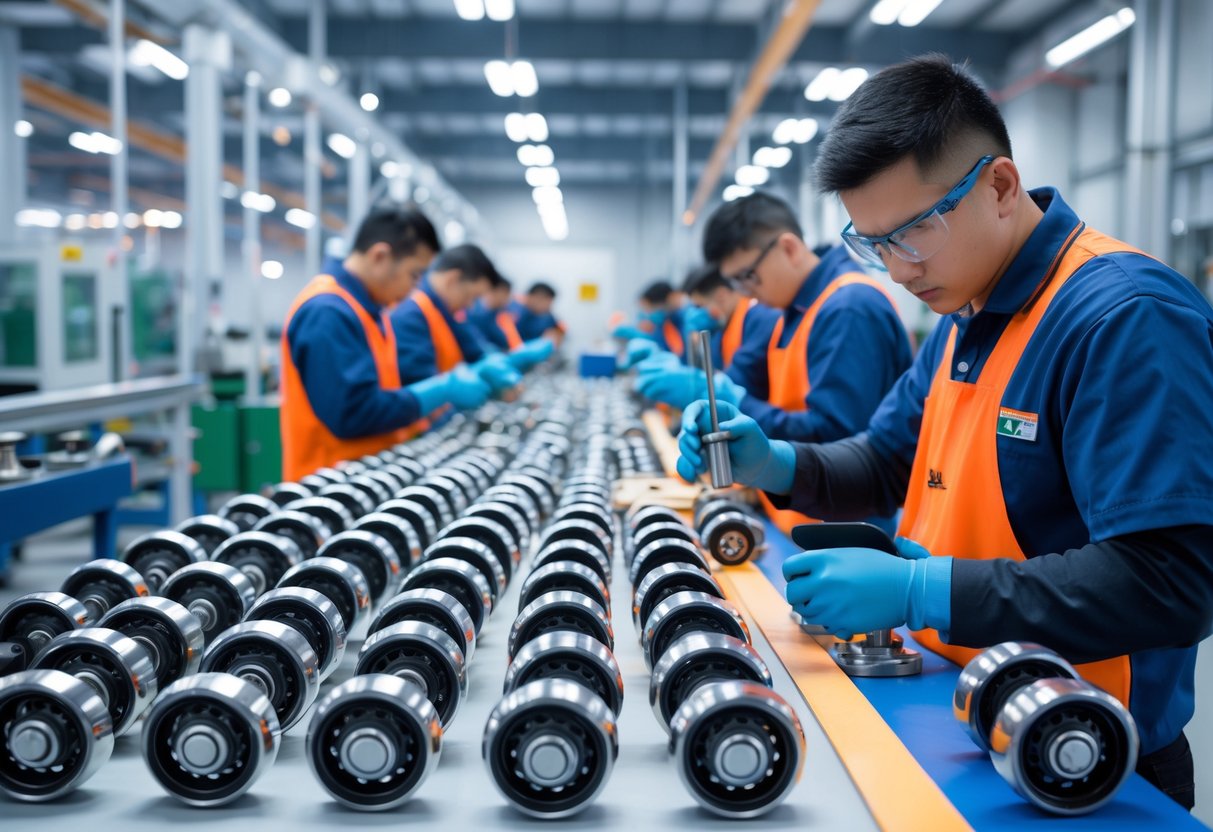
Let’s dig into the building blocks of a caster system and how different setups really fit different manufacturing jobs. The selection process? It’s all about matching materials, wheel types, and mounting options to what your facility throws at you.
We’re going to walk through the basics—what goes into a caster, how they’re made, and where they show up in the real world. If you’re in charge of moving precision equipment or shifting a monster press, the casters you pick will make a big difference for both safety and productivity.
Understanding Casters and Their Key Components
Casters are made up of several parts that all have to work together to keep things rolling. What sets a caster apart from a regular wheel is the mounting and swivel mechanisms—that’s where the magic happens for controlled movement.
What Are Casters?
Casters are mechanical devices you bolt or snap onto equipment to give it mobility and control, usually combining a wheel, a mounting system, and often a swivel so you can steer in any direction.
You’ll spot casters everywhere—from the office chair you’re sitting in to the massive carts on a plant floor. The basic idea? Take something stationary and make it mobile, without sacrificing stability or load capacity. Unlike just a wheel, a caster is the whole package, ready to bolt on and go.
Primary Functions:
- Make equipment and furniture mobile
- Add steering or keep things rolling straight (swivel or rigid)
- Handle different loads, depending on their specs
- Save your floors by picking the right wheel material
Core Parts of a Caster
The wheel is the heart of any caster. We use polyurethane, rubber, nylon, and cast iron, each with their own perks—some are better for heavy loads, others for protecting floors or rolling quietly.
The mounting system is how you attach the caster, either with a plate (flat and bolted down) or a stem (a rod that fits into a hole). The choice here really comes down to how much weight you’re moving and how your equipment is built.
Bearings cut down on friction in the wheel and swivel. Ball bearings, roller bearings, and Delrin bushings all have their place, depending on how smooth and durable you need things to be.
The frame or bracket holds everything together. We usually make these from steel, aluminum, or tough plastics, and they’re what gives the caster its strength.
Swivel mechanisms use a raceway packed with ball bearings so the caster can rotate. If you just need straight-line movement, you go with a rigid frame. The axle keeps the wheel in place, and brake systems can lock the wheel or the swivel, so things stay put when you want.
Difference Between Casters and Wheels
Wheels are just that—a rolling piece that needs extra hardware to attach. Casters are the whole assembly: wheel, mount, bearings, bracket, and sometimes brakes. You can slap a caster onto your equipment and you’re ready to roll—no extra engineering required.
Wheels need a custom setup for mounting and don’t offer much in the way of steering or locking. Casters, on the other hand, come with built-in mounting and can include features like directional control or brakes. That’s a big deal when you’re specifying equipment, because casters can save a lot of engineering headaches.
Types of Casters for Manufacturing Applications
In manufacturing, you can’t just use any old caster and hope for the best. You need assemblies that can take a beating, move serious weight, and keep working shift after shift. The right caster selection can make or break how your operation runs on the floor.
Industrial Casters Overview
Industrial casters are built for tough environments. Think steel, cast iron, and reinforced plastics—these aren’t your hardware store options. You’ll see two main types: swivels for maneuverability, and rigids for straight-line tracking.
Wheel materials are chosen based on what you’re rolling over and how much weight you’re hauling. Polyurethane, nylon, rubber, and metal compounds all have their place. Some are better for concrete, others for tile, and some for high heat.
Temperature extremes, chemicals, and floor protection—these are big factors in picking your caster. Some facilities need non-marking wheels for clean floors, others need wheels that can handle heat or caustic spills.
Light-Duty, Medium-Duty, and Heavy Duty Casters
We sort casters by how much weight they can handle. Light-duty models are good up to about 200 pounds each—think tool carts or small benches. These usually come with rubber or soft polyurethane wheels for floor protection.
Medium-duty casters cover 200 to 1,200 pounds. They’re the workhorses in most plants—used on carts, line-side racks, and inventory movers. Our 40 Series is a classic here, found everywhere from warehouses to production lines.
Heavy duty? That’s anything over 1,200 pounds, and some go up to several thousand. These beasts have reinforced frames, top-tier bearings, and wheels made from forged steel or high-impact nylon. You’ll find them on presses, die carts, and seriously heavy gear.
Specialty Casters and Custom Designs
Sometimes the standard stuff just doesn’t cut it. Shock-absorbing casters are a lifesaver for delicate equipment, especially if you’re rolling over rough joints or uneven floors. Spring-loaded designs help keep things steady and soak up vibration.
If you’re in electronics or clean rooms, electrostatic discharge (ESD) casters are essential—they’re built from conductive materials to keep static at bay. For foundries or bakeries, high-temp casters with phenolic resin or special alloys are the go-to.
We also do plenty of custom work. Whether it’s a specific wheel diameter, mounting height, or a unique brake, sometimes you just need a caster that fits your exact specs.
Caster Mounting Options
How you mount your caster makes a big difference for stability and installation. Plate casters use a flat plate with four bolt holes—this is the gold standard for heavy equipment because it spreads the load and bolts down tight.
Stem casters come in threaded, grip ring, or friction-fit styles and are great for lighter gear. Threaded stems are especially good if you need to swap casters often.
Bolt hole casters split the difference, using a single bolt through the center. These are handy in tighter spots where a plate won’t fit. Every now and then, we get requests for kingpinless or offset mounts—these are more niche but can solve tricky footprint or clearance issues.
Materials and Finishes in Caster Manufacturing
The material you pick for your caster isn’t just about strength—it affects everything from load capacity and floor compatibility to how long the caster lasts in your environment. Finishes like powder coating and plating can really extend service life, especially in rough conditions.
Wheel Materials and Performance
Wheel material is huge for caster performance. Polyurethane wheels are a favorite for their balance of toughness and floor protection. They shrug off chemicals and don’t leave marks, making them great for a lot of plant settings.
Nylon wheels are the workhorses for heavy-duty loads—tough and wear-resistant, but they can be a bit noisy on hard floors.
Rubber wheels are all about smooth, quiet rolling and protecting floors. They’re ideal where you want less noise and a softer touch, though they can wear out faster if you overload them.
Steel and cast iron wheels are built for brute strength and durability. Steel handles heat and abrasion, and stainless steel is the go-to for washdown or food-grade environments. Just be careful with these on delicate floors—they’ll chew them up if you’re not careful.
Frame and Housing Materials
Frames and housings have to be tough—steel frames are the industry standard for heavy-duty stuff. We’ll pick the steel grade based on the job and budget.
Stainless steel is the only real choice for food, medical, or marine environments where corrosion is a dealbreaker. Zinc-plated steel is a good compromise for indoor use, offering some rust protection without the cost of full stainless. Cast iron frames are rare but unbeatable when you need max rigidity, though they’re heavy and can be rough on floors.
Corrosion Protection and Powder Coating
Powder coating isn’t just for looks—it’s one of the best ways to protect casters from rust and chemicals. The finish is tougher than regular paint and stands up to chips and scratches.
We use powder coating for casters in corrosive areas or when customers want color coding for organization. The process fuses dry powder onto the metal, then cures it for a rock-solid barrier.
Zinc plating and galvanization are other options. Zinc is good for smaller parts and gives a thinner coat, while hot-dip galvanizing is the tank of rust protection—great for outdoor or marine use. Chrome plating is mostly for show, but it does add some corrosion resistance too.
Manufacturing Processes for Casters
Making casters is a mix of engineering, fabrication, and a bit of art. We start with digital designs, move through metal forming and molding, and finish up with assembly and some pretty strict quality checks.
Design and Engineering
Everything starts with CAD. We use 3D models to lock in load capacities, swivel action, and all the fine details. The engineering team draws up blueprints for every part—mounting plates, wheel geometry, you name it.
We always prototype first, making samples to test in real-world conditions. If something doesn’t roll right or the load distribution is off, we tweak the design until it’s dialed in.
Key design factors:
- Load ratings and safety margins
- Mounting style (plate, stem, bolt hole)
- Wheel size and tread width
- Brakes and swivel locks
Metal Fabrication and Molding
Steel plates are cut and stamped into shape, then pressed and welded to make the housings and plates. We finish them with spray paint and oven curing to fight off rust.
Wheel production depends on the material. Plastic wheels are injection molded for consistency. Rubber wheels get their hubs inserted into molds, then we inject rubber. Polyurethane wheels are a combo—die-cast aluminum cores with a PU tread bonded on.
Every batch gets cooled and finished—rubber wheels, for instance, need a couple of hours to set up before we grind the edges and check bearing fits.
Assembly and Quality Control
Bearings go into the housings to keep things spinning, fastened in place with stamped top plates. Wheels are attached—sometimes by hand for special orders, sometimes on automated lines for big runs.
We don’t skimp on quality checks. Every caster gets measured, hardness-tested, and put through salt spray to check corrosion resistance. We drop heavy weights on them for impact tests, and run the brakes through thousands of cycles. Even the paint job gets a close look for uniformity. Anything that doesn’t pass gets flagged and investigated so we can keep improving.
Applications of Casters in Industry
If you’ve ever watched a production line in full swing, you know industrial casters are the unsung heroes rolling behind the scenes. From massive warehouses to tight manufacturing cells, casters are what keep things moving—literally. We design and supply these components to handle material transport, keep production lines agile, and tackle all sorts of specialized load-handling jobs where reliability isn’t optional.
Material Handling and Logistics
Material handling just doesn’t happen without the right casters. When you’re moving pallets, finished goods, or even delicate electronics, you need casters that can take a beating and keep rolling. We spec heavy-duty casters on pallet jacks, order pickers, and mobile racks—basically anything that has to haul serious weight day in and day out. Swivel casters are a must for weaving through crowded aisles, while rigid casters keep things tracking straight when you’re covering distance.
You’ll find casters on:
- Platform trucks and hand carts—think package delivery and sorting
- Roll cages and wire carts for back-of-house retail and wholesale
- Mobile bin systems that help keep SKUs organized
- Conveyor transfer carts that bridge production lines
Polyurethane and rubber treads help cut rolling resistance, which means less muscle needed to push fully loaded carts. If you’re moving sensitive electronics, anti-static casters are a no-brainer. And let’s be honest, nobody wants a noisy warehouse, so noise-dampening wheels are always a welcome upgrade.
Manufacturing and Production Equipment
In production, flexibility is everything. Casters let you reconfigure your shop floor without calling in a construction crew. We mount industrial casters on welding tables, machine bases, and even massive parts containers, so you can shuffle things around as product lines change or new jobs come in.
Locking casters on mobile workbenches are a favorite—roll them where you need them, lock them down for precision work. If you’re dealing with heat, like around furnaces or ovens, we’ve got casters that shrug off high temps. And in automotive or aerospace, those big assembly fixtures? They ride on extra heavy-duty casters that don’t flinch at thousands of pounds.
Maintenance teams love carts with sealed-bearing swivel casters—no more fighting metal shavings or coolant gunk that would otherwise grind a wheel to dust.
Other Industrial Uses
Some environments just don’t play nice, so we build casters for the job. Cleanrooms in pharma or electronics need non-marking, low-particle casters to keep things sterile. Food processors go for stainless steel casters that won’t rust out after a week of washdowns or chemical exposure.
Medical and lab gear often calls for lightweight casters with smooth swivels—navigating tight hospital corridors with a loaded cart isn’t easy otherwise. Shock-absorbing casters are a lifesaver when you’re moving delicate instruments or sensitive loads. And in chemical plants, we match caster materials to the specific solvents and caustics you’re up against—no one wants to swap out wheels every month.
Selecting the Right Casters for Your Needs
Let’s be real: picking the right caster isn’t just about slapping wheels on something. It comes down to three big things—how much weight you’re moving, what kind of floor you’re rolling on, and the environment those casters have to survive. Overlooking any of these is just asking for trouble.
Load Capacity Considerations
We always start with load capacity. You’ve got to add up the total weight—equipment plus whatever you’re hauling—and then divide by the number of casters. But don’t stop there. In manufacturing, we tack on a 25-30% safety margin, just in case weight shifts or you hit a bump.
Heavy-duty casters are the go-to once you’re looking at loads over 300 pounds per wheel. For example, let’s say your machine weighs 800 pounds and you’re loading it with 1,200 more. That’s 2,000 pounds total. With four casters, you want each rated for at least 625-650 pounds with that safety buffer.
Mounting style matters, too. Plate mount casters are the standard for heavy loads; stem mounts are fine for lighter gear. Always double-check catalog specs against your actual use—most ratings assume walking speed and only occasional use, not all-day industrial grind.
Floor Surface and Mobility Requirements
Wheel material can make or break your caster setup. Polyurethane wheels are a favorite on concrete and tile—they protect floors and carry a decent load. Nylon wheels? They’re beasts for high-capacity jobs on hard surfaces, but don’t use them on delicate floors unless you like scratches.
For maneuverability, you want swivel casters; for straight tracking, stick with rigid casters. Most shop layouts use both—swivels up front for steering, rigids in the back for stability.
| Wheel Material | Best Surface | Load Capacity | Key Benefit |
|---|---|---|---|
| Polyurethane | Concrete, tile | Medium-High | Floor protection |
| Nylon | Hard surfaces | Highest | Durability |
| Rubber | Hard floors | Medium | Noise reduction |
| Cast iron | Rough surfaces | Highest | Extreme durability |
Environmental and Safety Factors
When it comes to temperature extremes, you really have to pick your materials carefully. Phenolic wheels, for instance, can handle heat up to 450°F—think foundries or bakeries, places where things get seriously hot. Standard rubber? Forget it, those start breaking down past 180°F. For corrosive or wet environments, we lean toward stainless steel casters—nobody wants rust or contamination creeping into their production lines.
Brakes are another thing you can’t overlook in a manufacturing space. We usually throw locking brakes on at least two casters per unit. It’s just safer that way, especially when you’re loading or moving heavy stuff. Total-lock brakes clamp down both the wheel and the swivel, while directional locks just keep the wheel from rolling. Sometimes customers aren’t sure which they need, but honestly, it depends on the workflow.
And then there’s the floor—if you’ve ever seen a shop floor, you know debris is a constant battle. Bearings can take a beating if you’re not careful. That’s why we go with sealed bearing assemblies in these cases. For high-use applications, we’ll spec out casters with grease fittings so you can actually keep them lubed up—way better than those so-called “maintenance-free” options that end up wearing out faster than you’d expect.


