
 Support
 Sign In
 Cart
Cart


When it comes to industrial or institutional equipment, Faultless casters have been a go-to for ages—over 135 years, in fact. Since 1889, this brand has been cranking out casters and wheels that actually last, whether you’re moving lightweight furniture or wrangling heavy-duty carts. With more than 10,000 combinations on the table, there’s a solution for just about any mobility challenge you can throw at them. Their reputation? Let’s just say it’s well-earned, built on a steady focus on durability and cost-effectiveness.
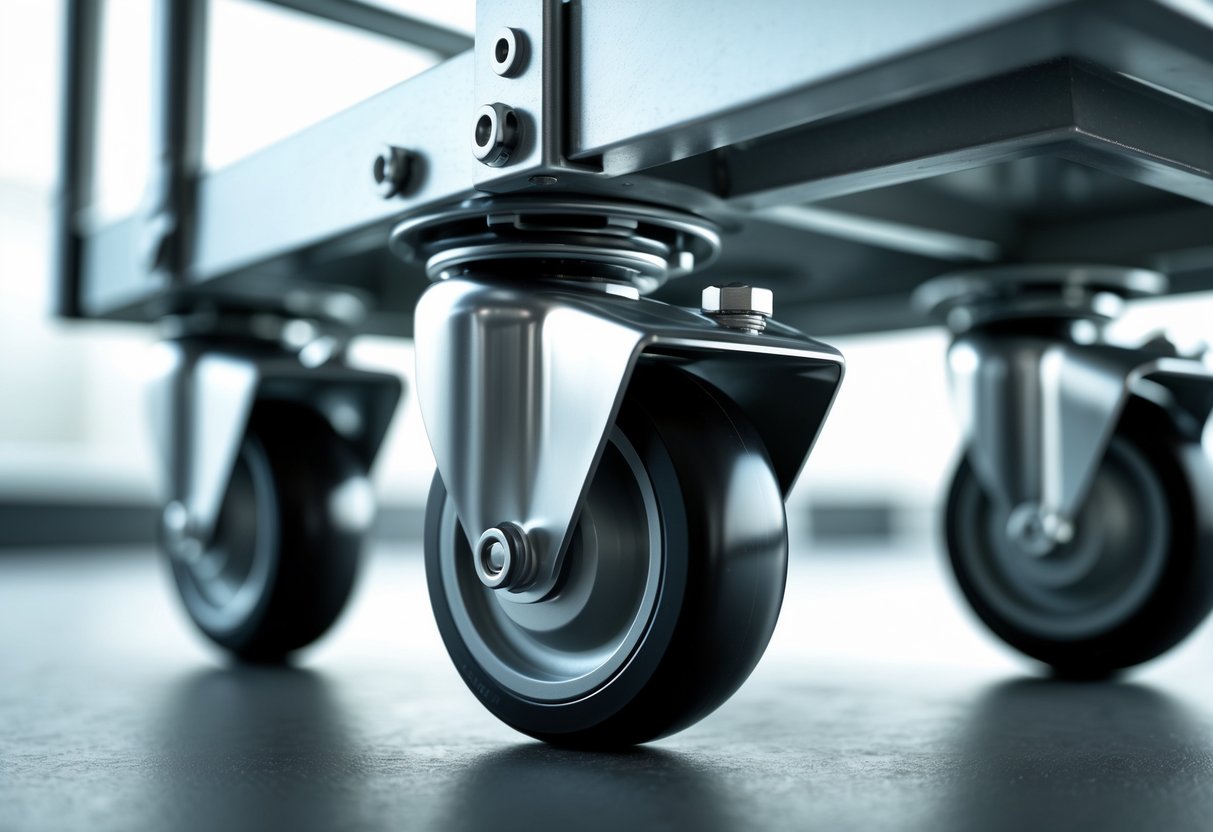
Honestly, getting a handle on the Faultless product line is a must if you’re specifying casters for your operation. Whether you’re in healthcare and need smooth, quiet maneuverability or you’re in manufacturing where you’re pushing some serious weight, these casters have niche solutions for almost every sector.
Let’s dig into what makes Faultless casters tick, check out the different types you’ll run into, and talk through how to pick the right one for your job. We’ll also touch on maintenance tips and why sourcing these casters is usually a pretty smooth process, thanks to their distribution partnerships.
What Are Faultless Casters?
Faultless casters are engineered mobility components from Faultless Caster, a company that’s been at it since 1889. With over 10,000 plate and stem caster combinations, they cover everything from lightweight furniture to heavy-duty industrial setups.
Overview of Faultless Caster Brand
This story starts with Bernard H. Noelting, who came up with a better furniture caster back in 1889 in Nebraska City. By 1913, the company moved to Evansville, Indiana, to get closer to the heart of furniture manufacturing.
Now, Faultless is part of Colson Group—the world’s largest caster and wheel manufacturer. That’s a big deal, honestly, because it means Faultless benefits from global resources but still keeps its own standards tight. Their products ship through a national network, so getting what you need locally isn’t a headache.
They’re everywhere: industrial plants, hospitals, office equipment, air cargo, and furniture factories. You’ll find their light-duty casters rated at 225 lbs and their heavy-duty models topping out around 1,500 lbs per caster.
Key Features and Technologies
These casters don’t just get a quick look-over—they’re put through the wringer with quality testing before they ever reach your dock. Faultless backs a lot of their products with a solid 3-year warranty—something we appreciate as a manufacturer.
The Series 1400 is kind of the backbone of their lineup. It’s a versatile, tough-as-nails series with wheel choices for medium to heavy-duty applications, each handling 275 to 1,500 lbs.
Their engineers are constantly tweaking and introducing new designs, always chasing better performance or cost savings for the end user. Whether you need top plate casters, threaded stem casters, grip ring stems, or hollow kingpin setups, Faultless has mounting options for just about any install requirement.
Industry Leadership and History
Over 137 years in the business? That’s no fluke. Faultless has stuck around by innovating and adapting to what industries actually need.
Being part of Colson Group means Faultless is plugged into a supply chain that moves more than 190,000 casters every day, all over the world. That’s some serious volume, but they haven’t let it get in the way of quality. We’ve seen their casters pull their weight in all sorts of environments—think medical-grade casters in hospitals and specialized solutions for janitorial or institutional gear.
Types of Faultless Casters
Faultless builds casters in a range of mounting styles to fit whatever you’re working on. Each setup is tailored for specific equipment and installation needs, from factory machinery to hospital beds.
Plate Casters
Plate casters have a flat mounting plate—usually with four bolt holes—that you bolt straight onto the bottom of your equipment. This style spreads the load out nicely and makes for a rock-solid connection. If your gear has a flat mounting surface, these are a no-brainer.
Standard plate sizes are often 4″ x 4.5″, but there’s flexibility depending on what you’re moving. Plate casters are especially good for heavy-duty gear like industrial carts and platform trucks. They’re basically the gold standard for strong, stable mounting. You’ll need to drill four holes and bolt these on—pretty straightforward, but make sure your base is up to the task. Once they’re on, you get a stable ride with no annoying wobble, even under heavy loads. Faultless plate casters come in both rigid and swivel types, so you can mix and match for the maneuverability you want.
Stem Casters
Stem casters are a bit simpler—they use a shaft that slots into a socket or housing on your equipment. Threaded stem casters screw right into place, while grip ring stem casters snap in with a compression fit. Both are quick to install and don’t need a bunch of bolt holes.
Threaded stems let you tweak the height a bit, which can be handy. Grip ring stems are great for fast swaps or replacements, and we see them a lot on office chairs, display racks, and utility carts. Most stem diameters are between 3/8″ and 1/2″, with different lengths for whatever clearance you need. They’re easy to install, but keep in mind they’re generally for lighter loads. Faultless has a bunch of stem options to fit different sockets.
Kingpinless Casters
Kingpinless casters ditch the traditional kingpin bolt and use a beefier bearing design. That means a lower profile, better load distribution, and smoother swiveling. Plus, with fewer moving parts, there’s less that can go wrong.
We usually recommend kingpinless models for heavy, demanding environments—think manufacturing lines or warehouse carts that never stop rolling. The design is just more robust and needs less maintenance over time.
The hollow kingpin version is a nice hybrid—you get the strength of kingpinless construction, but the mounting post lets you bolt it through the center for a secure fit. This is handy for custom jobs where standard mounting just won’t cut it.
Medical Casters
Medical casters are purpose-built for healthcare—quiet, easy-rolling, and resistant to all the cleaning chemicals you’ll find in hospitals. The non-marking wheels are a must for keeping floors looking decent, and the bearings are sealed to handle constant cleaning.
You’ll spot these on hospital beds, IV poles, diagnostic gear, and all sorts of rolling carts in clinics. They’re smooth and quiet, which is crucial for patient care environments.
Every mounting style is available—top plate, threaded stem, grip ring, hollow kingpin—so you can fit them to just about any medical device. Capacities range from light carts to heavy imaging equipment, and you’ll want to balance mobility, stability, and compliance with whatever standards your facility has in place.
Choosing the Right Faultless Caster
Picking the right Faultless caster isn’t just about weight—it’s about matching load, mounting style, and wheel material to your application. If you miss any of those, you’re asking for trouble down the road.
Load Capacities and Application Fit
Faultless sorts their casters into series by load capacity. Series 100-500 covers 90-500 lbs per caster—great for things like dollies, laundry carts, or toolboxes. Series 1400 is the workhorse, handling 275-1,500 lbs for warehouse trucks and shelving.
If you’re moving serious weight, the HX1400-HX3400 series is where you look—600-3,500 lbs per caster, built from forged SAE 1045 steel, and designed with a 4-inch upper main load raceway. For business machines, there are low-profile casters that handle 200-1,200 lbs, perfect when height is at a premium. To size your casters, add up your equipment weight plus whatever it’ll carry, divide by the number of casters, and add a 33% safety margin. Better safe than sorry, right?
Mounting Options and Configurations
You’ve got three main mounting options with Faultless. Top plate mounting uses a steel plate with bolt holes—1/4-inch thick for most jobs, 3/8-inch for the heavy stuff. Threaded stem mounting (Series G400) is common on wire carts and retail fixtures.
Kingpinless designs (KPL1400-3400 and KP1300-3300 series) are all about durability, using precision-machined, induction-hardened raceways. KPL has a 2-1/8-inch raceway, KP bumps up to 3 inches. Swivel, rigid, and even models with 4-position directional locks are available, so you can dial in the handling you want.
Wheel Types and Materials
Wheel material matters—a lot. Faultless offers plain bearings for light loads, self-lubricating bearings for less maintenance, roller bearings for heavier stuff, and precision ball bearings for smooth, quiet operation under max loads.
Series 1400 uses 1/4-inch hardened ball bearings in a 5/16-inch raceway. The big boys use 1/2-inch balls in 3-inch raceways or even 1-inch bore tapered rollers. Every caster comes standard with a corrosion-resistant zinc finish, though you can get black oxide on business machine models. Wheel diameter and width should match your floor and clearance needs. Bigger wheels roll easier over bumps, and wider wheels help avoid floor damage on softer surfaces.
Key Applications for Faultless Casters
You’ll find Faultless casters everywhere you look—on manufacturing floors, in warehouses, and throughout hospitals. They’re the unsung heroes moving everything from heavy industrial loads to delicate medical devices, always adapting to whatever the environment throws at them.
Material Handling Equipment
In material handling, Faultless casters are pretty much a staple. The Series 1400 is especially popular for pallet jacks, platform trucks, and heavy-duty dollies, with capacities from 275 to 1,500 lbs.
Factories rely on these casters to shuttle raw materials, move finished products, and keep things flowing. They’re built to handle the grind of constant use, which helps cut down on downtime and maintenance headaches. Bakery racks, toolboxes, and furniture dollies also benefit from Faultless’s general duty series. These casters are tough enough for bumpy concrete and tight doorways, and with threaded stem and top plate options, you can fit them to almost anything.
Warehouse and Industrial Uses
Distribution centers rely on Faultless casters for order picking carts, inventory racks, and mobile workstations. These environments are rough on components—between debris, temperature swings, and non-stop shifts, you need casters that won’t quit or get chewed up by the floor.
Honestly, we’ve seen these casters shine on assembly line carts and parts bins, especially where operators need quick, pinpoint positioning. The wheel lineup covers everything from smooth epoxy-coated floors to the more unforgiving concrete. Factory floors are brutal, so impact absorption and floor protection aren’t just nice-to-haves—they’re dealbreakers.
Laundry carts in commercial settings? They’re a whole different beast. Heavy, wet loads, constant operation, and plenty of chemical exposure. Faultless casters hold up against corrosion and moisture, and they manage to stay quiet, which is more important than you’d think when carts are rolling around 24/7.
Medical and Institutional Equipment
Healthcare facilities don’t mess around with standards—sanitation, quiet movement, and precise control are all non-negotiable. We spec Faultless medical casters for hospital beds, IV stands, diagnostic gear, and utility carts where floor protection and smooth rolling have to be guaranteed.
The non-marking wheels are a must for hospital floors, and the corrosion-resistant builds stand up to a steady diet of disinfectants. For quick swaps, grip ring stem and hollow kingpin mounting options make life easier for maintenance teams. Clinical labs run these casters on mobile instrument carts and specimen carriers, where vibration control really matters. The quiet roll helps keep things calm. No one wants rattling equipment when patients are trying to recover or staff are deep in concentration.
Maintenance and Performance Optimization
Keeping Faultless casters in top shape means regular lubrication, inspections, and jumping on any performance hiccups fast. That’s how you get smooth operation and squeeze more years out of your casters.
Lubrication and Upkeep Tips
We usually recommend greasing Faultless casters every three to six months, but if you’re in a heavy-use or nasty environment, it’s worth bumping up the frequency. Use a solid lithium-based grease on the wheel bearings and swivel raceways, but don’t go overboard—too much grease just collects gunk.
Before greasing, we clean the moving parts with a mild detergent to knock out dirt and grime. Mixing old debris with new grease just speeds up wear, and nobody wants that.
Best practice? Get the lubricant right onto the bearing race and swivel, then work the wheel and swivel a few times to spread it around. Good lubrication can cut friction by about 40% and makes a real dent in noise.
If you’re dealing with high heat or chemicals, don’t trust standard petroleum grease—it’ll break down fast. Specialized lubricants keep their viscosity and protect your investment.
Inspection and Replacement Guidelines
We do a monthly walk-through, checking for flat spots, cracks, or any signs of wheel material wearing out. Fasteners, mounting hardware, and the swivel action all get a look—loose bolts or binding swivels can spell trouble.
Key things to watch:
- Wheel tread depth and surface wear
- Bearing movement and any odd noises
- Smooth swivel rotation
- Mounting plate condition and bolt torque
If a wheel’s diameter drops by 25% or bearings grind even after you grease them, it’s time for a swap. Uneven wear? That usually points to a load or alignment problem that shouldn’t wait.
We keep a maintenance log that includes dates, issues, the whole deal. Helps spot patterns before they turn into downtime headaches.
Troubleshooting Common Issues
If a Faultless caster suddenly steers like a shopping cart with a mind of its own, we check for debris—hair, wire, packaging bits—wrapped around the axle or jammed in the swivel. It happens more than you’d think.
Squeaks or grinding? Nine times out of ten, it’s a lube issue or the bearings are shot. Fresh grease is the first move, but if the noise sticks around, those bearings probably need replacing. When casters wobble or vibrate, we check bolt torque and the mounting surface for damage. It’s also worth double-checking that loads don’t exceed the caster’s rating and are distributed evenly.
If swiveling gets tough, it’s often impact damage to the kingpin or raceway. If those parts are bent or deformed, the whole caster usually needs to go—repairs rarely get it back to spec.
Industry Partnerships and Support
Faultless works with a solid network of partners and distributors to keep products available and support accessible. These include specialized distributors like Conveyer & Caster, plus warranty programs and technical assistance.
Conveyer & Caster Collaboration
Conveyer & Caster – Equipment for Industry is one of our go-to partners for getting Faultless products out to customers. With over 10,000 plate and stem caster combos, they help us cover basically any application. The collaboration is all about delivering mobility solutions that actually work for the end user.
We see this partnership model across other distributors too—folks who know material handling inside out. Conveyer & Caster brings local expertise and technical know-how, while we handle the manufacturing. Their team can help dial in the right caster for your load, floor, and unique application.
Distributors keep common Faultless models in stock, but can also handle custom orders when you need something outside the catalog.
Supplier Networks and Distribution
Faultless gets to market through a broad network—industrial suppliers, material handling specialists, and OEMs all carry our line. National Caster Corporation and Service Caster Corporation are just a couple of the distributors offering the full range.
This multi-channel setup means you can buy through your local distributor or, if you’re a manufacturer, work directly with us for OEM needs. We’ve also rolled out online ordering for standard products, which makes it easier to get what you need without a ton of back-and-forth.
Colson Group backs our distribution, so we can handle big orders and international shipping without missing a beat.
Customer Service and Warranty
Faultless handles technical support both directly and through their distributor network. If you need help figuring out which caster fits your application—or you’re just not sure what to order—you can always reach out to sales reps at distributors like Service Caster at 1-800-215-8220. Honestly, having a real person to talk to makes a difference when you’re sorting out load ratings or trying to match up a tricky mounting plate.
Warranty coverage is available for manufacturing defects, but the actual terms depend on the product line and how you’re using the caster. If you’re working on a custom rig or your application is a bit out of the ordinary, their engineering team will get involved. They’re pretty responsive when it comes to technical consultations, especially if you need to tweak a standard product.
Faultless also has an in-house testing facility where they put casters through their paces, up to a 20,000-pound load. It’s not just for R&D; they use it to dig into warranty claims too. As caster folks, we appreciate that level of thoroughness.


