
 Support
 Sign In
 Cart
Cart


Furniture casters turn static pieces into mobile, adaptable furniture that actually keeps up with your life. These little wheels mount to the bottom of chairs, tables, cabinets, beds—basically anything you want to move without throwing your back out. Suddenly, cleaning under the sofa or shifting that heavy credenza isn’t a weekend project.
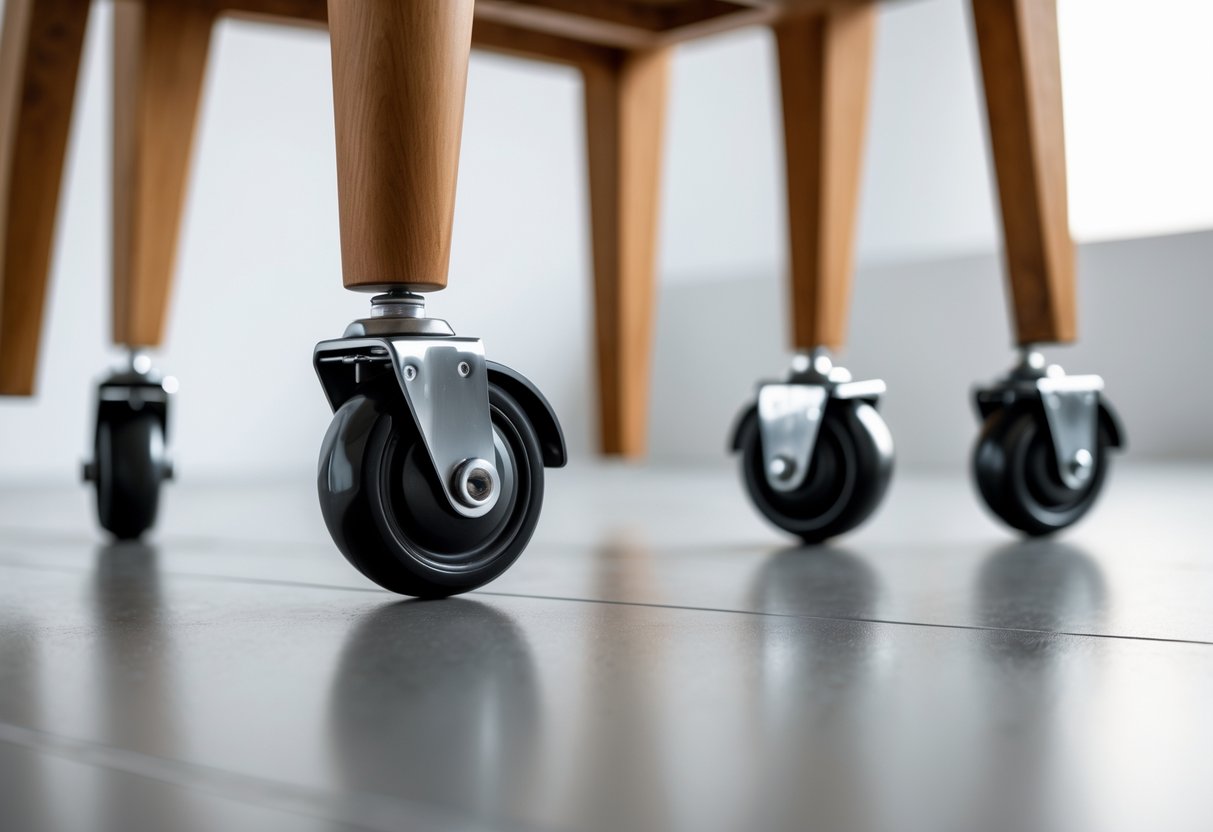
Furniture casters are engineered wheels, purpose-built for light to medium loads, designed to safeguard floors and deliver smooth, quiet rolling for both home and office furniture. You’ll find them in a range of materials, sizes, and mounting styles—each tailored to different furniture builds and flooring types. Honestly, the quality of your casters makes a bigger difference than most people realize: it’s the difference between gliding and scraping, between silent movement and a symphony of squeaks, and whether your hardwood stays pristine or gets scarred up.
Let’s dig into the different types of casters, how to pick the right wheel material for your floor, figuring out load capacity, and what’s involved in installation. There’s more to it than just popping in a wheel—features like brakes, swivel heads, and mounting styles can make or break (sometimes literally) your setup.
What Are Furniture Casters?
Furniture casters are wheel assemblies that attach to the underside of your furniture, letting you roll things around instead of dragging them. Each caster combines a wheel and a mounting mechanism, so that heavy bookshelf or awkward table suddenly becomes a breeze to reposition.
Common Uses and Applications
You’ll spot furniture casters everywhere mobility matters. At home, they’re under sofas, beds, coffee tables—anything you might want to shift for cleaning or to freshen up the room layout. In offices, casters are a given on chairs, filing cabinets, and those endlessly mobile presentation boards.
Retail and hospitality spaces use casters for displays, restaurant equipment, and service carts. In medical settings, think hospital beds, IV poles, carts, and patient chairs—mobility isn’t optional there. Industrial workshops go heavy on casters for tool cabinets, workbenches, and material carts.
Studios and creative spaces love casters for their flexibility, and if you’re into DIY, you’ve probably realized adding wheels to a storage unit or work table is a game changer for workflow and space.
Furniture Casters vs. Commodity Casters
Not all casters are created equal. Furniture casters are a different breed from commodity casters—our industry puts a premium on aesthetics, floor protection, and keeping things quiet. You’ll see softer wheel materials like rubber or polyurethane that won’t gouge your oak floors or leave streaks on tile.
Commodity casters, on the other hand, are all about maximum load, durability, and keeping costs low. They’re usually built from hard plastics or steel, perfect for factory floors but not so friendly to your living room. Their mounting hardware tends to be bulkier, too—heavy plates and kingpins for metal frames and big loads, while furniture casters stick with grip-ring stems or slim plates that suit wood and lighter builds.
And yes, the price tags reflect all this—expect to pay a bit more for furniture casters with specialized finishes and materials.
Types of Furniture Casters
There’s a surprising variety in caster design, each with its own purpose. Swivel casters let you change direction on a dime, rigid casters keep things rolling straight, brake casters lock everything down, and heavy-duty models are built for serious weight and abuse.
Swivel Casters Overview
Swivel casters spin a full 360 degrees, so your furniture can move in any direction without you having to wrestle it into place. This is what makes office chairs dance around or lets rolling carts pivot through tight spaces.
The secret sauce is the bearing mechanism above the wheel, which handles the rotation. Swivel casters are a must if you need to dodge obstacles or make quick turns. Wheel materials here range from rubber to polyurethane to nylon, depending on the floor and the weight you’re dealing with.
You’ll usually see these with either a top plate or a stem for mounting. They’re super maneuverable, but if you need straight-line stability, you’ll want to mix in some rigid casters for balance.
Rigid Casters Benefits
Rigid casters, also known as fixed casters, only allow forward and backward movement—no side-to-side action. Sounds like a limitation, but for heavy furniture or equipment that shouldn’t drift, it’s a real advantage.
These are perfect when you want your furniture to move predictably and not wander. The fixed orientation helps distribute weight and keeps things from wobbling. We often recommend rigid casters up front and swivels in the back on carts or dollies for a nice blend of control and maneuverability.
Rigid casters are tough—fewer moving parts, less maintenance, and they usually outlast swivel models. Heavy cabinets, industrial benches, and big toolboxes all benefit from a solid set of rigids.
Casters With Brake
Brake casters come with a locking mechanism—usually a simple foot pedal—that keeps your furniture from rolling away when you need it to stay put. Some brakes just lock the wheel, while others lock both the wheel and the swivel, so nothing moves at all.
These are a must for anything that needs to stay stationary but still be mobile when required. Hospital beds, service carts, mobile workstations—all better off with brakes. Dual-lock casters are especially stable, locking both rolling and pivoting.
Brake designs vary from basic friction locks to more complex ratcheting systems. It’s worth checking them periodically to make sure they’re engaging and releasing smoothly. In some industries (healthcare, food service), locking casters aren’t just nice to have—they’re required for safety.
Heavy-Duty and Industrial Casters
When you’re dealing with loads upwards of 300 pounds (sometimes well over 1,000 per caster), you need heavy-duty casters. These feature reinforced frames and bigger wheels, often made from steel or forged alloys, built to survive industrial abuse.
We always calculate total load and divide it across all mounting points—no guessing. Wheel material is key: polyurethane for floor protection and decent load, steel or cast iron when durability trumps everything else. Ball bearings in both the wheel and swivel reduce resistance, which is essential when you’re moving serious weight.
Industrial casters are built to shrug off impacts, roll through debris, and handle harsh chemicals. Look for sealed bearings and thick treads for longevity. You’ll find these under manufacturing gear, massive tool chests, and warehouse benches—places where failure isn’t an option.
Choosing the Right Caster Wheels
Picking the right caster wheel isn’t just about what fits—it’s about matching load, floor type, and dimensions to get the best performance and avoid headaches down the road. The right setup means your furniture moves easily, your floors stay intact, and you’re not replacing casters every few months.
Load Capacity and Durability
Every caster is rated for a maximum weight—ignore this at your peril. We always total up the furniture’s weight plus anything it’ll carry, then divide by the number of casters to get the per-wheel load. Add a safety margin (usually 25–30%) to avoid premature failure.
Say each caster needs to handle 50 pounds? Go for something rated at 65 pounds or more. Better safe than sorry.
Wheel material matters a lot here. Polyurethane is a workhorse—handles moderate to heavy loads, shrugs off chemicals. Nylon is super strong for industrial use, but can be too hard for home floors. Metal casters are the tanks of the caster world, but they’ll chew up delicate surfaces and make a racket.
Floor Protection Considerations
Here’s the rule of thumb: hard wheels on soft floors, soft wheels on hard floors. Rubber and polyurethane are great for hardwood, tile, and laminate—they spread the weight, roll quietly, and don’t leave marks.
For carpet, you want something harder like nylon or thermoplastic rubber. Soft wheels just sink in and make moving furniture a chore (and might ruin your carpet).
Residue and marks are another thing to watch for. Good polyurethane casters don’t bleed plasticizer, so you won’t get mystery stains on vinyl or sealed floors. If you’re worried about marks, look for non-marking wheels—they’re worth the extra bucks.
Wheel Size and Height
Bigger wheels roll over bumps, thresholds, and uneven floors with less effort. A 3-inch wheel will handle most household obstacles better than a 2-inch, and you won’t have to muscle your furniture around.
But keep in mind, bigger wheels mean your furniture sits higher. That can mess with ergonomics (especially for chairs) or make your display look off. We usually suggest 2-inch casters for lightweight furniture and smooth floors, 3-inch for moderate loads or minor floor bumps, and 4-inch (or more) for heavy-duty or rough surfaces. Always check that your mounting plate fits the furniture base securely.
Wheel Materials and Their Impact
The wheel material is where the rubber meets the road—literally. It affects floor protection, load, noise, and how long your casters last. Picking the right one isn’t just about specs; it’s about what you actually need day-to-day.
Rubber and Polyurethane
Rubber wheels are the gold standard for floor protection. They’re soft, won’t scratch hardwood or tile, and absorb shocks and noise. You’ll see them on office chairs, medical carts, and home furniture where you want things to stay quiet.
Polyurethane is a bit firmer and can handle heavier loads—think 200 to 900 kg per caster—without flattening out. It resists oils and cleaning chemicals, so it’s perfect for commercial settings where spills happen.
Both rubber and polyurethane roll smoothly on hard floors. Polyurethane holds its shape better over time and doesn’t develop flat spots from sitting. If you’re moving furniture often across sensitive floors, these materials are your best bet for floor protection.
Cast Iron and Polyolefin
Cast iron wheels are the heavy lifters—think loads over 1000 kg per caster. We spec these for industrial furniture and equipment that barely moves but needs to be mobile when it counts. They’re practically indestructible, resist heat and chemicals, but will wreck soft floors and sound like thunder rolling.
Polyolefin is a tough plastic, great for chemical resistance and durability at a lower cost than metal. These wheels are good for medium loads (300–800 kg per caster), roll easily on smooth surfaces, and don’t swell when wet.
Both materials are louder and tougher on floors than rubber or polyurethane, so use them where that’s not a concern.
Non-Marking Wheels
Non-marking wheels use special rubber or polyurethane blends that don’t leave black marks or discoloration. Additives prevent pigment transfer, so your floors stay clean.
We always recommend non-marking casters for gyms, retail, healthcare, or anywhere floor appearance matters. They have the same shock absorption and low noise as standard rubber or polyurethane.
Just a heads up—not all soft wheels are non-marking. Standard rubber often has carbon black, which can leave streaks. True non-marking wheels cost a bit more but save you from endless floor cleaning.
Installation and Maintenance
Getting furniture casters installed right is half the battle—do it wrong and you’ll be chasing wobbles, squeaks, or worse. Regular maintenance keeps things rolling smooth and prevents annoying surprises. We’ll cover mounting options, when to swap out old casters, and some easy upkeep tips.
Mounting Methods: Stem vs. Plate
Stem mounts slide right into a pre-drilled hole in the furniture leg or frame—think office chairs or lightweight tables. There are a few main flavors: grip ring stems (those are the ones that snap in with a satisfying click), threaded stems that actually screw in, and your basic friction-fit stems that just wedge in snug. We see these a lot on chairs with tubular legs or when you want a super clean look—no bulky plates or screws showing.
Here’s the catch: the hole size really matters. Go too wide and the caster wobbles, too tight and you might split the wood. Most grip ring stems are happy with a 7/16 inch hole, but it’s always best to double-check the spec sheet—manufacturers love their quirks.
Plate mounts are a different beast. They bolt right onto the bottom of the furniture with four screws in a standard pattern. You’ll mostly see plates sized around 2.5 x 3.6 inches for typical furniture, but for the heavy stuff—think shelving or industrial carts—4 x 4.5 inches is more the norm. Plate mounts spread the load out, so they’re a go-to for anything heavy or wobbly.
For hefty cabinets, workbenches, or just anything you don’t want tipping over, plate mounts are the way to go. Drill your pilot holes a bit smaller than the screw diameter so you don’t split the wood (that’s a classic mistake). And don’t cheap out on the mounting surface—3/4 inch thickness is kind of the baseline for a solid hold.
Caster Replacement and Upgrades
You’ll know it’s time to swap out your furniture casters when the wheels crack, the hardware bends, or you can’t get them rolling smoothly even after a good cleaning. Bad bearings are a dead giveaway—if your caster wobbles or drags, you’re stressing both the furniture and your flooring.
When you’re replacing casters, match the original mounting style exactly—stem diameter and length for stems, hole pattern for plates. If you’re bumping up to higher-quality casters (and honestly, why not?), it pays off for heavier loads, better floor protection, or just a nicer rolling feel. Polyurethane wheels tend to outlast rubber and they’ll handle a lot more weight before they start complaining.
Watch out for height changes—new casters can make your furniture sit higher than you’d expect, or need more clearance underneath. If you’re working in a tight spot, measure the swivel radius so you don’t end up with a caster that bangs into the legs or frame. And if you’re upgrading anyway, why not add a locking caster or two? It’s a simple way to keep things from rolling off when you least expect it.
Maintenance Tips for Longevity
Give your casters a quick once-over every month—loose screws, banged-up wheels, or sticky swivels are all things you’ll want to catch early. Tighten up any hardware that’s worked itself loose; it’s pretty normal for fasteners to wiggle out over time with regular movement.
Clean the wheels weekly if you can, just with a damp cloth. Hair, dust, and all that gunk will slow things down and can scratch your floors. Skip the harsh cleaners—those can eat away at the rubber or plastic.
Lubricate the swivel bearings every six months with a drop or two of light machine oil or silicone spray. Don’t overdo it, though—too much oil just attracts dirt. If your casters are squeaking, it’s usually a sign they’re thirsty for a bit of lube. But if they’re stiff even after cleaning and oiling, you might have debris jammed in there or parts that are just plain worn out.
Try to keep furniture with casters on flat, even surfaces so you don’t wear out one side faster than the other. And if you’re not planning to move it for a while, lock those casters down—otherwise, you might end up with flat spots on the wheels from sitting in one place too long.
Design and Ergonomics
Furniture casters aren’t just about function—they’re part of the whole design vibe. As manufacturers, we’re always weighing engineering needs with aesthetics. The right caster selection can make a piece easier to move and still look sharp.
Impact on Mobility and Usability
We’re big on ergonomic caster design—it’s all about making movement effortless. Go for larger wheel diameters if you want to roll over thresholds or cables without a fight. Tread material is key, too: polyurethane wheels give you smooth rolling, low resistance, and they’re gentle on floors.
Swivel casters are a lifesaver in tight spaces. Good bearings make a huge difference—if you’ve ever tried to push a heavy cart with cheap casters, you know what I mean. You want furniture to glide, not drag.
Always check that your casters are rated for the total weight—furniture plus whatever you load onto it. Undersized casters just make life harder, adding friction and making you work for every inch. Properly rated casters spread out the load, roll smoother, and last longer. It’s worth taking a minute to check the specs before you buy.
Matching Casters to Décor
When it comes to picking out furniture casters, it’s honestly a bit of an art. We don’t just slap on any wheel—we’re thinking about finish, profile, and how everything ties together. Chrome, brushed nickel, oil-rubbed bronze—these finishes? They’re not just for show; they’re meant to echo the cabinet pulls and fixtures you’ve already got going on. For that modern, stripped-back vibe, black or white plastic casters usually do the trick, blending right in. If you’ve got a more classic or vintage setup, brass or antique finishes just feel right, don’t they?
Low-profile casters are for those times you want the furniture to move but don’t want anyone to notice what’s doing the work. On the flip side, we sometimes get requests for casters that are meant to be seen—ornate brackets, vintage-style wheels, the whole nine yards. Some of our favorites are those with retractable mechanisms; you can roll the piece around and then—poof—wheels disappear, leaving those clean lines untouched.
Wheel diameter is a detail folks sometimes overlook, but it changes the whole look and feel. Smaller wheels (think 1-2 inches) keep things subtle and are perfect for lighter pieces. If you need to move something heavier or just want that bolder look, larger wheels (3-4 inches) are the way to go, though they definitely make their presence known under the furniture.


