
 Support
 Sign In
 Cart
Cart


The aerospace sector doesn’t mess around when it comes to mobility solutions. Aerospace casters are engineered to handle brutal conditions—think heavy loads from 1,000 up to 50,000+ pounds, exposure to jet fuel and de-icers, and the need for precision rolling across every inch of a hangar or tarmac. Whether it’s moving a tooling cart, a fuselage section, or a custom fixture, these casters are the unsung heroes behind the scenes.
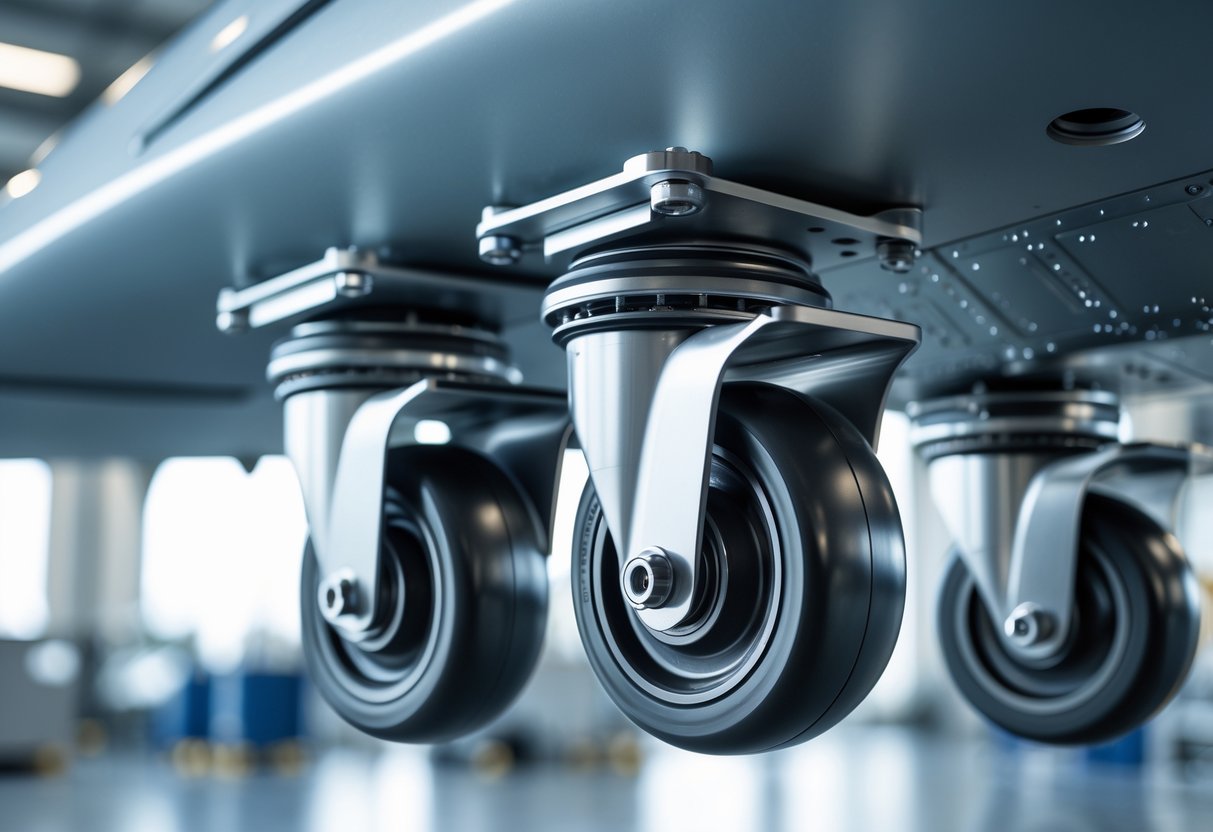
Picking the right caster for aerospace work? That’s a whole different ballgame from your average industrial application. We’re constantly working with manufacturers and ground crews who need to keep noise down in echoing hangars, avoid debris that’ll scratch up those expensive floors, and squeeze out every second of efficiency—because any downtime gets real expensive, real fast.
Let’s dig into what actually sets aerospace casters apart: the specs, the materials, and the design quirks that make them tick. If you’re in the market, you’ll want to know the standards we’re held to, the performance tricks we swear by, and what really matters when you’re picking casters for your next big aviation project.
What Are Aerospace Casters?
Aerospace casters aren’t your run-of-the-mill wheels—they’re purpose-built for the high-stakes world of aviation, where moving a 40,000-pound assembly with pinpoint accuracy is just another Tuesday. These are the components that keep production lines humming and ground support equipment rolling without a hitch.
Definition and Key Features
When we talk aerospace casters, we’re talking heavy-duty wheels and assemblies built to take a beating. Load capacities? We’re routinely spec’ing casters that handle 5,000 to 50,000 pounds—per caster. That’s not a typo.
Materials matter. You’ll see corrosion-resistant alloys like #356 aluminum showing up everywhere, thanks to their strength and reliability. Spring-loaded designs are a must for shock absorption—nobody wants a cracked avionics panel because a dolly hit a bump. Swivel locks and brakes? Absolutely essential when you’re inching a million-dollar component into place.
And since these casters are built to military and aerospace specs, you’ll find features like lifetime lube, positive pressure seals, and maintenance-free construction as the norm. They’ve got to stand up to steam, detergents, and wild temperature swings without missing a beat.
Types of Aerospace Casters
Rigid casters keep things moving in a straight line—perfect for long, heavy loads. Heavy-duty swivels give you that 360° maneuverability, so you can pivot a massive jig around a crowded shop floor.
Spring-loaded casters? That’s your go-to for shock absorption. They’re great for delicate parts or when you’re rolling over less-than-perfect floors. Pneumatics are the workhorses for baggage and military cargo—they eat up bumps and handle speed changes like pros.
Dual wheel casters with pry-bar sockets are what we spec when you need extra stability for big, awkward fixtures. And if you’re in a high-abuse environment, kingpinless casters are a staple—they shrug off shock loads and keep rolling.
Differences from Standard Casters
Here’s the deal: standard casters top out around 2,000 pounds. Aerospace casters? Ten times that, easy. The build is just different—think high-grade aluminum and specialty alloys, not basic steel or plastic.
Protecting the load is non-negotiable. We’re not just moving boxes; we’re moving components that can’t afford a scratch. So, aerospace casters go through way more rigorous testing. Wheel materials get fancy too—phenolic for heat, specialty polyurethane for non-marking, and pneumatic for shock absorption. You won’t find basic rubber or plastic here.
Everything’s built to tighter tolerances, and the quality control is on another level—military spec is the baseline, not the exception.
Core Applications of Aerospace Casters
Aerospace casters are everywhere you look in an aviation facility. Whether it’s shuttling a delicate avionics rack or rolling a 30-foot wing jig, reliability and safety aren’t just nice—they’re mandatory. These wheels see everything from featherweight tooling to monster assemblies.
Material Handling in Aerospace Environments
Most of the time, we’re talking about moving raw materials, in-process parts, or finished subassemblies around massive production floors. The challenge? Protecting sensitive cargo while still being able to steer a thousand-pound load with one hand.
Spring-loaded casters are key for absorbing shocks—especially when a cart’s only partially loaded. Pneumatic wheels are another favorite, especially for baggage carts or utility dollies that see both slow and fast speeds.
Loads can swing wildly. One caster might see 5,000 pounds, another 50,000. Swivel casters with full rotation let operators squeeze through tight corners without endless repositioning.
Aluminum construction holds up to all the chemicals, moisture, and cleaning agents aerospace environments throw at it. Maintenance-free designs and pressure seals mean less downtime, and who doesn’t want that?
Aircraft Manufacturing Facilities
On the shop floor, aerospace casters are what let us move massive assemblies, heavy tooling, and subassemblies between stations without breaking a sweat. Swivel locks and brakes? Absolutely—you can’t risk drift when aligning expensive components.
Dual wheel casters with pry-bar sockets are a lifesaver for long jigs and awkward fixtures. Dual wheel setups spread the load out, so nothing tips. Polyurethane wheels keep floors looking good, even after thousands of trips.
Phenolic wheels are the go-to around welding or heat-treating—they shrug off heat where other wheels would melt. Swivel casters help rotate big fixtures without a forklift, which, honestly, saves a ton of time.
Ground Support Equipment Uses
Ground support gear lives outside, so it needs casters that can take a beating—think baggage carts, fuel trucks, maintenance stands. We’re talking outdoor-rated, sealed bearings, and shock-absorbing wheels.
Pneumatics shine here—they’re built for rough tarmac and all kinds of weather. Sealed hubs keep out water and runway grit. Military gear? That’s a whole other level—casters have to survive salt spray, vibration, and whatever else the field throws at them.
Integrated brakes are non-negotiable. Whether it’s a deadman brake or a simple running gear stop, you need to keep things from rolling away—especially during aircraft servicing or windy days on the ramp.
Technical Requirements and Performance Standards
Aerospace casters have to meet some pretty strict standards—ANSI, ICWM, you name it. Safety, strength, and reliability aren’t just buzzwords; they’re requirements. When you’re moving a critical assembly, you can’t afford a caster failure.
Load Capacity and Weight Distribution
Most aerospace casters are rated for 5,000 to 50,000 pounds each, sometimes more. The actual requirement depends on what you’re moving—could be a tool cart, could be a wing section.
You’ve got to account for both static and dynamic loads. That means thinking about what happens when you hit a bump or take a corner too fast. Always build in a safety margin—we usually recommend at least 25% above what you think your max load will be.
A few things to keep in mind:
- Static load rating: What it holds standing still
- Dynamic load rating: What it handles while rolling
- Impact resistance: Can it take a sudden shock?
- Uniform sectional properties: Is the material consistent throughout?
Dual wheel casters help with weight distribution, and 360° swivels keep even the heaviest loads maneuverable.
Shock Absorption and Floor Protection
Spring-loaded casters are the go-to for shock absorption, especially on sensitive loads or uneven floors. Pneumatic wheels are a close second—great for both fast and slow speeds, and they soak up impacts like nothing else.
Cushion tread wheels are also a solid pick—they’re softer, so they dampen vibration. Polyurethane is the top choice for non-marking and durability on finished floors.
Choosing the right wheel is half the battle:
- Polyurethane: Non-marking, great for nice floors
- Pneumatic: Ultimate shock absorption
- Phenolic: Handles heat, tough as nails
- Steel: Indestructible, but rough on floors
Corrosion Resistance and Environmental Factors
Aerospace casters live in harsh places—humidity, chemicals, temperature swings, you name it. #356 aluminum alloy is our go-to for corrosion resistance and strength.
Sealed hubs on pneumatic casters keep out water and debris. Positive pressure seals are a must for resisting steam, abrasives, and wild temperature changes. Lubricants need to perform at both high heat and deep cold—no one wants a seized-up caster in January.
Maintenance-free is the gold standard. Less time greasing means more uptime. If you’re working outdoors or in humid spots, corrosion resistance becomes even more critical—plain steel just won’t cut it.
Aerospace Caster Materials and Wheel Types
Wheel material isn’t just a detail; it’s a make-or-break decision. The right pick affects everything—load rating, floor wear, and how well your operation runs.
Polyurethane Wheels
Polyurethane wheels are kind of the sweet spot—they’re tough, protect floors, and shrug off chemicals. You’ll see them everywhere in aircraft manufacturing, especially when hydraulic fluids and solvents are in play.
We like polyurethane for loads in the 2,000–12,000 pound range. It holds its shape under pressure and doesn’t leave marks, which is huge in clean rooms. It’s stable across a wide temperature range too—handy for both hangars and outdoor storage.
Plus, polyurethane wheels outlast rubber by a huge margin—sometimes three or four times as long. Less downtime, fewer replacements.
Forged Steel Wheels
When you’re moving the heaviest stuff—think fuselage sections or engine fixtures—nothing beats forged steel. These wheels can handle 50,000 pounds and up, no problem.
Steel’s tough on floors, though. We only recommend it for reinforced concrete or on steel plates. The upside? It won’t deform or wear out, even if you’re rolling over hot spots near welders or ovens.
Noise is a tradeoff—steel wheels can be loud, but the durability is unbeatable. Maintenance is minimal, and if floor protection isn’t a priority, it’s the way to go.
Pneumatic and Foam-Filled Options
Pneumatic wheels are all about shock absorption. They’re perfect for sensitive gear—avionics, composite parts, you name it. They handle rough outdoor surfaces, cracked tarmac, and transitions without breaking a sweat.
Foam-filled pneumatic wheels are even better for GSE—you get the shock absorption without worrying about flats. We use these on baggage carts, cargo dollies, and anything that’s out in the elements. Load ratings range from 500 to 8,000 pounds.
Pneumatics are gentle on delicate loads and adapt to different speeds and surfaces. Sealed hubs keep out dirt and water, which is a must for military and commercial aviation gear.
Design Innovations and Customization Options
Aerospace casters these days? They’re on another level—think modular designs, robust safety upgrades, and mounting systems tailored for the wild demands of aircraft manufacturing and GSE. We’re not just talking about wheels that roll; we’re talking about engineered solutions that actually fit the realities of your workflow, your environment, and your payload.
Modular and Interchangeable Components
Modularity’s become the name of the game. You don’t want to shut down a whole line just to swap out a wheel, right? With modular caster assemblies, you can yank a worn wheel or bearing and drop in a new one—no need to wrestle with the entire rig. If you’re constantly switching between hangar floors and the tarmac, interchangeable wheel cores let you pop on a polyurethane tread one day, then swap to a pneumatic the next.
Standardized top plates? Absolute lifesaver. You can boost load ratings or drop in a new swivel head without tearing apart your existing frames. The flexibility to spec out your bearings is huge too—precision ball bearings for those lighter dollies, or tapered rollers when you’re moving a 20,000-pound tooling fixture. Cuts down on parts inventory, and honestly, it’s just easier to keep your fleet running.
Ergonomics and Safety Enhancements
We’ve all seen operators struggle with awkward brakes or clunky locks. That’s why we build in ergonomic touches like foot-activated swivel locks—no more fumbling for a lever while steering a loaded cart. Extended pedals are a must on taller frames, making them actually reachable.
Color-coded brake indicators and reflective strips aren’t just for show; they help in low-light hangars or out on the apron at 3am. Anti-pinch fork profiles? They’re a small thing until you’ve nearly lost a finger, trust me.
Load distribution tech is another area we’re seeing real gains. By spreading force across the wheel’s footprint, rolling resistance drops and operators don’t have to fight the load. Less push force means fewer back injuries and less fatigue, which—let’s be honest—makes everyone’s life easier.
Brake Systems and Mounting Solutions
Control is everything when you’re moving expensive gear. We’re using dual-brake setups: directional locks paired with total locks, so you’ve got options whether you’re staging or in transit. Thread guards keep the brakes clean, which is critical if you’re rolling across gravel or debris outdoors. Stainless steel brake parts are a must for coastal airports—corrosion’s a nightmare otherwise.
Mounting’s not an afterthought, either. Side-angle mounts drop the center of gravity, which is a big deal for tall or top-heavy loads. Shock-absorbing elastomer pads on top plate mounts help protect sensitive avionics from vibration. For the real heavy hitters—think 10,000 pounds and up—through-bolt mounting is non-negotiable.
And if your shop floor is less than perfect? Precision leveling mounts keep all wheels grounded, so you’re not teetering during maintenance.
Selecting the Right Aerospace Casters
Getting caster selection right isn’t just about picking the biggest wheel. You’ve got to weigh your load requirements, sort out the environmental headaches, and make sure your supplier actually knows aerospace. We’ve seen too many operations cut corners and pay for it later.
Evaluating Project Requirements
Load capacity? That’s the make-or-break factor. Start by tallying up the total weight—equipment, tooling, whatever. Then divide by how many casters you’re using, and tack on a healthy safety margin (seriously, don’t skip that part). Aerospace casters run from 5,000 to 50,000+ pounds per unit, but you want some headroom.
Environment matters more than most folks realize. For humid or outdoor use, #356 aluminum casters are a solid pick—corrosion won’t eat them alive. Floor conditions are just as critical; the wrong wheel can trash a finished epoxy floor or bog down on rough concrete.
Wheel Material Selection:
- Polyurethane: Won’t mark up floors—great for the nice stuff in assembly bays.
- Phenolic: Handles heat, so if you’re near ovens or autoclaves, it’s a go-to.
- Pneumatic: Eats up bumps and cracks, perfect for outdoor or uneven surfaces.
- Steel: Tough as nails, but you’ll pay for the durability.
Need maneuverability? Swivel casters with full 360° rotation make it easy to snake around tight corners, while rigid casters keep long fixtures tracking straight.
Common Challenges and Solutions
Floor variations are brutal in aerospace plants. Spring-loaded casters are a bit of a secret weapon—better shock absorption, and they still protect your load even if the cart’s only half full.
Noise is another pain point, especially in enclosed assembly areas. Pneumatic and spring-loaded wheels help cut down the racket and shield delicate instruments from jarring impacts.
When it comes to keeping things put, application-specific brakes are key. Deadman brakes, running gear brakes—they’re not just buzzwords. Swivel locks let you dial in exact placement without the cart wandering off.
For the really heavy stuff, smooth rolling is everything. Maintenance-free casters with lifetime lubrication, high-temp lubricants, and positive pressure seals are the only way to go. They’ll hold up to steam cleaning, harsh chemicals, and whatever else you throw at them.


