
 Support
 Sign In
 Cart
Cart


Office chair casters can really make or break your daily workspace experience, but picking between soft and hard casters? That’s where a lot of folks get tripped up. The truth is, the “better” choice boils down to what kind of floor you’re rolling on: hard casters are great on carpet, while soft casters are the way to go for hardwood, tile, or laminate.
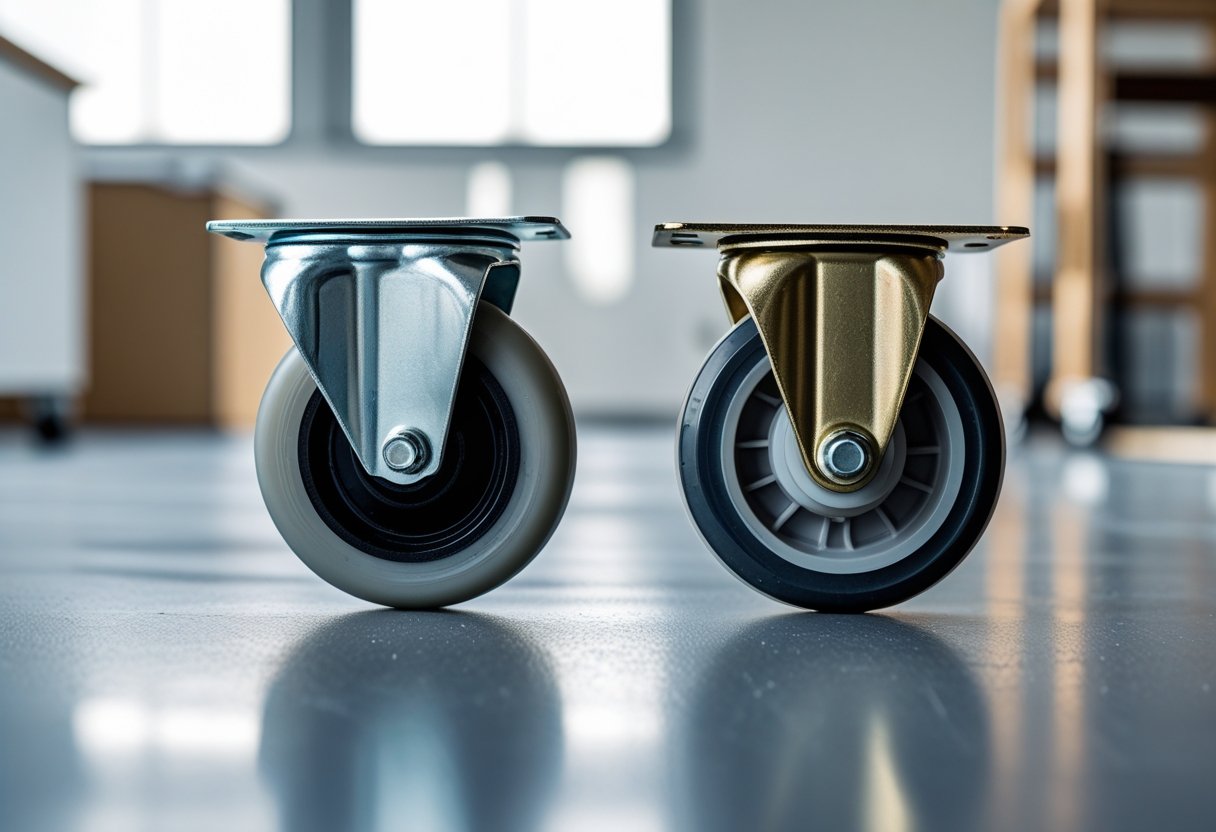
Honestly, it’s kind of wild how many people end up with chairs that either drag through the carpet or leave nasty scratches on hardwood, all because they picked the wrong casters. There’s a real difference between gliding around easily and constantly fighting your chair, and it all comes down to how those wheels interact with your floor.
Let’s dig into the key differences between soft and hard casters, see how they actually perform on different floors, and figure out which ones make your work life easier (and maybe your back a little happier too).
Soft Casters vs Hard Casters: Core Differences
The main difference between soft and hard casters is really about what they’re made of and how they behave under pressure. These differences affect how easily they roll, how much they protect your floors, and how much weight they can handle.
How Soft Casters Work
Soft casters are made from flexible stuff like rubber, thermoplastic rubber, or softer polyurethane. When you sit down, these materials squish a bit, which makes the wheel hug the floor more.
That squishiness helps soak up bumps and vibrations. Roll a soft caster over a rough patch, and the wheel will kind of mold itself to the surface, keeping contact even if the floor isn’t perfect.
What stands out about soft casters:
- Surface conformity: They adjust to little dips or bumps in the floor.
- Shock absorption: Less jarring when you move around.
- Extra grip: More friction, so your chair doesn’t roll away by itself.
They’re also just quieter. If you’re rolling around on hard floors, soft casters don’t make that annoying clatter you get from harder wheels.
How Hard Casters Work
Hard casters use rigid materials—think nylon, polypropylene, metal, or hard polyurethane. They don’t really flex when you put weight on them, so there’s just a tiny bit of the wheel touching the floor.
Because the wheels don’t squish, they transfer your movement straight to the floor. There’s less energy wasted, so they roll easier—especially on carpet.
Why people choose hard casters:
- Low rolling resistance: Takes less effort to get moving.
- High load capacity: Can hold more weight without bending or breaking.
- Durable: They stand up to a lot of use.
Their hard surface means you don’t lose any energy to wheel flex, which is great if you’re always moving your chair around on carpet.
Key Material and Design Contrasts
Material makes a huge difference in how these casters perform. Here’s a quick look at how they stack up:
| Aspect | Soft Casters | Hard Casters |
|---|---|---|
| Materials | Rubber, TPR, soft polyurethane | Nylon, metal, hard polyurethane |
| Floor protection | Excellent | Not so much |
| Rolling resistance | Higher | Lower |
| Noise level | Pretty quiet | Can be loud |
| Load capacity | Lower for same size | Higher for same size |
Design-wise, soft casters are usually a bit chunkier, with thicker treads for more cushion. Hard casters are slimmer—less material between you and the floor means less drag.
Manufacturing is different too. Soft casters need special blends to keep them flexible but tough, while hard casters are all about strength and resisting wear.
Performance on Different Floor Types
What really matters is your floor. Hard wheels are best on carpet, while soft casters are the go-to for hard floors if you want to avoid damage.
Carpeted Floors: Best Practices
Hard wheel casters just work better on carpet. They don’t sink into the fibers, so you’re not fighting the chair every time you move.
On low-pile carpet, hard casters roll pretty much effortlessly. They don’t get tangled or stuck.
High-pile carpet is trickier, but hard casters still do better than soft ones. The wheels squish the carpet down and keep you moving.
You’ll run into problems with soft casters on carpet:
- More resistance when you try to roll
- Wheels sinking into thick carpet
- Tougher to change direction
- They wear out faster
If you want your chair to roll smoothly on carpet, go with plastic or nylon hard wheels. They’re tough enough for the job and keep you moving easily.
Hard Floors: Choosing the Right Caster
Soft casters really shine on hard floors like hardwood, tile, or laminate. Their softer surface won’t scratch up your floors, and they’re way quieter than hard wheels.
If you use hard casters on hard floors, you’ll probably end up with scratches or dents. Not great if you care about your floors.
Some common soft caster materials:
- Polyurethane: Grippy and protective
- Rubber: Super quiet
- Thermoplastic: Cheaper, but still soft enough
Soft casters spread out the weight, so you don’t get dents or pressure points. They also roll quietly and smoothly, which is nice if you’re moving around a lot.
Mixed Environments and Chair Mats
Got more than one floor type? Chair mats are a simple fix—they give you a consistent surface no matter what’s underneath.
Why use a chair mat?
- Lets you use any caster type
- Shields your floors from damage
- Makes your casters last longer
- Smoother rolling, especially over seams
If you don’t want to mess with mats, dual-wheel casters (hard center, soft tread) can handle both carpet and hard floors decently. Rolling between carpet and hard floor? Chair mats help smooth out that transition, so you’re not suddenly stuck or sliding.
If you’re dealing with mixed flooring, hard casters plus a protective mat is a solid combo. You get good carpet performance and your hard floors stay safe.
Usability, Comfort, and Ergonomic Impact
Your caster choice isn’t just about the floor—it affects how you move, how noisy things get, and even how your body feels after a long day. Both types give you a different experience at your desk.
Mobility and Smooth Rolling Experience
Hard casters are perfect for carpet. They roll right over the fibers with barely any effort, even on thicker rugs.
Soft casters are best for hard floors. They glide easily and don’t scratch or damage the surface.
Rolling resistance is a big deal:
| Surface Type | Hard Casters | Soft Casters |
|---|---|---|
| Carpet | Low resistance | High resistance |
| Wood/Tile | Medium resistance | Very low resistance |
| Mixed surfaces | Can vary | Pretty consistent |
Hard casters can be a pain on smooth floors—they take more effort to start moving, which can get old if you’re shifting around a lot.
Soft casters keep things easy on hard surfaces. Less strain, less effort, just smooth rolling.
Noise, Stability, and Locking Casters
Noise is another thing to think about. Hard casters can be loud on hard floors—everyone in the office will know when you’re moving.
Soft casters are almost silent, which is great if you don’t want to be “that person” rolling around noisily.
Stability? Hard casters hold their spot on carpet, but can slide around on smooth floors. Soft casters grip better, so your chair stays put.
When it comes to locking casters, hard locks can be aggressive but might not hold well on slippery floors. Soft caster locks get a better grip, so your chair doesn’t drift when you lean or shift.
Ergonomics for Office Chair Users
If your casters don’t match your floor, you’re probably working harder than you need to. Hard casters on smooth floors make you push more, which can tire out your shoulders and core.
Soft casters cut down on the effort, so you’re not straining every time you move.
People end up twisting or shuffling awkwardly when their chair doesn’t roll right. The right casters help you move naturally and keep better posture.
Soft casters also cushion out little bumps, so you’re not getting jolted every time you shift. Hard casters pass those vibrations straight through, which can get uncomfortable after a while.
Choosing the Right Casters for Your Needs
Picking the right casters means thinking about how tough they are, what your chair and workspace need, and how you’ll keep them rolling smoothly. These choices can save your floors, your wallet, and maybe your back.
Assessing Caster Longevity and Durability
Weight capacity is a biggie. Go for casters that can handle at least 1.5 to 2 times your expected load. Better safe than sorry.
Hard casters usually carry more weight, thanks to their sturdy materials. They don’t bend or break easily.
Here’s a quick rundown:
| Caster Type | Expected Lifespan | Load Capacity |
|---|---|---|
| Hard Plastic | 3-5 years | Up to 250 lbs |
| Steel | 5-10 years | Up to 400 lbs |
| Polyurethane | 2-4 years | Up to 300 lbs |
| Rubber | 1-3 years | Up to 200 lbs |
Soft casters wear down faster, especially if you’re rolling on rough surfaces. Rubber and polyurethane can break down from friction and the environment.
Bearings matter too. Ball bearings last longer and roll smoother than sleeve bearings, plus they don’t need as much upkeep.
How to Match Casters to Your Chair and Workspace
Flooring is the main thing. Hard casters are for carpet—they won’t mess up your floor and they roll easily.
Soft casters are made for hardwood, tile, and laminate—they protect your floors and keep things quiet.
If you have:
- Low-pile carpet (under 0.25 inches): Either type is fine
- Medium-pile carpet (0.25-0.5 inches): Hard casters are better
- High-pile carpet (over 0.5 inches): Definitely go hard
Switching caster types can change your chair height by a quarter to half an inch, so keep that in mind if your desk setup is tight.
If you’re sensitive to noise, soft casters can cut rolling sounds by up to 80% on hard floors.
Mixed floors? Go for dual-wheel designs that can handle both without missing a beat.
Tips for Maintenance and Replacement
Regular cleaning really helps caster wheels last longer—probably more than most folks realize. It’s a good idea to clear out hair, threads, and all the random debris that gets tangled around the wheels and axles at least once a week. It’s not glamorous, but it does the trick.
Don’t forget about monthly lubrication for the bearings. A bit of light machine oil on the swivel parts and wheel bearings (just follow whatever the manufacturer suggests) keeps things rolling smoothly and avoids that annoying squeak.
There are a few clear signs when it’s time to swap out your chair casters:
- Flat spots on the wheels
- Excessive wobbling when you roll around
- More resistance than usual when moving
- Visible cracks in the wheel material
How often should you replace them? Honestly, it depends on how much you use your chair. If you’re sitting for 8+ hours a day, you’re probably looking at new casters every 2-3 years—doesn’t really matter what they’re made of.
When it’s time, stick with identical replacement casters. Mixing different types just makes your chair roll weirdly, and frankly, it can be a safety headache.
If you’re not sure about swapping them yourself, professional installation is worth considering. A bad fit can mess up your chair base or make it harder to move—nobody wants that in the middle of a workday.


