
 Support
 Sign In
 Cart
Cart


Picking out the right casters for your retail business can make a surprising difference in how smoothly things run, how customers feel about shopping, and even what you end up spending over time. Whether it’s shopping carts that need to glide effortlessly or display racks that get shuffled around every week, each retail setup comes with its own mobility headaches—and, honestly, not all casters are up to the task.
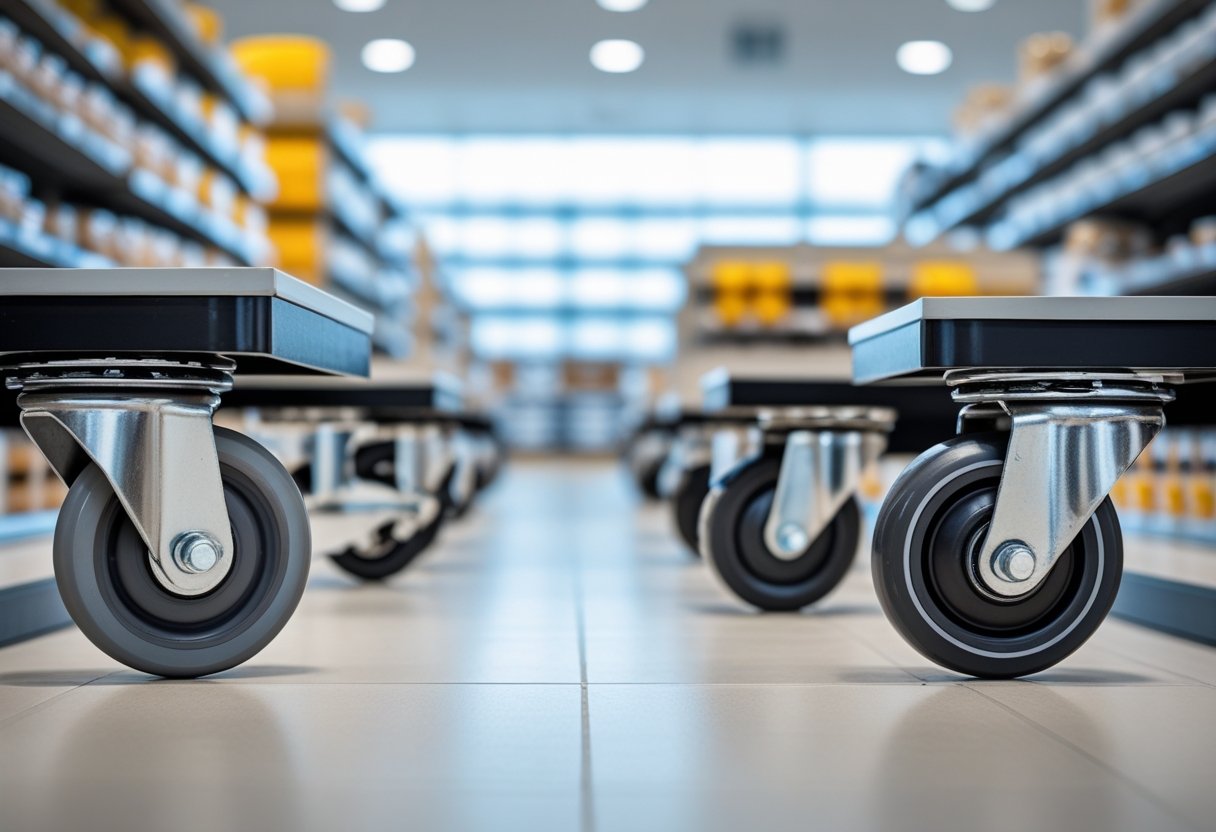
The trick to choosing optimal retail casters is matching wheel diameter, load rating, and material to your real-world needs—while also thinking about your floors, noise levels, and just how often you’ll be moving things around. With the retail caster market expected to hit $5.2 billion by 2033, more retailers are realizing that quality casters are a smart investment in both operations and customer happiness.
Let’s dig into the types of casters out there, how to size up your needs, and what to look for if you want your casters to last. We’ll cover everything from what to consider before buying to installation and maintenance tips that’ll help you get your money’s worth.
Understanding Retail Industry Casters
Retail casters are those unassuming little wheels that keep everything rolling—literally. They let you move equipment, displays, and inventory around the store, making day-to-day tasks way less of a hassle. If you think about it, they’re a behind-the-scenes player in everything from storage and restocking to the customer’s actual shopping trip.
Key Roles and Benefits in Retail Environments
Casters are more important than most people realize. They’re what make it possible to move heavy shelves, fixtures, and gear without breaking your back or scuffing up the floors.
Operational Benefits:
- Enhanced Efficiency: Casters make it way easier to move displays and inventory—no more awkward lifting
- Floor Protection: Good casters help keep your floors looking nice, avoiding scratches or gouges
- Noise Reduction: The right ones can keep things quiet, which is especially nice during business hours
Customer Experience Impact:
Ever struggled with a shopping cart that just won’t steer? Yeah, it’s annoying. Smooth-rolling casters make shopping less frustrating and more enjoyable.
Cost Management:
Quality casters don’t just save your team from sore backs—they also help your equipment last longer by keeping things stable and easy to move.
Types of Retail Casters
You’ll find different caster types in retail, each meant for specific jobs and weight limits.
| Caster Type | Primary Use | Key Features |
|---|---|---|
| Rigid Casters | Heavy displays, stationary equipment | Go straight, handle heavy loads |
| Swivel Casters | Shopping carts, mobile displays | 360-degree spin, easy to steer |
| Locking Casters | Cash registers, POS systems | Stay put when you need them to |
| Pneumatic Casters | Outdoor displays, bumpy surfaces | Absorb shocks, roll smoothly |
Material Considerations:
- Polyurethane: Quiet, gentle on hardwood, pretty versatile
- Rubber: Great for protecting floors, nice grip
- Nylon: Tough for heavier stuff, shrugs off chemicals
- Steel: Super durable, more for warehouse than sales floor
Load capacity is all over the map—light-duty casters might only handle 50-200 pounds, while heavy-duty ones can take on over 1,000 pounds.
Common Applications and Uses
Casters show up all over retail, and each use case has its own quirks.
Store Operations:
- Display fixtures: Shelving and racks that need to move for seasonal resets
- POP displays: Those point-of-purchase stands you see near checkouts
- Audio-visual equipment: Carts for presentations or in-store events
Inventory Management:
- Stock carts: Heavy-duty casters for moving product from the backroom
- Picking carts: Used in warehouses, need to be sturdy and roll smooth
- Business machines: Printers, scanners, and the like—mobility helps here, too
Customer-Facing Applications:
Shopping carts are the most obvious example. Their casters take a beating and need to handle all sorts of surfaces, from shiny tile to rough parking lots.
Specialized Uses:
Some carts are specifically built to protect delicate floors, while electronics carts need to keep expensive gear steady and safe when rolling around.
Selecting the Right Casters for Retail
Retailers need casters that look good, last long, and don’t wreck the floors. Load capacity and material matter a lot for both how well things move and how your store looks.
Assessing Load Capacity Requirements
Retail casters need to hold up everything from light displays to fully loaded carts. When figuring out what you need, don’t just look at the usual weight—think worst-case scenario.
Light duty casters are fine for racks and small fixtures (50-150 lbs per caster). Medium duty options step up to 150-400 lbs, good for carts and heavier stuff.
If you’ve got four casters, divide the total load by four, then tack on an extra 25-30% for safety. So, a 600-pound cart? Each caster should be rated for at least 200 lbs. If you’re moving things a lot, go higher on capacity—constant movement wears casters out faster. And if your load isn’t evenly balanced, add a little more wiggle room to your calculations.
Choosing the Appropriate Caster Material
Polyurethane wheels work well for most retail uses—they’re quiet, protect floors, and don’t pick up too much gunk, even with heavier loads.
Rubber wheels are super quiet and gentle on floors but can wear out faster if you’re hauling heavy stuff all day. They’re a good pick for stores with fancy flooring.
Nylon wheels are for heavy loads, but they’re noisy and can leave marks. Usually, you’ll only want them for the backroom or on concrete.
| Material | Load Capacity | Noise Level | Floor Protection |
|---|---|---|---|
| Polyurethane | High | Low | Excellent |
| Rubber | Medium | Very Low | Excellent |
| Nylon | Very High | High | Poor |
If you’re cleaning a lot, polyurethane’s your friend—it stands up to most retail cleaning chemicals.
Floor Protection and Surface Compatibility
Non-marking wheels are a must for polished floors—no one wants scuff marks everywhere. Always double-check that your wheels are actually non-marking.
Tread patterns matter more than you’d think. Smooth treads are good for clean, flat floors; textured ones help on slick or wet spots.
Wheel hardness is a trade-off: softer wheels protect your floors but might pick up more debris.
Ball bearing construction keeps rolling resistance down and helps avoid those annoying flat spots when displays sit in one place for too long.
If you’ve got carpet, go with bigger wheels—at least 4 inches for low-pile, 5 inches for medium-pile. Trust me, it makes a difference. Keeping floors safe isn’t just about the wheels—regular cleaning and maintenance help, too.
Mobility, Safety, and Specialized Features
Retail spaces need casters that roll easily, stay safe, and don’t make a racket. Whether you go swivel or rigid, need brakes, or want super-quiet options, your choices here affect both customers and staff.
Swivel Versus Rigid Casters
Swivel casters spin all the way around, which is perfect for carts and displays that need to zigzag through aisles. If you’ve got tight corners, these are the way to go.
Rigid casters only go forward and back—no turning. They’re stable and good for heavy, straight-moving displays.
Most retail setups do best with a mix: two swivels for steering, two rigids for stability. It’s a nice balance between control and maneuverability.
| Caster Type | Best Applications | Key Benefits |
|---|---|---|
| Swivel | Shopping carts, mobile displays | 360° movement, tight turns |
| Rigid | Heavy shelving, straight aisles | Stability, load support |
| Combination | Most retail equipment | Balanced mobility and control |
Brakes and Locking Mechanisms
Total lock brakes lock both the wheel and the swivel, so nothing moves—handy for ramps or when loading up.
Directional locks let the wheel roll but don’t let it swivel, so carts go straight.
Foot-activated brakes are easier on staff—no bending down. Just make sure the pedals are easy to see and reach.
Side brake levers are more manual but work fine for smaller equipment or shopping carts.
Whatever you pick, brakes need to work well on your floors and shouldn’t leave marks.
Noise Reduction and Maneuverability
Polyurethane wheels are a game-changer for noise—way quieter than hard plastic or metal. They soak up vibrations and roll smoothly over all sorts of floors.
Precision bearings help keep things quiet and rolling smooth—no annoying squeaks or grinding.
Wheel diameter plays a big role, too. Bigger wheels (4-6 inches) handle bumps better and make less noise.
Tread patterns can help with grip and sound. Smooth treads are quieter, textured ones are grippier on wet floors.
When it comes down to it, reducing noise in customer areas is a big deal. But you still need everything to move easily, so it’s a balancing act.
Installation, Maintenance, and Longevity
Getting your retail industry casters installed right and keeping them in good shape really pays off. If you follow the manufacturer’s instructions and do a bit of regular upkeep, you’ll get more life out of your casters and avoid annoying breakdowns.
Mounting Methods and Compatibility
There are two main ways to mount casters: stem-mounted and plate-mounted. Stem casters push into a hole, which works for displays with less room. Plate casters bolt onto flat surfaces.
Always measure before you buy! Check the clearance, bolt patterns, and how the weight will be spread out. Most retail displays use standard 3/8-inch or 1/2-inch stems.
A few quick reminders:
- Make sure the weight capacity is up to the task
- Double-check that there’s enough clearance for the wheels to spin
- Use the right torque for bolts on plate casters
- Test all swivels and locks after you’re done
Mixing and matching mounting styles or weight ratings can mess with stability, so stick with the same kind of caster across each unit.
Routine Maintenance Tips
A little maintenance goes a long way. Clean out debris that gets wound around the axles, and check the wheels weekly if they move a lot (monthly is fine for displays that stay put).
What to do:
- Pull out hair, string, and other gunk from the wheels
- Wipe wheels down with cleaners that won’t mess up your floors
- Oil the bearings every few months
- Make sure brakes still work as they should
Stores with heavy foot traffic might need to do this more often. Keep an eye out for loose bolts, worn treads, or busted brakes. If you’ve got non-marking wheels, go easy on the cleaning—nothing abrasive, or you’ll ruin the finish and risk marking up your floors.
Maximizing Durability and Safe Operation
If you want casters to survive the chaos of retail, it’s all about picking the right ones—and actually taking care of them. We spend a lot of time matching wheel materials to the floor (because, let’s be honest, not all floors are created equal) and thinking about how much traffic they’ll see. That’s how you get the most out of them.
Durability Factors:
- Go for weight ratings that leave you a 25% safety margin—don’t cut it too close
- Pick wheels that won’t chew up your floors (or get chewed up by them)
- At least two locking casters per display—trust me, you’ll regret skipping this
- Swap out worn parts before they’re totally toast
Regular load distribution checks are a must. If you let things get lopsided, some casters end up carrying way too much and wear out way faster, while others are just along for the ride. The environment’s a big deal, too. High humidity? You’ll probably need stainless steel. If the temperature’s all over the place, wheel compounds can stiffen up or get too soft. We keep an eye on these factors and tweak our maintenance schedules as needed—no point pretending one size fits all.
If you hear strange noises, feel resistance, or the whole thing just seems wobbly, don’t wait around. Damaged casters should be swapped out right away to steer clear of accidents and keep your displays from collapsing at the worst possible moment.


