
 Support
 Sign In
 Cart
Cart


Let’s be honest—lugging heavy boxes or awkward equipment by hand is a recipe for sore backs and wasted time. Hand trucks are the bread and butter of material handling, letting you move serious weight—think anywhere from a few hundred pounds up past 1,000—without breaking a sweat. Whether you’re running a warehouse, doing last-mile delivery, or just shifting stuff around the garage, a well-built hand truck is going to make your life a whole lot easier.
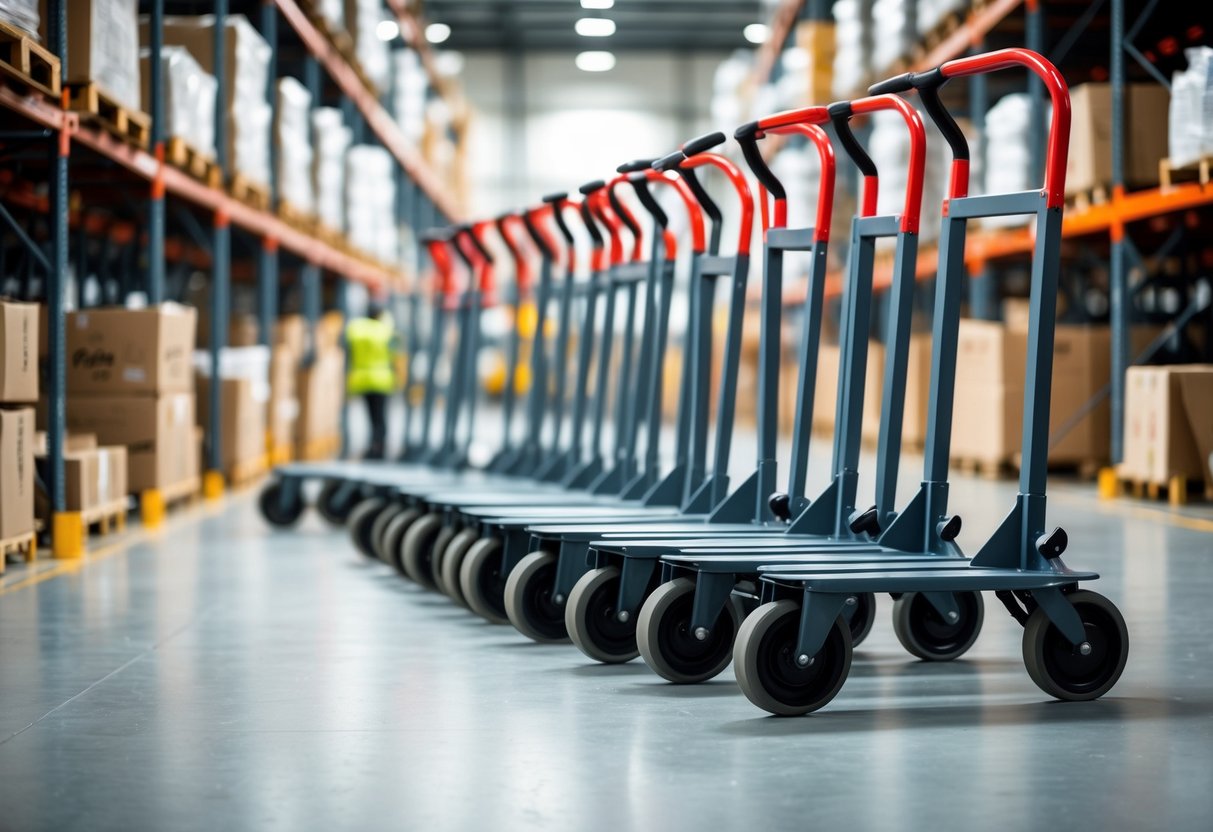
If you’re trying to wrap your head around hand trucks, this guide should help. We’ll dig into different models, compare them with other gear, and talk about what really matters when you’re picking one out—whether for a warehouse floor or the back of a delivery van.
There are a ton of options out there, from convertible units that flip between two and four wheels to hand trucks made for moving appliances. We’ll highlight the features that actually make a difference, the add-ons that are worth your money, and a few shop-floor tips for keeping your trucks rolling smoothly.
What Is a Hand Truck?
At its core, a hand truck is an L-shaped material handling workhorse—handles up top, two wheels at the bottom, and a toe plate (that little shelf) to slide under whatever you need to haul. The design works like a lever, shifting the heavy lifting onto the wheels so your back doesn’t have to do all the work.
Definition and Primary Uses
You’ve got a vertical frame, handles on top, wheels on the bottom, and a toe plate sticking out at a right angle. Just tip the hand truck forward, slide the plate under your load, and tilt it back—the weight balances over the wheels, and you’re good to go.
You’ll see hand trucks everywhere—warehouses, delivery trucks, even at home when you’re moving that old fridge. Warehouse crews use them to shift boxes between racks and docks; delivery drivers wheel in cases of drinks or supplies; homeowners rely on them for moving day or just getting a new washer into the basement.
The basic concept goes way back—dock workers in the 1700s, unable to heft big sacks of spices, came up with the first hand trucks to level the playing field. Over time, brewers, movers, and just about every industry that hauls heavy stuff have made hand trucks a must-have.
Comparison to Carts and Dollies
People toss around “hand truck,” “dolly,” and “cart” like they’re the same thing, but there are real differences. A classic hand truck is that upright, L-shaped two-wheeler. Dollies usually have four wheels and a flat platform—no handles sticking up. Carts? Four wheels too, but with a bigger deck for bulkier or multiple loads.
Quick breakdown:
- Hand trucks: Two wheels, vertical frame, best for tall or stacked loads
- Carts: Four wheels, flat deck, for wider or awkward items
- Dollies: Depends on who you ask—sometimes means either of the above
In the UK, you’ll hear “sack truck” or “sack barrow.” Some folks call them “two-wheelers,” “box carts,” or even “trundlers” depending on where you are.
Role in Material Handling
Hand trucks are the unsung heroes of the shop floor. They cut down on injuries and speed up the workflow, letting one person haul loads that would otherwise need a team or a powered lift.
In logistics, it’s all about speed and safety. Porters at stations, skycaps at airports—they’re using hand trucks to keep things moving. Any decent warehouse will have a few different types on hand, since not every load is created equal.
You’ll find hand trucks made of steel tube, aluminum, sometimes even heavy-duty plastics. In beverage delivery, extruded aluminum rails with cast magnesium or aluminum parts are popular—they’re tough but light enough to toss in and out of a truck all day.
Types of Hand Trucks
Hand trucks aren’t one-size-fits-all. You’ve got your basic models for everyday hauling, convertibles that handle different jobs, and specialized versions for appliances or other big-ticket items.
Standard Hand Trucks
This is your go-to: L-shaped frame, two wheels, small platform at the bottom. Steel and aluminum are the main choices. Steel is the tank—great for rough use in warehouses and on delivery routes. We usually suggest unpainted steel if you’re dealing with a lot of bumps and scrapes. Aluminum? It’s lighter, so if you’re moving the truck itself a lot, it’s easier on your arms.
Handles come in dual-grip (need both hands) or loop style (can push with one, handy if you need to open a door). Most standard hand trucks are rated for 400–800 pounds, depending on the build.
Convertible Hand Trucks
Convertible hand trucks are the Swiss Army knives of the material handling world. They switch from upright two-wheelers to four-wheel platform carts with a quick adjustment—usually a latch or pin system.
In platform mode, you get more space and four points of contact, which is perfect for bigger or awkward loads that won’t stack. Flip it back to two wheels and you can snake through tight aisles.
They run a bit pricier than standard models, but if your operation handles a mix of loads, it’s money well spent. Retail backrooms, moving companies, and shops with lots of different hauling needs love these.
Appliance Hand Trucks
When you’re moving refrigerators, washers, or commercial ovens, a standard hand truck just won’t cut it. Appliance hand trucks are built with reinforced frames, wide bases, and higher load ratings—usually 800 to 1,200 pounds.
A lot of them have stair-climbing wheels or rails, so you’re not stuck at the bottom of a staircase. Straps keep appliances from shifting or tipping, and the toe plate is longer to handle deep loads.
Some models have curved backs for rounded appliances, extra height for tall fridges, and rubber bumpers to protect finishes. If you’re in appliance delivery, HVAC, or property maintenance, you probably already know these are non-negotiable.
Other Common Material Handling Equipment
Hand trucks are great for moving stuff upright, but sometimes you need something different. That’s where platform trucks, pallet jacks, and service carts come in.
Platform Trucks
Platform trucks are basically rolling tables—flat surface, four wheels, and a handle or two for pushing. They’re ideal for furniture, appliances, or anything too big or weirdly shaped for a hand truck.
Decks come in wood, steel, or plastic. You’ll see weight ratings from 400 pounds (for the lighter plastic ones) up to 2,000+ for the heavy-duty steel models.
Typical features:
- Non-slip decks
- Rubber or poly wheels for smoother rolling
- Handles that fold down for storage
- Sizes from 18×24 inches up to 30×60
We use these a lot in retail, manufacturing, and delivery—anywhere you need to move big or flat loads without stacking.
Pallet Jacks
If you deal with pallets, you need a pallet jack. These slide under a standard pallet, use a hydraulic pump to lift it a few inches, and then you just wheel the whole thing wherever it needs to go.
A basic pallet jack has two forks, a pump handle, and wheels. Most are rated for up to 5,500 pounds. You pump the handle, raise the load, and pull or push.
Manual models are everywhere, but there are electrics for heavier or longer hauls. They’re simple, don’t need much maintenance, and are a staple in any warehouse.
Service Carts
Service carts are like mobile workbenches—shelves, bins, or compartments to keep your tools and parts organized as you move around. Great for maintenance, hospitals, restaurants, or any place where you need stuff at your fingertips.
You’ll find them with two to four shelves, raised edges so things don’t slide off, and sometimes drawers or bins for small parts.
Common types:
- Utility carts (open shelves)
- Bin carts (divided compartments)
- Tool carts (drawers, holders)
- Tub carts (deep bins)
They’re a simple way to keep your workflow moving and your gear sorted.
Choosing the Right Hand Truck
Picking the right hand truck isn’t just about price—you’ve got to think about what you’re hauling, how often, and where. The wrong choice can be a pain (literally and figuratively).
Load Capacity and Intended Use
Every hand truck has a weight rating, usually 300 to 1,000+ pounds. Match this to your heaviest regular load, not just your average. If you’re mostly moving boxes, a standard upright will do. For appliances or heavy machinery, go for a reinforced appliance model. If you’re moving all sorts of stuff, a convertible might be worth the investment.
It’s smart to buy with a bit of headroom—better to have more capacity than you need than to push your gear to the limit every day.
Material and Frame Construction
Steel frames are the tanks—heavy but tough enough for daily abuse. If you’re in a rough-and-tumble warehouse, steel is hard to beat.
Aluminum is lighter, so if you’re loading the truck in and out of vehicles or carrying it up stairs, you’ll appreciate the weight savings. It’s still durable, just not quite as bulletproof as steel.
Material breakdown:
| Material | Weight | Durability | Best For |
|---|---|---|---|
| Steel | Heavy | Excellent | High-traffic commercial, heavy loads |
| Aluminum | Light | Good | Lighter loads, on-the-go use |
Powder-coated steel or anodized aluminum will help prevent rust if you’re working outside or in humid spots. Definitely worth looking for if you deal with moisture.
Wheel Types and Maneuverability
Pneumatic (air-filled) wheels are great for rough or outdoor terrain—they soak up bumps but need the occasional air check or patch.
Solid rubber wheels are basically maintenance-free and work well on smooth floors. They’re less likely to get punctured. Foam-filled wheels are a nice middle ground—some cushion, no flats.
Bigger wheels make it easier to roll over thresholds or debris, and if you’re dealing with stairs, look for stair-climbing wheels or tracks.
Safety Features and Ergonomics
Handle design really matters, especially if you’re using the truck all day. Loop handles or dual grips give better leverage and control than a single bar.
Adjustable handles are a plus—nobody wants to stoop or stretch awkwardly. Padded grips help too, especially on bigger jobs.
Toe plates (or nose plates) should be long enough to fully support your load. Some models come with straps or retention bars—great for keeping appliances or tall items from tipping. Wheel guards or fenders are a small touch but can save your feet (and your pants) from getting caught up.
Essential Accessories and Supplies
Hand trucks really shine when you pair them with the right packing materials—they’re not just for keeping things tidy, but actually help protect your load and keep it steady on the move. Boxes are the backbone for loose items, and, honestly, foam and tape are the unsung heroes when it comes to keeping everything locked down.
Boxes and Moving Supplies
If you ask us, sturdy corrugated boxes are a must, and they need to match the weight rating of your hand truck. You’ve got your standard sizes—small (1.5 cubic feet), medium (3 cubic feet), and the big guys at 4.5 cubic feet. Small boxes are just right for dense stuff like books or hardware, while those bigger boxes? Save them for lighter, bulkier goods—think linens, lampshades, maybe a pile of packing peanuts.
Double-wall dish pack boxes are worth it for fragile items, especially when you’re rolling over uneven floors or up a ramp. We’ve noticed that using boxes of the same size makes stacking on the nose plate way easier, and you don’t get that annoying shifting mid-haul.
Plastic totes are a solid alternative if you’re tired of cardboard. They’re reusable, they laugh in the face of a warehouse spill, and they hold their shape even when they’re not packed to the brim. For folks moving stuff around all day, every day, totes just make life simpler.
Protective Materials: Foam and Tape
Foam padding is your best friend for keeping scuffs and dings at bay. We’re big fans of foam corners on furniture, and foam sheets between boxes soak up the bumps that happen no matter how careful you are. Foam wrap is flexible—it hugs weird shapes better than bubble wrap, and you don’t get those awkward air bubbles that make things shift.
Packing tape isn’t just about closing boxes; it’s about reinforcing them for the real world. We tape in an H-pattern—center seam, both edges—top and bottom. If you’re using anything lighter than 1.9 mil tape, you’re asking for trouble. The right tape holds up against the rattling and jostling that comes with moving loads on casters.
Stretch wrap is a bit of a game changer when you’re moving a stack. Bundle those boxes together and suddenly you’ve got one solid unit that won’t slide around, even when you’re squeezing through tight corners or over a threshold that’s seen better days.
Maintenance and Safety Tips
Keeping your hand trucks rolling smoothly isn’t rocket science, but it does take a little discipline—daily checks, smart storage, and knowing your limits on the shop floor.
Regular Inspections and Repairs
Before every shift, give your hand truck a once-over. Look for cracks or bends in the frame—anything that could mess with your load rating. Wheels need love too: check for proper inflation, uneven wear, and make sure there’s still tread left.
Don’t forget the hardware. Axles, bolts, fasteners—grab a wrench and make sure nothing’s working itself loose. If your model’s got hand brakes or other safety bits, test them. If something’s worn out or busted, swap it out before you get rolling. Better safe than explaining to the boss why a load ended up on the floor.
It’s worth keeping a log of inspections and repairs. That way, you can spot patterns before they become headaches. Hit moving parts with the recommended lubricant now and then. If you spot damage to the crossbars, verticals, or the base plate, don’t risk it—tag it out and get it fixed.
Proper Storage Practices
Hand trucks belong in their own spot, not blocking aisles or cluttering up high-traffic zones. We stash ours in dry, covered spaces so rust doesn’t get a foothold.
Stand them up or hang them on a wall bracket—saves space and keeps them from warping. Extreme temps, moisture, or a chemical spill can really do a number on the finish and reliability. We try to keep the most-used trucks up front, so you’re not digging through a pile to get what you need.
After a long day, a quick wipe-down goes a long way. Dirt and grime will eat away at your gear if you let it. Keep them clean, and your casters (and everything else) will thank you next time you need to move a load.
Safe Lifting and Moving Techniques
Whenever possible, we push hand trucks instead of pulling—it’s just easier to see where you’re going, and honestly, your shoulders will thank you in the long run. Before we even start moving anything, we take a minute to size up the route: checking for random cords, bumpy patches, or anything else that could trip us up.
We never push our luck with load ratings; sticking to the manufacturer’s specs is non-negotiable. Overloading? That’s a shortcut to busted casters and, frankly, a mess no one wants to deal with. Heaviest stuff always goes on the bottom—keeps the center of gravity low and helps avoid those awkward tip-overs. And if something can shift, it probably will, so we make sure everything’s strapped down tight before rolling out.
If stairs are in play, we break out stair-climbing hand trucks—no contest. Tilting the load back onto the handles puts the weight right over the wheels, which just works better. We keep a steady grip and don’t rush things; better to get it right the first time than risk a spill. Safe material handling is kind of our thing.


