
 Support
 Sign In
 Cart
Cart


Pallet jacks are pretty much the backbone of material handling in warehouses, retail stores, and industrial spaces. As caster manufacturers, we see firsthand how these tools—ranging from basic manual models to high-capacity electric units—keep everything rolling. Load capacities? They run the gamut, from 2,200 up to a hefty 17,000 pounds. If you’re running a small backroom or a sprawling distribution center, knowing your way around pallet jacks is crucial for picking the right workhorse for the job.
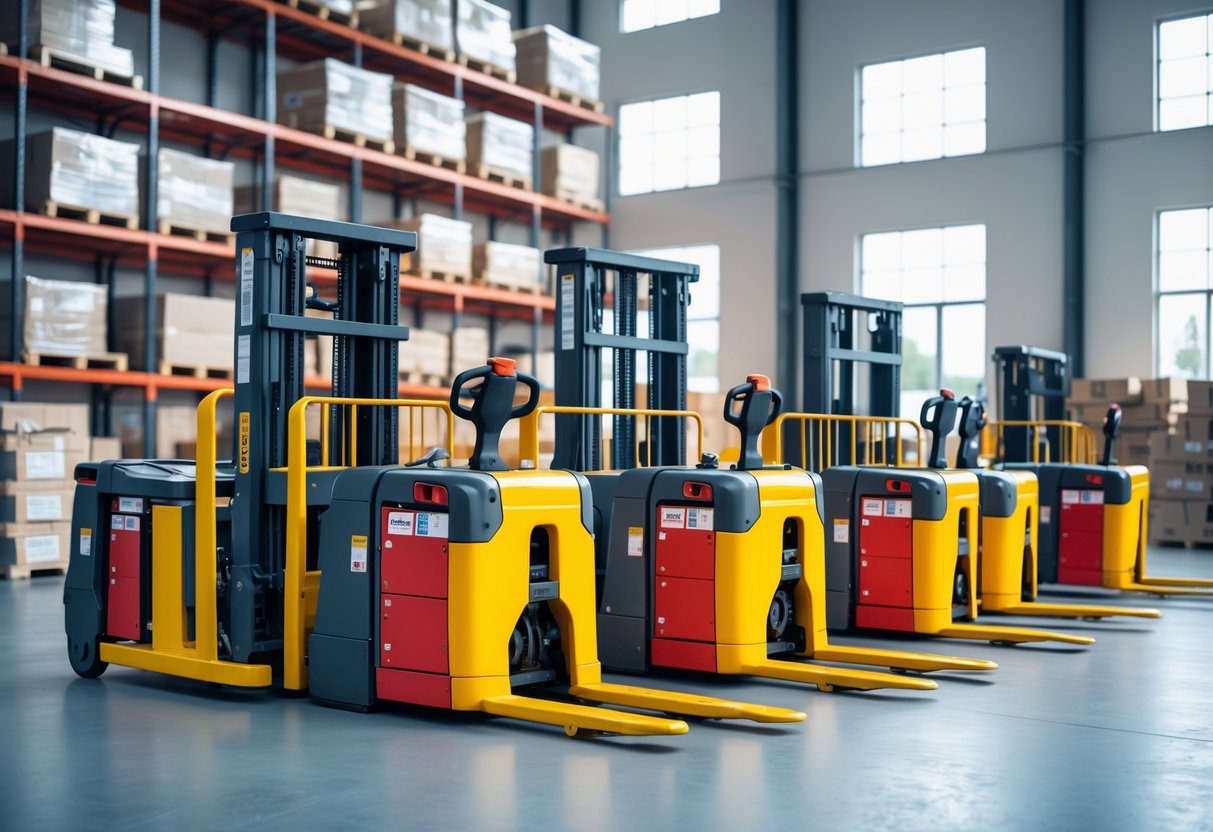
Honestly, picking out a pallet jack comes down to a mix of load capacity, where you’ll use it, how often, and, let’s be real, what you want to spend. Manual jacks are great for lighter, less frequent jobs, while electric models shine in busy operations where you’re moving stuff non-stop. You’ll see all the big names—Toyota, Crown, Hyster, Yale—offering options for every scenario.
We’ll break down how these things work, what sets the different types apart, and some features you’ll want to keep an eye out for. You’ll also get a sense of what you should expect to pay and a few tips that come from years of moving heavy stuff around.
What Are Pallet Jacks?
Pallet jacks are wheeled tools built for lifting and rolling palletized loads over short distances—think warehouse aisles, retail backrooms, or the shop floor. They use either a simple hydraulic pump or an electric mechanism to get the load just high enough to clear the ground.
Definition and Core Functions
You’ll hear them called pallet trucks or pump trucks, but it’s all the same idea: two forks that slip under a pallet. We use these every day to move heavy stuff without needing a forklift or any fancy training.
Operation’s pretty straightforward—slide the forks under, hit the lifting mechanism (it’s a hand pump on manual models, or a powered lift on electrics), and up goes the load—usually about 3 to 8 inches off the ground.
Main components:
- Steel forks to carry the load
- Casters and load wheels for rolling
- Hydraulic or electric lifting system
- Handle for steering and control
Most jacks handle between 3,000 and 8,000 pounds, depending on the model. Their compact footprint lets you snake through tight aisles—places a forklift just can’t go.
Pallet Jacks vs. Forklifts
Both move palletized goods, but they’re not interchangeable. Pallet jacks are the basic, ground-level solution for moving stuff horizontally. Forklifts, on the other hand, are for stacking and reaching higher shelves—they need trained operators, cost a lot more, and take up more space.
We reach for pallet jacks in tight spots or when we want something simple and quiet. They’re maintenance-light and, at least for manual models, emission-free. Forklifts are great if you need vertical lift or are moving heavy loads across longer distances, but they’re overkill for a lot of day-to-day warehouse jobs.
Material Handling Applications
In our line of work, pallet jacks are everywhere—moving inventory from the receiving dock to storage, prepping orders for delivery, or restocking shelves in retail. Manufacturing uses them to shuttle raw materials and finished goods between stations, and you’ll even spot all-terrain versions on construction sites.
Typical jobs include unloading trucks, organizing storage, and handling inventory counts. They save workers’ backs and speed up repetitive moving tasks. We’ve seen operations grind to a halt when a pallet jack goes down—so yeah, they’re that important.
Types of Pallet Jacks
Pallet jacks generally fall into three buckets: manual, powered, and walkie. Manual models rely on muscle, powered ones have electric motors, and walkies let you walk alongside while steering.
Manual Pallet Jacks
Manual pallet jacks are just about everywhere. Operators pump a hydraulic jack handle to raise the forks, then muscle the load to its destination.
Standard manual jacks usually lift 4,000 to 5,500 pounds, with forks around 48 inches—perfect for standard pallets. You’ll find these in grocery stores, smaller warehouses, and loading docks.
Their biggest selling point? Low price and almost no maintenance (maybe a shot of grease now and then). No batteries, no chargers. Just keep in mind, if you’re moving heavy stuff all day, your team will feel it.
Powered Pallet Jacks
Powered pallet jacks are a game changer for busy operations. With electric motors and rechargeable batteries, operators can move big loads with a flick of the wrist—no more sweating through your shirt.
We see these in places where pallets are flying around all day. They handle up to 8,000 pounds or more, depending on the model. The operator walks behind, steering with a throttle on the handle.
Batteries usually last 4 to 8 hours per charge. Upfront, they cost more than manuals, and you’ll need a spot to charge them. Maintenance is higher too—think battery care and the occasional motor check.
Walkie Pallet Jack
A walkie pallet jack is just a powered pallet jack where the operator walks behind or alongside—no riding platforms here. The walkie design keeps things compact, which is a lifesaver in cramped aisles.
Operators have a clear view, can step off to adjust loads, and can weave around obstacles. Most walkies come with variable speed and auto-braking—safety first.
You’ll get speeds around 3 to 4 mph when loaded. We like them for jobs with moderate distances and lots of stopping and starting.
Key Uses for Pallet Jacks
Pallet jacks really come into their own when you’re moving palletized goods short to medium distances. Their flexibility makes them a must-have for order fulfillment, loading docks, and anywhere quick maneuvering is a priority.
Low-Level Order Picking
For ground-level order picking, pallet jacks are pretty much unbeatable. You can position the jack right under a pallet, lift it just enough to clear the floor, and roll it wherever it needs to go.
This is especially handy when products are stored on the warehouse floor or the bottom rack. No need to climb or mess with complicated gear. Their maneuverability is a big plus in narrow aisles.
In retail and small warehouses, we use them to pull partial pallets for shelf restocking. They’re great for mixed SKU pallets too—move just what you need, no need to reorganize the whole storage area.
Dock Work
When it comes to loading and unloading trucks, pallet jacks are the go-to. They bridge the gap between truck beds and warehouse floors, moving goods fast and efficiently.
On the receiving dock, you can quickly pull shipments off trucks and onto the floor. The low forks slide right under pallets in trailers, and the hydraulic pump gives you enough lift to clear dock plates and ramps. This keeps things moving, especially during busy periods.
For shipping, pallet jacks help stage orders near dock doors before loading. It’s easy to organize outgoing shipments by route or priority, and you won’t clog up your dock.
Transport and Delivery
Pallet jacks aren’t just for inside the warehouse. Delivery drivers use them to move goods from trucks to customer sites—especially in cities where forklifts are a no-go.
We often see compact pallet jacks on delivery trucks for curbside drops. They’re perfect for beverages, packaged food, and anything heavy that needs to be moved by one person. This is a lifesaver for retail deliveries, restaurant supply, and last-mile logistics.
They’re also handy for cross-docking—moving goods straight from one truck to another without stopping in storage. Pallet jacks make these transfers quick and painless.
Features and Specifications
When you’re picking a pallet jack, specs matter. Load capacity, fork size, wheel design, and controls can make or break your workflow. Here’s what we look for as folks who spend a lot of time around casters and material handling gear.
Load Capacity and Lift Height
Load capacity is the max weight your jack can handle. Manual models usually cover 2,200–6,000 lbs, while electric jacks can go up to 17,000 lbs for the tough jobs. Always check your heaviest loads before settling on a rating.
Lift height is another key factor. Most jacks just lift enough (1–8 inches) for basic transport, but high-lift models can hit 47 inches—handy if you’re stacking or loading onto raised surfaces. Electric walkie stackers can go even higher, up to 80 inches for racking.
Worth noting: the higher you lift, the less weight you can handle. Make sure your jack can still manage your typical loads at its highest lift.
Fork Dimensions and Wheels
Fork length and width determine what pallets you can handle. Standard forks run 42–48 inches, widths from 20.5 to 27 inches. Some models have adjustable forks—nice if you’re dealing with oddball pallet sizes.
Wheels are a big deal for performance. Polyurethane or rubber wheels are best for smooth warehouse floors, while pneumatic tires grip better outdoors or on rough ground. Load wheels sit at the fork tips and carry the weight; steer wheels at the handle do the turning.
Turning radius can range from 52 to 100 inches, depending on fork length and wheel setup. If you’ve got tight aisles, go for a smaller turning radius.
Operator Controls and Safety
On electric jacks, you’ll find handle-mounted controls for speed, lift, and lowering—super convenient. Ergonomic tiller handles cut down on fatigue, which your team will appreciate. Some models even let you program performance settings for different operators.
Safety’s not just a buzzword—deadman switches stop movement if you let go, and load backrests keep cargo from sliding back. Many electrics have IP65-rated electricals, so dust and water aren’t a problem.
You’ll also see built-in fork scales on some models, which is a time-saver for weighing loads on the fly. Service indicators are nice too—they’ll let you know when it’s time for a tune-up before anything major breaks.
Selecting the Right Pallet Jack
Honestly, picking the right pallet jack isn’t rocket science, but it does take some thought. Match the jack to your loads, space, and how much you’ll use it. Think through your applications, compare a few options, and focus on features that’ll keep your crew comfortable and productive. If you’re not sure, we’re always happy to talk casters and help you figure out what’ll roll best in your operation.
Matching Pallet Jacks to Applications
First things first: we always calculate our maximum load weight and tack on a 20-30% safety margin. If we’re regularly shifting 1,800 kg, it just makes sense to spec a 2,500 kg jack. Why risk premature wear or, worse, a dropped load?
Fork dimensions get overlooked, but honestly, they’re critical. Standard forks—about 685 mm wide and 1,150 mm long—fit Euro and CHEP pallets. If you’re wrangling half-pallets or display units, you’ll want shorter (900 mm) or narrower (520 mm) forks. Nothing’s more frustrating than fighting with a jack that just won’t fit.
Manual pallet jacks are best for short hauls—think under 30 meters—and light-to-moderate daily cycles. No batteries, no fuss, just keep the grease points happy. When you’re moving loads all day or covering big warehouse distances, powered pallet jacks are a game-changer.
A walkie pallet jack lets operators skip the back pain—no more pushing or yanking, especially on smooth floors. If your facility has ramps, dock plates, or less-than-perfect surfaces, look for tandem load rollers. They bridge gaps and bumps way better than single rollers ever could.
Comparing Models and Brands
We’re always weighing pallet jacks on four specs that matter:
| Feature | What to Verify |
|---|---|
| Load capacity | Rated capacity (with that safety margin) |
| Fork size | Will it handle every pallet in your mix? |
| Lift height | 100-200 mm covers most cases; high-lift for ergonomic picking |
| Wheel material | Polyurethane for indoor; nylon if you need rugged durability |
The best brands? They’ve got local service, and you can actually get parts when things break. A bargain jack with no support will cost you more in downtime than you’d think.
Battery type’s a big deal for powered units. Lithium batteries? They’re fast to charge, zero maintenance, but cost more. Lead-acid saves cash upfront but you’ll be topping off water and babying them with equalization charges.
Ergonomics and Efficiency
Handles are more important than people think. Ergonomic designs with controlled descent valves save wrists and prevent those “uh-oh” drops. We want handles at a height that doesn’t force operators to stoop or overreach—little things, but they add up over a shift.
Polyurethane wheels? They cut rolling resistance by about 30% compared to nylon. Less muscle, less fatigue, and they’re way quieter on polished concrete. That’s a win for both operators and anyone nearby.
With powered jacks, we check that controls are intuitive and ambidextrous—nobody likes hunting for buttons. Creep or turtle modes let you nudge into tight racks without overshooting. Auto speed reduction in corners? That’s a must if you want to avoid tip-overs.
Low-profile forks and compact battery boxes make it easier to see the load and what’s around you. We always measure our narrowest aisle pinch points (not just the main run) to make sure the turning radius won’t leave us stuck.
Pricing and Purchase Considerations
Talking price, it’s not just about sticker shock. You’ve got to look at build quality, what you actually need the jack to do, and how it’ll hold up over time. A cheap jack isn’t much of a deal if it’s out of commission half the year.
Factors Influencing Price
Manual pallet jacks usually run $250 to $600 for standard models. If you want corrosion resistance or built-in scales, you’re looking at $1,500 or more. Electric models are a different league—$2,000 to $10,000, depending on the bells and whistles.
Material composition drives the price. Budget units use thin steel and basic welds—fine for light, occasional use. Heavier-duty models have reinforced frames, cast hydraulic pumps, and better wheels. If you’re running a busy warehouse, that difference matters.
Capacity ratings bump up the cost. Most operations stick with 2,000-2,500 kg, but heavier models need beefier frames and hydraulics. Wheel type is another factor—nylon is cheap, but polyurethane or pneumatic wheels add cost and performance, especially if you’re worried about floor damage or rough terrain.
For electric models, battery technology is a big price driver. Lead-acid is cheaper, but you’ll be maintaining them. Lithium-ion costs $1,000-$3,000 more, but you get faster charging, longer life, and no maintenance headaches.
Where to Buy Pallet Jacks
You’ve got options. Industrial equipment dealers know their stuff and usually have stock you can actually see before buying. They’ll set you up with service contracts and parts—pretty valuable if you can’t afford downtime.
Online marketplaces and direct manufacturer sites can save you some money, but you’re on your own for specs and support. And don’t forget, shipping heavy gear isn’t cheap—figure another $100-$300.
Used equipment dealers can be a goldmine if you’re careful. Manual jacks can go for 40-60% off retail. Just check for hydraulic leaks, frame cracks, and wheel condition. For electrics, battery health is everything—replacements can run $800-$2,500.
Rental programs work if you only need a jack now and then. Weekly rates of $75-$150 sound good, but if you’re renting month after month, you’ll pay more than just buying outright.
Cost vs. Value Analysis
Chasing the lowest sticker price? Honestly, it almost never pays off in the long run. In our industry, what you really want to look at is the total cost of ownership—spread out over the equipment’s actual lifespan. For a solid manual jack, you’re usually talking 5 to 10 years if you’re not beating it up; with electric models, 3 to 7 years is about right, give or take.
Let’s say you grab a $300 manual jack, but it’s back in the shop twice a year at $75 a pop. That’s $1,050 over five years—kind of sneaks up on you, doesn’t it? Now, compare that to a $550 jack with better welds, bushings, and bearings that barely needs any attention. That upfront cost starts to look like a bargain, especially when you factor in less downtime and fewer headaches for your team. For electrics, you’ve got to think about charging cycles, battery swaps, and the ongoing maintenance bill—nobody likes a surprise when the battery dies mid-shift.
If you’re running a busy operation, productivity gains can absolutely tip the scales. Say an electric jack lets one operator move 30% more pallets every shift. That’s not just a nice-to-have; it’s real labor savings. A $4,500 electric jack could save you $1,200 a year on wages alone, and it’ll pay for itself in less than four years. Not bad, right?
And then there’s safety and ergonomics—can’t ignore those. Manual jacks are already a big step up from lugging loads by hand, but electrics go even further to cut down on repetitive strain. Fewer injuries means fewer workers’ comp claims, which, trust me, can get expensive fast. Injury prevention isn’t just good for your crew—it’s a line item on your bottom line.
At the end of the day, it’s about matching the right caster or jack to your actual needs. No sense in dropping $1,200 on a stainless steel jack for a basic warehouse when a $400 unit does the job just fine. But in a food processing plant? That stainless is worth every penny. It’s all about fit-for-purpose, not just price tags.


