
 Support
 Sign In
 Cart
Cart


Ladders are everyday essentials that let us reach those out-of-the-way spots—whether it’s swapping out a light bulb, cleaning out gutters, slapping a fresh coat of paint on the walls, or just grabbing something from overhead storage. Picking the right ladder for the job isn’t just about convenience; it’s about keeping yourself safe and getting the work done without a hitch.
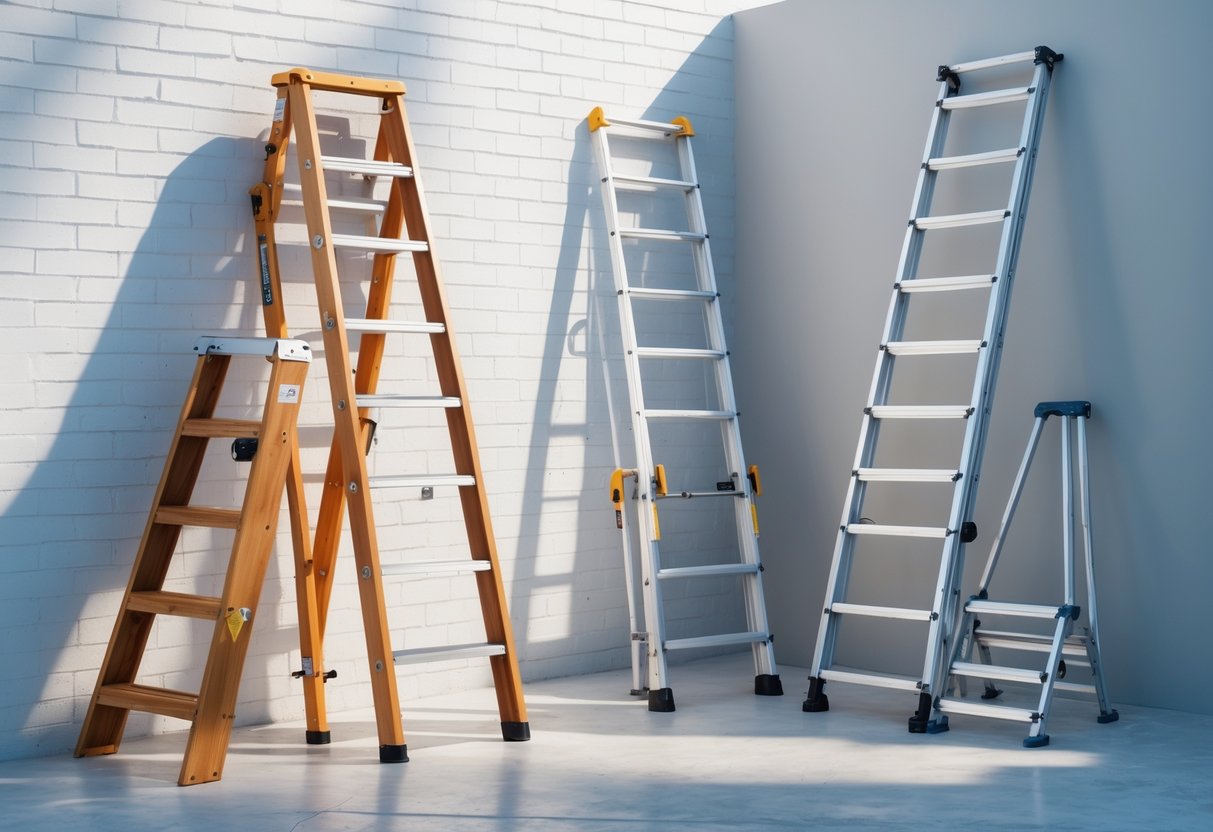
There’s no one-size-fits-all ladder. Step ladders are the go-to for indoor fixes and moderate heights, while you’ll want an extension ladder for outdoor gigs that need a bit more reach. Some jobs call for telescopic or platform ladders—those are real game changers in certain scenarios.
Let’s talk through what matters when you’re choosing a ladder: from the stuff it’s made of and how much weight it’ll hold, to how you use it and keep it in good shape. Knowing your options keeps you safe and makes sure you’re not stuck with equipment that’s more trouble than it’s worth.
Understanding Ladders
At their core, ladders are just two rails and some rungs, but they’ve come a long way from the rough-hewn wooden versions of the past. Now, we see everything from classic wood to advanced alloys and composites—each with its own purpose.
Definition and Basic Components
A ladder is basically a set of vertical or angled rails with steps or rungs connecting them. The steps are flat and comfy for your feet; rungs are round and need a bit more balance. Here’s what we’re usually looking at:
- Side rails: The vertical supports that carry all the weight
- Steps or rungs: Where you stand or climb, evenly spaced
- Feet or safety shoes: Grippy, slip-resistant bits at the bottom
- Spreaders or locking devices: Hold folding ladders open and steady
- Top cap: The flat platform at the top of stepladders
You’ll also spot duty rating labels for max weight, and spec tags with safety info. Some models even toss in things like pail shelves or non-slip pads—those little touches that make a big difference.
History and Evolution of Ladders
Turns out, ladders have been around for over 10,000 years—there are cave paintings to prove it. Early versions were pretty basic: just branches or poles lashed together. But people have always needed a way to get up higher, and as time went on, we got smarter about it.
The industrial era really kicked things up a notch. Wood was king for ages, but then aluminum showed up, making ladders way lighter and easier to lug around. Fiberglass joined the mix too, mainly for jobs where electricity’s a concern (since it won’t conduct current like metal).
Today, manufacturers are all about versatility and safety. Articulated ladders with locking hinges, combo ladders, and extension models that can reach rooftops—there’s a solution for every scenario. Industry standards (think ANSI) help keep things consistent and safe across the board.
Types of Ladders
Not all ladders are built the same—far from it. There are compact folding models for tight spaces, step stools for just a little boost, and big extension ladders for when you need to get way up there.
Folding Ladders
Folding ladders are basically step ladders with joints so you can collapse them down and stash them away. Storage is a breeze—slide one behind a door, in a closet, or even in your trunk. A lot of folding ladders have adjustable legs, which comes in handy on stairs or uneven ground. You can use them where a regular ladder would be wobbly or just plain unsafe. Plus, with lightweight builds, moving them from room to room isn’t a hassle.
Typical 4-step folding stools reach about 3 to 4 feet. They’re great for everyday stuff like changing bulbs or reaching the top shelf. Just make sure you check the weight rating—some are only good for 200 lbs, while others go up to 375 lbs. Folded, they’re usually just a few inches thick.
Step Stools
Step stools are the little cousins of ladders—just a step or two, perfect for quick jobs indoors. They don’t need to lean on anything and are sturdy thanks to their wide base.
Folding step stools are everywhere, and you can tuck them under a bed or in a closet. They’ll give you about 12 to 24 inches of extra reach. If you’re buying for adults, look for non-slip tops and rubber feet to keep things steady and protect your floors. Materials vary: plastic is light but not as tough, usually topping out at 200 lbs. Metal stools are heavier but can handle 300 lbs or more—ideal for shops or busy settings. Handrails are a nice bonus if you want a little extra stability.
Extension Ladders
Extension ladders are the workhorses for outdoor projects—think painting houses, cleaning gutters, or getting onto a roof. They slide open in sections, using either a pulley or friction locks.
They need to lean against something solid, and you want to set them at a safe angle (about 4 feet up for every 1 foot out from the wall). Most run from 16 to 40 feet extended. Aluminum is the go-to for a lot of folks since it’s light and strong. If you’re anywhere near power lines, though, fiberglass is non-negotiable. Check the duty rating—Type I (250 lbs) and Type IA (300 lbs) are common for these.
Key Features of Ladders
When you’re picking out a ladder, a few details make all the difference. Wide non-slip pedals mean safer footing, lighter frames are easier to move, and weight capacity is non-negotiable for safety.
Wide Non-Slip Pedal
If you’re up high, you want your feet to stay put. Wide, non-slip treads help with that—textured surfaces or ribbing keep your boots from sliding, even if things get a bit messy. More surface area means less foot fatigue, too. Look for pedals at least 3 inches wide; some go up to 4 inches if you want extra comfort. The grip is especially important if you’re wearing different shoes or working in the rain. You’ll notice the difference during longer jobs.
Lightweight Portable Ladder
A lightweight ladder makes life easier, especially if you’re moving it around all day. Aluminum is a favorite—about 30-40% lighter than steel, but still tough as nails. Fiberglass is a bit heavier but offers insulation from electricity. Portability isn’t just about weight, either. A good folding design lets you stash the ladder in a trunk or tight corner, so you’re not tripping over it when it’s not in use.
Weight Capacity Considerations
Don’t ignore the weight rating. ANSI sets the standards: Type IAA (375 lbs), Type IA (300 lbs), Type I (250 lbs), Type II (225 lbs), and Type III (200 lbs). Add up your weight, your gear, and whatever you’re carrying. Exceeding the limit isn’t worth the risk—structural failure is no joke.
Selecting the Right Ladder
Picking the right ladder comes down to where you’re working, how high you need to go, and what you’re hauling. Getting the right material, weight rating, and size is what keeps you safe and productive.
Assessing Intended Use
Start by looking at your environment. Got electrical hazards? Skip aluminum—go with fiberglass or wood. Tight spaces? You might need a different style than you’d use in an open workshop.
Here’s a quick breakdown of duty ratings:
| Type | Rating | Capacity |
|---|---|---|
| Type IAA | Extra Heavy Duty | 375 pounds |
| Type IA | Extra Heavy Duty | 300 pounds |
| Type I | Heavy Duty | 250 pounds |
| Type II | Medium Duty | 225 pounds |
| Type III | Light Duty | 200 pounds |
Don’t forget to factor in your weight, clothes, tools, and anything else you’ll be carrying. Stay under the max.
Size and Height Requirements
You want a ladder that’s long enough so you’re not tempted to stand on the top steps or rungs. On a step ladder, never stand on the top cap or the step right below it. With extension ladders, avoid the top three rungs.
For extension ladders, go 7 to 10 feet longer than your highest reach point. Don’t let the ladder stick out more than 3 feet past where it’s supported, or things get sketchy. A too-short ladder forces you into awkward, unsafe positions. One that’s too long can be hard to set up right. Always check the manufacturer’s label for the safe standing height.
Material Choices
There’s no universal best material—it’s all about the job.
Aluminum: Super light, easy to carry, but avoid it near electricity.
Fiberglass: Doesn’t conduct electricity, tough in bad weather, but a bit heavier.
Wood: Also non-conductive, but needs more care. Watch for cracks, splinters, and water damage.
Safe Usage Practices
Safety isn’t optional. A few minutes spent checking your ladder and setting it up right can save you a world of hurt. Inspection and proper technique are the backbone of ladder safety.
Pre-Use Inspection
Always give your ladder a once-over before you climb, even if you just used it yesterday. It’s quick and could save you from a nasty fall.
Check the side rails for cracks or bends. Make sure rungs and steps aren’t loose or busted. Tighten any wobbly hardware—screws, bolts, hinges. Look for anything slippery on the rungs (grease, mud, paint) and clean it off.
If you spot any of these, pull the ladder from service:
- Cracked or bent rails
- Missing or damaged steps/rungs
- Loose or broken hardware
- Beat-up feet or top caps
- Major rust or corrosion
Tag it, set it aside, and don’t try to patch it up with tape or wire. It’s just not worth the risk.
Proper Placement
We always set ladders on a solid, level surface—one that’ll actually hold the combined load of the ladder, the worker, and whatever you’re hauling up there. If you’re stuck with soft ground, you’ll need stabilizing devices like wide boards or leveling plates under the feet. Trust me, you don’t want to find out the hard way that the ground can’t handle it.
For leaning ladders, we stick to the 1:4 angle rule. Basically, for every four feet of ladder height, the base should be one foot out from the wall. So, if you’re going up 16 feet, plant the feet four feet out. It’s simple math, but it’s surprising how often people eyeball it and get it wrong. Clear the area around your ladder—no stray cords, no piles of debris, nothing that’ll trip you up. If you’re working near doorways, driveways, or anywhere people might wander through, set up barriers or warning signs, or even have someone stand by to keep folks out of the danger zone.
And, of course, keep ladders far away from electrical lines or anything that could zap you. For extension ladders, we always recommend a minimum of ten feet clearance from power lines. No exceptions.
Climbing and Descending Safely
We keep three points of contact at all times—two hands and a foot, or two feet and a hand. That’s non-negotiable, whether you’re going up, down, or just standing there working.
Always face the ladder when you climb or descend. No turning around or trying to get clever with your footing. Move with intention—don’t rush, and definitely don’t make any sudden moves that could throw off your balance. Stay between the side rails. If you start leaning out, you’re asking for trouble. Need to reach farther? Get down and move the ladder. It’s a hassle, but it beats a trip to the ER.
Carry only what you can safely manage—small tools, maybe a pouch. Anything heavy or awkward? Use a rope and bucket system or have someone hand it up. It’s just not worth risking your grip.
Maintenance and Storage
Ladders last longer (and stay safer) with regular cleaning and smart storage. A bit of attention here saves a lot of headaches later.
Cleaning and Upkeep
Check ladders before and after every use—look for cracks, dents, loose hardware, or anything that feels off. Clean off dirt, grease, paint, or whatever gunk is clinging to the rails and rungs. Slippery ladders are a nightmare, and grime can hide real problems.
For regular maintenance, it’s worth:
- Lubricating hinges, locks, and pulleys so they don’t seize up
- Tightening any bolts, screws, or rivets that work loose over time
- Inspecting rungs and rails for cracks, splits, or corrosion
- Making sure those non-slip feet aren’t chewed up or missing
Wood ladders hate moisture and wild temperature swings—keep them dry and out of the sun to prevent warping or splitting. Metal ladders? Watch for rust, dents, or bent parts. And fiberglass ladders need a check for cracks or surface wear.
If you spot damage that could compromise safety, pull the ladder out of service right away and mark it “Dangerous – Do Not Use.” Tightening a bolt is fine, but anything structural needs a pro or manufacturer service. If a ladder can’t be fixed safely, destroy it before tossing it—nobody needs a surprise accident from a junked ladder.
Storage Solutions
Honestly, storing ladders properly is one of those things folks tend to overlook until there’s a problem. Best practice? Mount them horizontally on wall hooks or brackets—nothing fancy, just solid hardware—in a spot that’s dry and has decent airflow. Laying ladders this way helps avoid any weird bends or stress points along the rails.
You’ll want to steer clear of a few trouble zones:
- Super hot or freezing environments
- Direct blasts of sunlight
- Places that get damp or muggy
- Walkways where ladders might stick out and trip someone
Wall hooks are usually fine for most shops or homes, but if you’re tight on space, ceiling mounts can be a lifesaver—especially in busy maintenance bays. For service vehicles, padded ladder racks are pretty much non-negotiable; road vibration will chew through fiberglass or wood rails if you’re not careful.
It’s worth double-checking that your storage area isn’t a hassle to get to. Don’t pile boxes or spare caster assemblies on top of ladders, and watch those overhangs—unsupported ends can sag over time. And if you’re dealing with wooden ladders, keep them far from any moisture. Nothing ruins a ladder faster than a bit of rot sneaking in.


