
 Support
 Sign In
 Cart
Cart


AI is fundamentally reshaping how distribution companies manage inventory, forecast demand, optimize logistics, and maintain equipment, with the technology projected to contribute trillions in value to the global economy. What started as small-scale pilots has become a real force in daily operations across wholesale and retail distribution networks. This isn’t just hype anymore, it’s what’s genuinely happening out there.
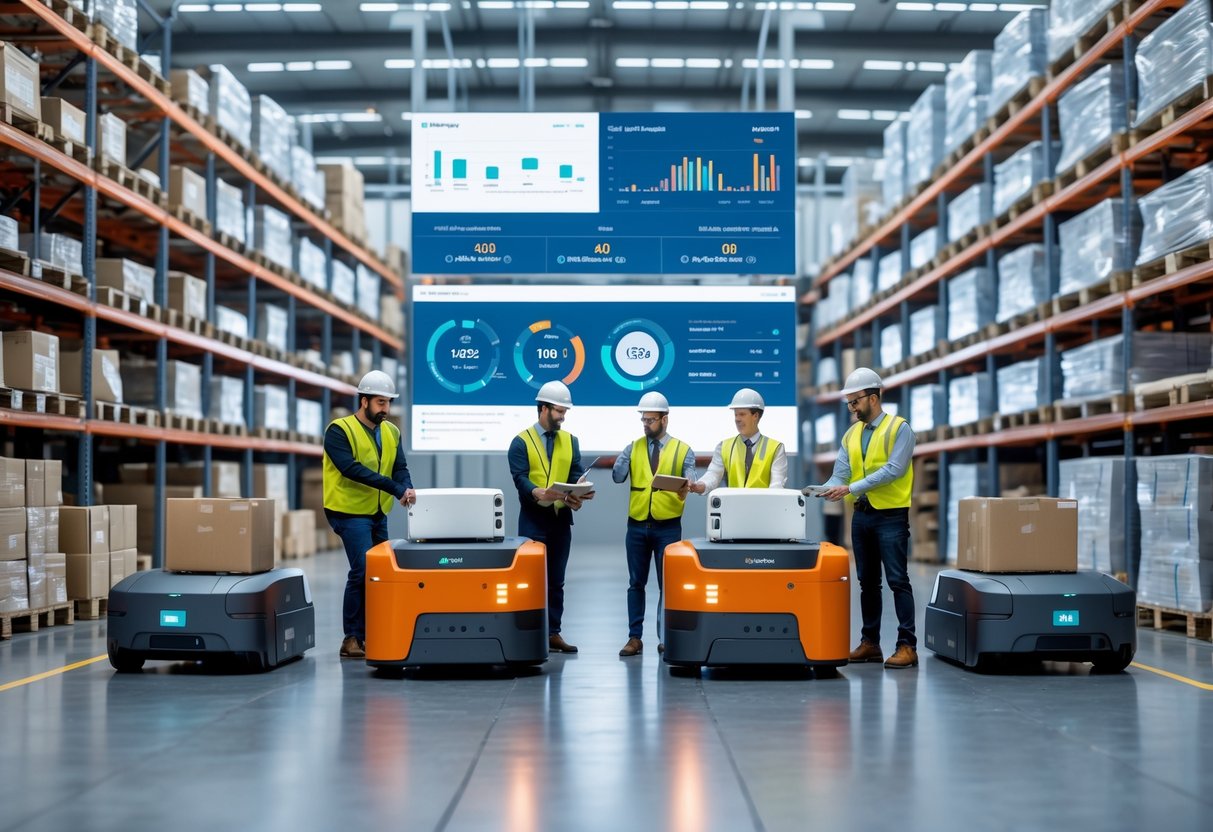
This technology represents a fundamental advancement beyond traditional automation capabilities. Today’s artificial intelligence systems can identify supply chain disruptions before they escalate into operational challenges, significantly reduce inventory discrepancies through enhanced forecasting methodologies, and enable distributors to base strategic decisions on comprehensive data analysis rather than intuition or limited historical records. This transformation is fundamentally reshaping competitive dynamics across the distribution industry.
This analysis examines the practical applications of AI technologies currently being implemented throughout distribution operations. We explore how organizations are refining demand forecasting processes, strengthening supply chain resilience, improving logistics efficiency, and transforming workforce dynamics, while addressing the significant challenges that accompany technology implementation.
Understanding Artificial Intelligence in the Distribution Industry
Artificial intelligence has become integral to core distribution functions, operating through machine learning algorithms and data analytics platforms that process substantial volumes of operational information. This technology enables distributors to automate decision-making processes and optimize supply chain networks with unprecedented precision that was unimaginable a decade ago.
Definition of Artificial Intelligence and Its Core Technologies
Within the distribution context, artificial intelligence encompasses machine learning, predictive analytics, and automation technologies that analyze data patterns to generate informed recommendations. Machine learning serves as the foundational technology, enhancing forecast accuracy by processing historical sales data, seasonal variations, and market indicators without requiring explicit programming for every possible scenario.
The primary AI technologies transforming distribution operations include natural language processing, which powers chatbots capable of handling customer inquiries without consuming staff resources. Computer vision technology facilitates warehouse automation and quality control processes, while deep learning neural networks deliver sophisticated demand prediction capabilities. Reinforcement learning algorithms optimize route planning efficiency and network performance.
These technologies integrate seamlessly with data analytics platforms, extracting information from warehouse management systems, transportation networks, and customer interaction points. The algorithms identify trends that human analysts might overlook and generate actionable recommendations for inventory management, shipping routes, and resource allocation.
Digital twin technology represents a particularly innovative application. AI creates virtual replicas of physical warehouses or distribution networks, enabling organizations to simulate thousands of scenarios and identify optimization opportunities before implementing changes in actual operations. This approach allows companies to test and refine strategies without risking capital investment or operational disruption.
The Role of AI in Modern Distribution Operations
Artificial intelligence is fundamentally restructuring how distributors plan, store, and transport goods. Machine learning systems now handle demand forecasting by analyzing customer purchasing patterns, market dynamics, and external factors, producing projections that significantly outperform traditional statistical methods.
Within warehouse environments, AI systems analyze labor requirements, equipment utilization, and material flow patterns on an hourly basis. These tools identify underutilized capacity that might otherwise go unnoticed and recommend specific actions to increase throughput without requiring capital investment in additional facilities.
AI-powered control towers provide comprehensive visibility across entire distribution networks, monitoring inventory levels, identifying potential stockouts, and facilitating cross-functional collaboration. Generative AI capabilities enable users to obtain operational insights instantly through natural language queries, eliminating hours of manual data analysis and spreadsheet manipulation.
For workforce management, advanced analytics examine employee data to identify retention risks and suggest proactive interventions. The technology analyzes performance metrics, scheduling patterns, and engagement indicators, enabling organizations to implement targeted strategies for retaining valuable personnel and maintaining operational continuity.
AI-Driven Demand Forecasting and Inventory Management
Artificial intelligence is revolutionizing how distribution organizations predict demand and manage inventory. By processing extensive datasets, AI helps optimize stock levels and prevent costly inventory errors. These systems continuously learn from sales patterns, market changes, and external variables, working to maintain optimal product availability without excessive storage costs.
Enhancing Inventory Accuracy with Predictive Analytics
AI systems now analyze historical sales data, market trends, weather patterns, and economic indicators to generate forecasts that substantially exceed the accuracy of traditional methods. These predictive analytics tools identify patterns that remain invisible to human analysis, extracting insights from millions of data points within seconds.
The real-time processing capability represents a significant advancement over static forecasting approaches. AI monitors current inventory levels while simultaneously tracking customer purchasing behavior and upstream supply chain conditions. This enables distribution centers to maintain inventory at precisely optimal levels, moving beyond guesswork and estimation to data-driven precision.
Machine learning models improve their accuracy over time through continuous learning. When predictions deviate from actual outcomes, the system analyzes these discrepancies and adjusts its algorithms accordingly. This self-correction capability proves particularly valuable for organizations managing thousands of SKUs across multiple warehouse locations, where manual oversight would be impractical.
Integration with existing systems enables automated stock replenishment processes. AI determines optimal reorder points, order quantities, and safety stock levels without requiring manual intervention, streamlining operations while reducing the risk of human error.
Reducing Stockouts and Excess Inventory
AI-driven demand forecasting addresses the two critical challenges facing distribution operations: stock depletion and excess inventory accumulation. The algorithms analyze multiple variables simultaneously to mitigate both problems, rather than optimizing for only one factor.
Organizations implementing these systems are achieving measurable cost reductions across their operations. Excess inventory decreases because AI identifies slow-moving products before they accumulate in warehouses, while stockouts decline as the technology anticipates demand increases with greater accuracy than traditional methods.
The analysis extends beyond single-variable consideration to incorporate lead times, shipping delays, and seasonal variations. This multifaceted approach enables inventory decisions that effectively balance service levels and holding costs, optimizing the total cost of ownership rather than focusing on individual metrics.
When organizations maintain appropriate product availability, customer satisfaction improves measurably. AI helps identify which SKUs are likely to experience increased demand, enabling proactive positioning that reduces lost sales opportunities and strengthens long-term customer relationships.
Adapting to Market Changes and Seasonal Fluctuations
Markets evolve rapidly, and AI’s ability to track these changes in real time proves remarkably effective for modern distribution operations. The technology monitors social media activity, competitor pricing strategies, economic news, and consumer behavior patterns continuously, detecting shifts that might otherwise go unnoticed until they impact operations.
Seasonal demand patterns vary significantly across products, regions, and customer segments. AI distinguishes these complex patterns and adjusts forecasts dynamically, accounting for local market conditions and customer-specific trends. For distribution networks serving diverse markets, this capability has become essential for maintaining competitive advantage.
When disruptions occur, whether from supply chain interruptions or unexpected demand surges, AI can recalibrate projections in real time. This adaptability proves crucial for maintaining consistent service levels during volatile periods while minimizing the impact of external uncertainties on operations.
When forecasting integrates with production and procurement systems, organizations achieve truly demand-driven operations. This enables adjustment of purchasing decisions and staffing levels based on anticipated requirements rather than historical patterns alone, reducing waste while improving product availability and overall customer satisfaction.
Optimizing Supply Chains and Mitigating Disruptions
AI provides distribution companies with advanced capabilities for identifying bottlenecks before they escalate into significant operational problems. Rather than constantly responding to disruptions after they occur, organizations can now adopt proactive approaches to supply chain risk management through predictive systems.
Improving Visibility Across Supply Networks
AI platforms aggregate data from multiple sources, including inventory systems, shipment tracking, supplier performance metrics, and transportation networks, presenting this information through unified, real-time dashboards. Machine learning analyzes both historical patterns and current conditions, flagging anomalies that human observers might overlook due to the complexity and volume of data involved.
With AI-powered tracking systems, distribution centers can monitor every pallet’s location throughout the entire journey, from manufacturer to final delivery point. The technology integrates IoT sensors, GPS tracking, warehouse management systems, and supplier information systems, providing comprehensive visibility into product locations and accurate estimated arrival times. The system incorporates external factors such as weather conditions, traffic patterns, and port congestion to maintain realistic delivery estimates and provide early warning of potential delays.
AI for Early Detection of Supply Chain Disruptions
AI-driven platforms assess supplier risk comprehensively by analyzing performance history, geopolitical developments, market fluctuations, and financial stability indicators. These systems can identify potential problems days or weeks in advance by recognizing subtle warning indicators embedded within complex datasets that would be impossible for human analysts to process manually.
Predictive analytics continuously monitor shipping delays, quality variations, and operational bottlenecks, providing advance notification of likely problem areas before they impact customer service. When high-risk situations emerge, the AI suggests alternative suppliers or routing options to maintain operational continuity and minimize service disruption.
Organizations are also employing AI to monitor external threats, including natural disasters, political instability, and economic shifts. The technology analyzes news sources, social media activity, weather forecasts, and economic indicators continuously, providing advance warning that enables inventory adjustments, alternative supplier arrangements, or shipment rerouting before situations deteriorate significantly.
Increasing Operational Resilience
AI is strengthening distribution networks by automating risk responses and building inherently adaptive systems. These platforms develop comprehensive contingency plans for various disruption scenarios and activate them automatically when predetermined conditions are met, reducing response time and human error.
Warehouse automation powered by AI maintains operational continuity during labor shortages or unexpected demand spikes. Robots handle critical tasks such as picking, packing, and sorting while algorithms optimize workflows dynamically, ensuring operations continue smoothly even during challenging periods.
With enhanced demand forecasts generated through AI analysis of sales data, market trends, and external factors, distribution centers can maintain optimal buffer inventory levels. The systems continuously learn and update their models based on new information, enabling supply chains to remain flexible and responsive even when market conditions shift unexpectedly.
Enhancing Distribution Logistics with AI
AI-driven logistics are producing measurable improvements across multiple operational dimensions. Organizations are observing enhanced routing efficiency, streamlined warehouse operations, and more effective material handling processes. Cost reductions typically range from 5 to 20 percent while operational cycles become faster and more reliable.
Route Optimization for Delivery Efficiency
AI algorithms process real-time traffic conditions, weather patterns, delivery time windows, and vehicle capacity constraints to generate routes that adapt continuously throughout the operating day. Traditional static routing approaches cannot accommodate last-minute delays or new orders effectively, but AI systems reroute vehicles dynamically to maintain optimal efficiency.
This technology reduces fuel consumption and shortens delivery times by evaluating thousands of potential routes to identify optimal solutions for current conditions. It assigns loads strategically and balances network utilization effectively, substantially reducing last-mile costs, which represent a significant portion of total shipping budgets in modern distribution.
Organizations have successfully implemented these systems to accommodate same-day deliveries without expanding fleet size or increasing operational costs. The AI incorporates driver schedules, customer requirements, and urgent shipments into optimization calculations to maintain high on-time delivery rates while minimizing total miles driven across the network.
Intelligent Warehouse Operations
AI-powered warehouse management systems can increase facility capacity by 7 to 15 percent without requiring additional floor space or major infrastructure investment. Using digital twins and machine learning technologies, these systems model operations comprehensively and identify facility-specific optimization opportunities that would be difficult to discover through traditional analysis.
Leading logistics providers have implemented AI systems that monitor labor and equipment utilization on an hourly basis, adjusting continuously for demand fluctuations and resource constraints. This granular visibility provides managers with accurate understanding of facility capabilities and helps predict how operational changes will affect overall performance before implementation.
Inventory management benefits significantly from AI integration. The technology analyzes millions of data points to enhance demand forecasting accuracy substantially. AI-driven control towers proactively manage stock levels across multiple warehouses, identify potential shortages early, and accelerate decision-making processes through real-time data access and automated alert systems.
Autonomous Vehicles and Robotics in Distribution
Autonomous robots and self-driving vehicles are transforming material handling both within distribution centers and throughout last-mile delivery operations. These systems work collaboratively with human workers, accelerating goods movement while reducing workplace injuries and improving overall operational safety.
Facilities are increasingly deploying autonomous forklifts and pallet movers that navigate independently through warehouse environments, maintaining smooth pick-and-pack operations even during peak demand periods. The robots communicate seamlessly with warehouse management systems to prioritize tasks dynamically and avoid congestion in high-traffic areas.
AI-powered robotics handle repetitive tasks including sorting, scanning, and palletizing with consistent accuracy that exceeds human performance. This allows human teams to focus on complex problem-solving activities and customer service functions where human judgment and interpersonal skills remain advantageous and irreplaceable.
Predictive Maintenance and Equipment Management
AI-powered predictive maintenance is significantly transforming how distribution centers maintain their critical equipment. By utilizing real-time data analysis, organizations can identify potential issues before they result in equipment failures, reducing unplanned downtime substantially and enabling maintenance teams to schedule repairs strategically during optimal periods.
Preventing Downtime with Machine Learning
Machine learning algorithms analyze continuous data streams from IoT sensors to detect early warning indicators in distribution equipment. These sensors monitor multiple parameters including vibration patterns, temperature fluctuations, and acoustic signatures across conveyors, forklifts, sorting systems, and other critical material handling equipment.
The AI establishes baseline operational parameters by studying extensive historical data, then alerts maintenance personnel when deviations occur that suggest developing problems. When sensor readings begin to drift from established normal ranges, the system can provide advance warning weeks before actual equipment failure would occur, allowing for planned maintenance interventions.
Key technological capabilities include anomaly detection using sophisticated unsupervised learning models, remaining useful life calculations to predict precise component failure timing, and real-time monitoring with edge computing infrastructure for immediate alert generation and response.
Distribution operations utilizing AI-driven predictive maintenance typically experience 35 to 45 percent reductions in unplanned downtime. This represents a substantial operational benefit for maintaining supply chain continuity and avoiding costly disruptions during critical peak operational periods when equipment reliability is most important.
Optimized Scheduling for Repairs and Upkeep
Artificial intelligence is transforming traditional maintenance scheduling practices throughout the distribution industry. Rather than adhering to rigid calendar-based maintenance schedules that may be inefficient or unnecessary, organizations now utilize AI to determine precisely when equipment actually requires attention based on actual condition and usage patterns.
The system integrates directly with warehouse management software to identify periods of reduced operational activity automatically. This enables strategic scheduling of repairs and maintenance during natural downtime periods rather than interrupting active distribution operations, resulting in more efficient resource utilization and minimal operational impact.
Organizations implementing these AI-driven approaches are observing significant improvements: 25 to 30 percent reductions in total maintenance costs by replacing only components showing actual wear rather than following arbitrary schedules, more efficient spare parts inventory management based on data-driven predictions rather than conservative estimates, and 26 percent improvements in technician productivity through intelligent prioritization of critical maintenance activities.
The AI continuously refines its predictive capabilities through ongoing learning from operational data, improving its ability to distinguish between genuine maintenance requirements and normal operational variations while minimizing false alerts that can waste resources and reduce confidence in the system.
Business Impacts and Workforce Transformation
AI has evolved beyond theoretical discussion to fundamentally alter how distribution companies operate, particularly regarding personnel management and process optimization. Organizations are achieving significant efficiency improvements while simultaneously experiencing substantial shifts in workforce skill requirements and job role definitions.
Operational Efficiency and Cost Reductions
AI technology is providing measurable competitive advantages throughout the distribution sector. Accelerated order processing capabilities, reduced inventory carrying costs, and sophisticated route optimization that achieves 10 to 20 percent fuel cost reductions represent tangible operational improvements that directly impact profitability and customer satisfaction.
Many distribution centers are successfully automating routine tasks including picking, packing, and sorting operations. This automation strategy reduces direct labor costs while improving accuracy rates to exceed 99 percent consistently. Predictive maintenance programs deliver practical benefits by maintaining equipment reliability and reducing costly unplanned downtime by as much as 30 percent.
Organizations beginning with smaller-scale AI pilot projects often achieve positive returns quickly, building internal momentum and stakeholder confidence. These early successes help secure leadership support and provide justification for larger technology investments. Even traditional aspects such as warehouse layout optimization and inventory slotting are being enhanced through AI analysis, reducing unnecessary worker movement and increasing overall throughput without requiring facility expansion or significant workforce increases.
Shifts in Job Roles and Required Skills
Rather than wholesale automation replacing human workers, job roles throughout the distribution industry are evolving substantially. Manual positions are transitioning into roles requiring greater technical oversight, analytical thinking, and advanced troubleshooting capabilities.
Workers increasingly need to interpret AI-generated reports and recommendations, manage sophisticated automated systems, and intervene effectively when technology encounters exceptions or problems. Leading companies such as Kuehne + Nagel are utilizing AI tools to accelerate employee transitions into new roles, which positively impacts retention rates and reduces the costs associated with turnover and recruitment.
Hybrid skill sets combining operational knowledge with technical capabilities are becoming increasingly valuable in the modern distribution environment. Employees who understand traditional warehouse operations while also possessing data literacy or basic technical competencies are particularly sought after by forward-thinking organizations. There is growing demand for personnel who can maintain AI systems effectively, manage data quality processes, and facilitate smooth technology implementations across diverse operational environments.
Organizations investing in comprehensive upskilling and reskilling programs are achieving better technology adoption rates and stronger returns on their AI investments, while also building more resilient and adaptable workforces capable of thriving in an increasingly automated industry landscape.
Challenges in AI Adoption and Data Readiness
Distribution companies frequently encounter significant obstacles when attempting to implement AI technologies at meaningful scale. The most substantial challenge consistently involves data quality and preparation requirements. AI systems require clean, standardized, and well-structured information to function effectively, yet organizational data is typically dispersed across multiple warehouse management systems, inventory software platforms, and various transportation management systems.
Common data issues such as missing SKU information, inconsistent part numbering systems, and incomplete transaction records create substantial complications when attempting to automate critical processes such as order picking, inventory management, and demand forecasting. These data quality problems can undermine AI effectiveness and delay implementation timelines significantly.
Many distributors continue operating on legacy technology systems that were not designed to support modern AI capabilities and real-time analytics requirements. Organizations frequently attempt to retrofit analytics capabilities onto outdated inventory databases or create complex integrations between ERP systems and shipping platforms. The existing infrastructure often lacks the computational capacity and data architecture necessary for real-time insights and automated decision-making.
Smaller and mid-sized organizations face particularly acute challenges due to budget constraints and limited internal IT resources. These companies must balance the need for technological advancement with practical limitations on capital investment and technical expertise availability.
The skills gap extends beyond operational workforce retraining to encompass leadership education and change management capabilities. Executive teams require solid understanding of AI capabilities and limitations to set appropriate expectations and avoid unrealistic projections. Establishing proper governance frameworks and avoiding excessive hype around AI capabilities represents a significant organizational challenge.
Change management presents additional complications that can determine implementation success or failure. Employees may experience legitimate concerns about job security or simply prefer established operational methods, particularly in organizations with long-standing processes and experienced workforces. Successful AI adoption requires comprehensive communication strategies, employee involvement in solution design, and meaningful training programs that demonstrate value rather than simply imposing change from above.


