
 Support
 Sign In
 Cart
Cart


Moving heavy appliances? Yeah, it’s a recipe for sore backs and pulled muscles if you’re not careful. Picking the right gear is huge for safety and actually getting the job done without hating life the next day. Appliance dollies are designed with some real thought behind them—they cut down on lifting strain, help you keep good posture, and let your legs (not your back!) do the work.
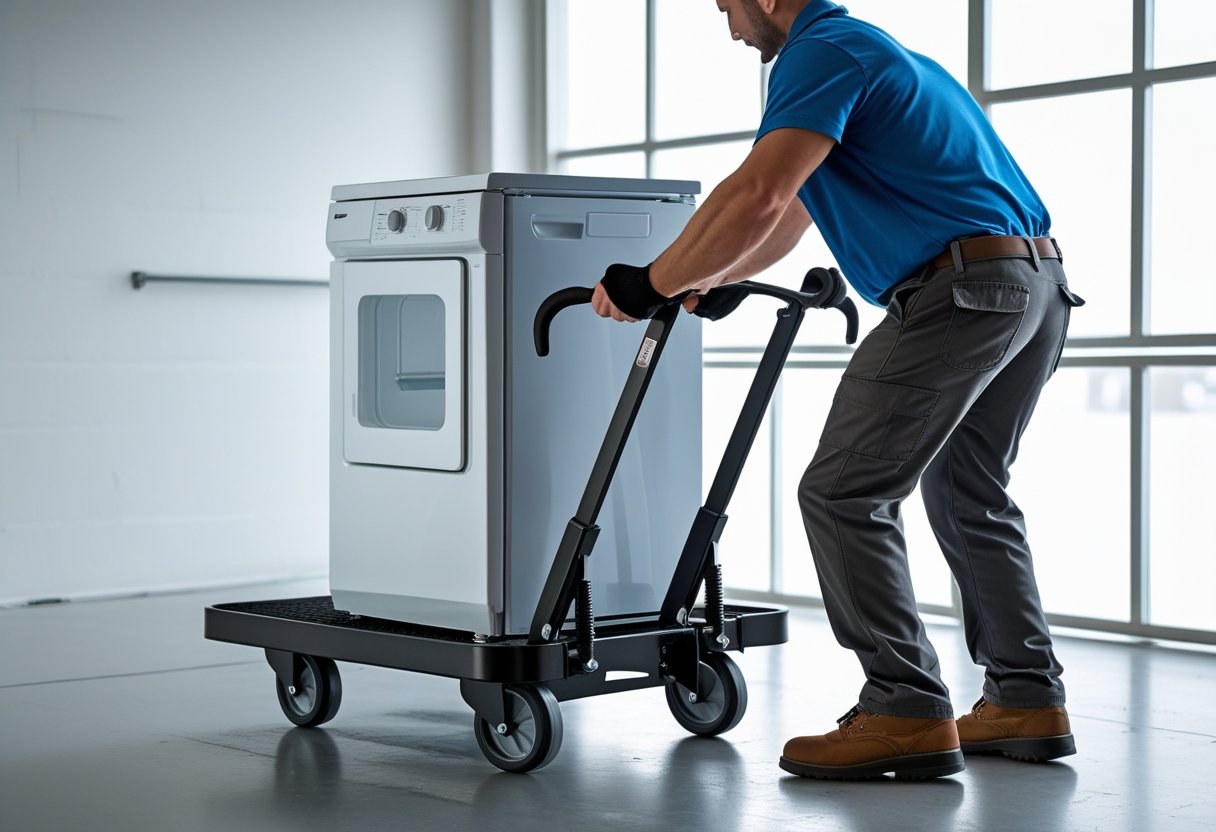
Modern appliance dollies aren’t just hunks of metal on wheels. Their design gives you a mechanical advantage that turns what could be a risky, awkward lift into something you can actually control. When you factor in pneumatic wheels, grippy handles, and smart weight distribution, you’re not just moving a fridge—you’re making it a lot less painful on your body.
Getting a handle (pun intended) on how these ergonomic ideas work in real settings can really help you pick the right dolly and use it without hurting yourself. If you know what to look for and how to use it, you can dodge a lot of injuries and move stuff way more efficiently.
Core Ergonomic Principles of Appliance Dollies
Using a dolly the right way is all about keeping your body in a good position and letting the tool do the heavy work. These basics aren’t just about comfort—they’re about not ending up at the chiropractor.
Proper Lifting and Handling Techniques
First rule: don’t try to deadlift a washing machine. Instead, tilt the appliance just enough to slide the dolly underneath. No need to play hero.
Before you even touch the thing:
- Clear the path—no tripping over shoes or random junk
- Make sure there’s room to actually move
- Check that dolly wheels aren’t cracked or wobbly
Stand with your feet about shoulder-width apart. Bend at your knees and hips, not at your waist, when you first grab the appliance.
Sliding instead of lifting can drop the strain by something like 80%. Get your hands where they matter: one on the dolly handle, one guiding the appliance. Never grab sharp corners or anything that looks like it’ll snap off. If the thing weighs more than about 200 pounds, don’t go solo—grab a buddy and actually talk through what you’re doing.
Body Positioning and Posture
Keep your back straight as you move. The dolly handle should hit around your waist—if it’s too high or low, you’ll be hunched or reaching, and that’s just asking for trouble.
Good posture means:
- Shoulders relaxed, not up by your ears
- Core muscles doing their thing
- Eyes forward, not glued to your shoes
- Elbows in, not flapping out like a chicken
Take short, steady steps—don’t try to speed-walk with a 300-pound fridge. Keep the dolly close; don’t let it pull you off balance. When you turn, pivot with your feet first instead of twisting your back. It’s a small thing, but your spine will thank you.
Stuff to avoid:
- Leaning way back to “balance” the load
- Hunching forward like you’re sneaking under a low ceiling
- Staring at your toes the whole time
- Grabbing the handle with your arms stretched out like Frankenstein
Hold the handle firmly but not in a death grip. Too tight and your hands will cramp up fast.
Load Stability and Securement
Always strap down the appliance before you move it. A loose load can shift and suddenly you’re wrestling a runaway oven.
How to load it right:
- Back of the appliance flat against the dolly
- Weight centered over the wheels
- No bits hanging off the sides
- Doors and drawers taped or tied shut
Cross straps in an X over the front. Tighten them so the appliance can’t wiggle, but don’t crank so hard you dent the thing.
Best strap spots:
- Upper third of the appliance, away from buttons or handles
- Around sturdy parts of the frame
- Double-check the tension after you start moving
Test the stability by giving the appliance a gentle rock—if it shifts, fix it before you go any further. If you’re rolling over bumpy surfaces or up ramps, pay extra attention to how the weight is balanced. Loads that are heavy up front need extra care when turning.
Leveraging Mechanical Advantage
The right wheels make a huge difference. Big wheels roll over bumps and cracks way easier than tiny ones. The dolly’s handle acts like a lever—you want your hands at the end of it to get the most force with the least effort.
What helps:
- Rolling is way easier than dragging (seriously, like 90% easier)
- The longer the handle, the more leverage you get (think 3:1 ratio)
- Wheels take the brunt of the weight
- Smoother floors mean less work for you
Keep up a steady pace; jerky starts and stops just waste energy.
Tips for using the dolly’s design:
- Don’t rush, but don’t dawdle either
- Let the dolly’s weight help you steer
- Let the wheels roll naturally—don’t force them
- Push in line with the handle, not off to the side
Pick routes with the smoothest, flattest surfaces you can. If you’re stuck with rough ground, slow down and brace yourself.
The dolly’s frame is built to carry the load so your body doesn’t have to—use it.
Design Features That Improve Ergonomics
Not all dollies are built the same. The best ones have adjustable handles, smart wheel setups, and solid safety features.
Adjustable Handle Heights
Honestly, adjustable handles are a game changer. They let you keep your back straight and save your shoulders from unnecessary strain. Most decent dollies let you adjust the handle between about 48 and 54 inches, which works for most folks. Fixed handles? They’re just not as comfortable for people who aren’t “average” height.
Adjustment options you’ll see:
- Telescoping handles with pins
- Multiple bolt holes
- Quick-release levers
Before you load up, set the handle so your elbows are at about 90 degrees when you grab it. This keeps your wrists and shoulders happy. Padded grips are nice, too. Some have textured or contoured shapes that just feel better in your hands, especially if you’re moving stuff all day.
Wheel Base and Mobility
Wheels can make or break your moving experience. Bigger wheels are easier to push and handle bumps better.
10-12 inch pneumatic wheels are the sweet spot for most situations. They soak up bumps and don’t rattle your arms as much. Solid rubber wheels are fine for smooth floors but can be rough on your joints over long hauls.
A wide wheelbase keeps things stable, but too wide and it’s a pain to turn. 18-24 inches apart seems to work best for most jobs.
Wheel setups you might see:
- Centered for balance
- Offset for better clearance
- Dual-wheel for the really heavy stuff
Ball bearings help wheels spin smoother and last longer. Sealed bearings are even better since they keep out dirt and gunk. Swivel casters on four-wheel dollies make turning easier, but they can wander if you’re trying to go straight.
Safety Mechanisms and Restraints
A good restraint system keeps the appliance from sliding or tipping. If the load shifts, you’re suddenly fighting gravity and momentum—not fun.
Ratcheting tie-downs are the gold standard. They hold tight and don’t loosen up mid-move. Look for straps rated for at least 1,500 pounds.
Curved back plates fit appliances better than flat ones, spreading out the pressure so you don’t dent or scratch stuff.
Other features worth having:
- Stair climber attachments make stairs way less scary
- Brakes so the dolly doesn’t roll away when you stop
- Padding to keep the appliance’s finish intact
Toe plates at the bottom give you a solid platform. Reinforced steel means the dolly won’t bend under a heavy load. Quick-release buckles make strapping and unstrapping fast. If it’s easy, you’ll actually use the restraints every time.
Practical Applications in Appliance Transport
Dollies aren’t just for moving fridges. They’re handy for all kinds of appliances and situations—if you know how to use them right.
Moving Heavy Appliances
For big stuff like fridges, washers, and dryers, get the dolly right up to the base and center the weight as best you can. The frame will support it while you keep your posture solid. With a fridge (usually 200-400 pounds), tilt it back just enough to slide the dolly in. No need to pick up the whole thing.
How to load up:
- Check wheels and frame for any damage
- Center the appliance on the dolly
- Strap it down so it can’t shift
- Keep your back straight as you move
Let your legs do the work when you start rolling. The dolly takes the weight; you’re just steering. If it’s over 300 pounds, don’t go it alone. Two people—one behind, one in front—makes everything smoother and safer.
Navigating Stairs and Tight Spaces
Stairs are tricky. Use a heavy-duty dolly with a strong frame and big wheels. Go slow—rushing is a bad idea.
Going up stairs, pull the dolly up one step at a time, keeping your weight behind the load. If you have a helper, they steady the base from below.
For tight spots:
- Measure doorways before you start
- Take off doors if you need to
- Plan how you’ll turn corners
- Clear the path—seriously, don’t skip this
Use the dolly’s ability to pivot instead of lifting in cramped areas. Let the wheels do the work. If it’s a narrow hallway, angle the appliance diagonally and keep the weight balanced. Try to avoid sudden moves that could throw you off balance.
Appliance Dolly Use with Wall Ovens
Wall ovens are a weird mix—small but heavy for their size. You want the dolly supporting the middle, not just the edges. The platform can handle 75-150 pounds, but you still need to use good lifting form. Strap the oven down so it can’t slide.
Steps for moving wall ovens:
- Unplug everything safely
- Wrap the oven in padding
- Center it fully on the dolly
- Use extra straps if you’re worried about stability
When you get to the install spot, line up the dolly with the brackets so you’re not lifting at awkward angles. Wall ovens are a bit easier on stairs than big fridges, but you still need to move carefully and keep your posture in check.
Best Practices for Reducing Injury and Fatigue
A little planning goes a long way. Check your gear, use protective equipment, and keep everything maintained. Your back (and your boss) will appreciate it.
Assessment Before and During Use
Always know what you’re lifting. Check the appliance’s weight and make sure the dolly can handle it—most are rated for 600 to 1,800 pounds, but don’t just guess. Look over your route for anything that could trip you up—tight spots, weird flooring, narrow doors. Measure if you’re not sure.
Quick checklist:
- Is the load within the dolly’s weight limit?
- Where’s the center of gravity?
- Are there good spots to attach straps?
- Any sharp edges or bits sticking out?
Watch your own posture as you go. Don’t twist your back, and keep your spine neutral.
If it’s a long haul, take breaks every 15-20 minutes. Fatigue leads to mistakes.
Pay attention to your body—if you’re breathing hard, sweating a lot, or your grip is slipping, stop and reset before you hurt yourself.
Personal Protective Equipment
Let’s talk about the gear you actually want when you’re wrangling appliance dollies. Steel-toed boots are a must—your toes will thank you if something heavy slips or the dolly rolls the wrong way.
Work gloves with some grip on the palms? Honestly, they make a huge difference. Just make sure you can still move your fingers enough to mess with tie-downs.
Back support belts can help you keep decent posture while you’re shifting stuff around, though, honestly, they’re no substitute for just lifting things right in the first place.
Safety glasses come in handy, especially if you’re squeezing through cluttered spaces or hauling things outdoors. You never know what might come flying. Long pants and sleeves save your skin from sharp corners or rough metal bits, but don’t go for anything baggy—loose clothes and moving parts are a bad combo.
Essential PPE List:
- Steel-toed safety boots
- Textured work gloves
- Back support belt
- Safety glasses
- Fitted work clothing
If you’re going to be kneeling a lot to mess with straps or adjust loads, knee pads are honestly worth it.
Maintenance of Appliance Dollies
It’s important to give dollies a quick once-over before each use—nobody wants equipment failing at the worst possible moment. Spin the wheels and make sure the bearings are moving smoothly, and don’t forget to check if they’re actually lubricated.
Take a look at the straps and tie-downs, too. If you spot any fraying, cuts, or spots that look stretched out, it’s best to swap those out right away. Damaged straps are just asking for trouble.
Weekly Maintenance Tasks:
- Knock off any debris from the wheels
- Hit the joints and pivots with a little lubricant
- Tighten up bolts and fasteners that have worked themselves loose
- Scan the frame welds for any sneaky cracks
Try to stash dollies somewhere dry—rust and corrosion sneak up fast. Hang the straps separately so the metal bits aren’t chewing them up. When wheels start looking bald or the tread’s barely there, it’s time for new ones. For pneumatic tires, keep an eye on the pressure; 30-40 PSI is usually where you want to be.
Jot down inspection dates and any repairs in a maintenance log. It’s not just about paperwork—it helps spot patterns and keeps you in line with safety rules. If your dolly can measure loads, remember to calibrate those weight ratings once a year. Otherwise, you might end up overloading without realizing it, and that’s never a good scene.


