
 Support
 Sign In
 Cart
Cart


Platform trucks are those unsung heroes of warehouses, offices, and all sorts of industrial spots. They’re basically wheeled carts with a flat deck and handles, and if you pick the wrong one, you’ll quickly find yourself dealing with wasted time, safety headaches, and costs that just shouldn’t be there.
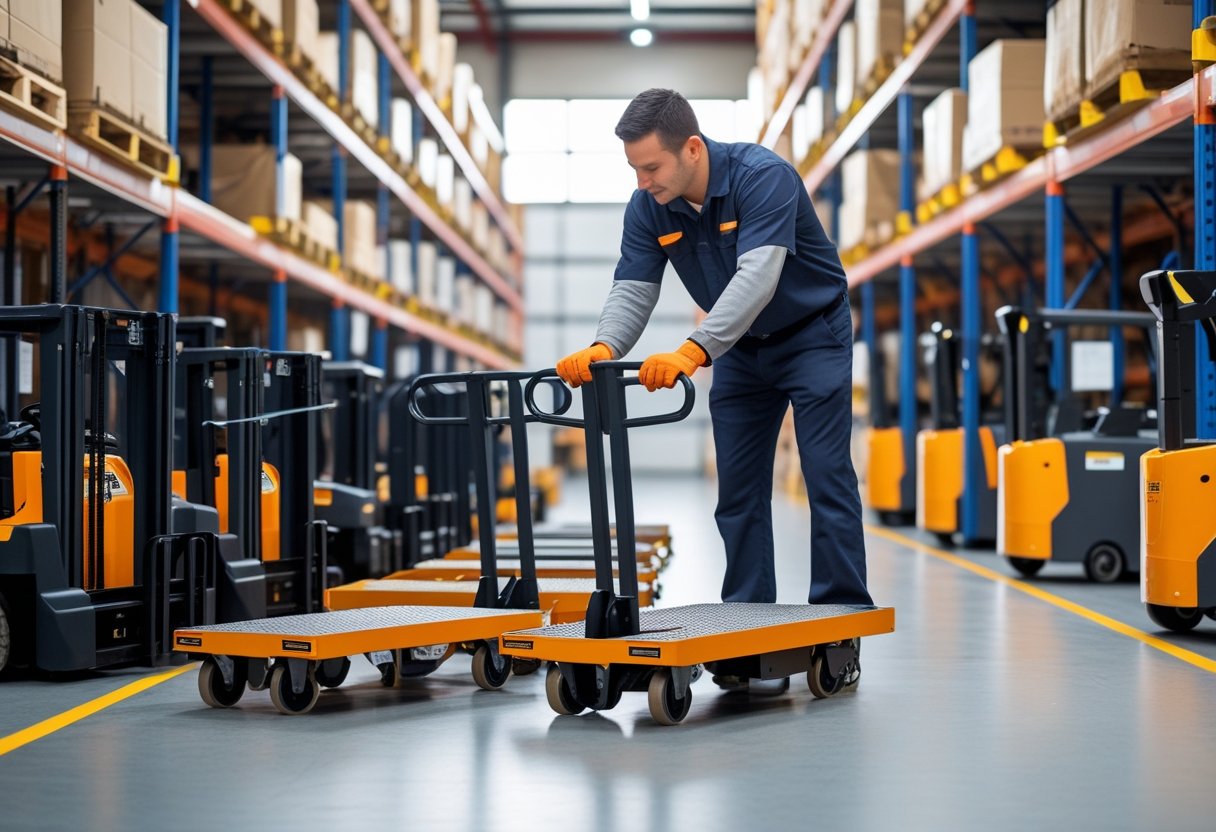
Choosing the right platform truck really comes down to your load requirements, work environment, deck material preferences, and how you need it to move. Weight capacity, deck size, and wheel setup are the big ones that’ll decide if a truck actually works for your day-to-day.
You’ll want to look at a few things: how heavy your loads are, what kind of surfaces you’re rolling over, where you’ll stash the truck, and if you need bells and whistles like folding handles or even powered movement. Getting a grip on the essentials makes it a lot easier to pick something that boosts productivity and keeps everyone safe.
Understanding Platform Trucks
Platform trucks are just about everywhere, moving heavy stuff from point A to point B without much fuss. They’ve got flat surfaces, wheels, and handles, and honestly, they’re more versatile than you might think.
What Is a Platform Truck?
So, a platform truck is basically a cart with a flat base on wheels—usually four casters—and a handle or two for steering it around.
That flat deck means you can load up a bunch of items at once, and most of these things can handle a surprising amount of weight—1,600 to 2,000 pounds per caster is pretty typical for the tough ones.
You might also hear them called:
- Flatbed carts
- Platform carts
- Platform trolleys
- Dollies
The overall design doesn’t change much, but you’ll see different wheel types, handle styles, and platform sizes depending on what they’re built for.
Common Applications
You’ll find platform trucks doing all sorts of jobs. Warehouses use them to move inventory back and forth, and in manufacturing, they’re hauling raw materials and finished products along the line. Retail workers rely on them for getting merchandise out on the floor.
Some of the main jobs:
- Shifting heavy boxes and packages
- Moving equipment between spots
- Loading and unloading delivery trucks
- Relocating furniture and big appliances
Distribution centers lean on them for picking and packing orders, while office buildings use them for everything from mail to office supplies.
Panel trucks often work side-by-side with platform trucks, each filling in where the other leaves off.
Types of Platform Trucks
There are a bunch of platform truck variants out there, each with their own strengths. Standard models have flat decks, fixed handles, and basic casters.
Heavy-duty trucks are built for bigger, tougher loads—think reinforced frames and beefier wheels.
Some common types:
- Standard flatbed trucks – The classic with U-shaped handles
- Heavy-duty industrial trucks – Built like tanks for serious weight
- Folding platform trucks – Collapse down for easy storage
- Specialty trucks – Custom tweaks for unique jobs
You’ll see options like folding handles if you’re short on space, or double handles for better control in tight areas.
Caster choices usually come down to polyolefin or rubber, and wheel sizes run from 6 to 8 inches, depending on how much you’re hauling and what you’re rolling over.
Key Factors to Consider When Choosing a Platform Truck
Picking the right truck means thinking about your loads, what the truck’s made of, how it feels to use, and where you’ll actually be using it. These details make a big difference in safety and how long the thing lasts.
Load Capacity and Size
Load capacity is just how much weight the truck can safely carry. Light-duty models start around 300 pounds, while the heavy-duty beasts can go well over 1,500 pounds.
It’s smart to pick a truck that can handle about 20-30% more than your heaviest regular load. That way you’ve got some wiggle room and won’t wear it out too fast.
Platform size matters, too. Small ones might be 18″ x 24″, while bigger trucks go up to 24″ x 48″ or more.
Think about both the weight and the size of what you’re moving. Maybe you need a steel deck truck for heavy machine parts, or a lighter 600-pound model for retail stuff.
Typical Load Categories:
- Light-duty: 300-500 lbs
- Medium-duty: 500-800 lbs
- Heavy-duty: 800-1,500+ lbs
Deck Materials and Construction
Steel is the go-to if you want durability and strength. It shrugs off dings and keeps its shape under heavy loads.
Aluminum is lighter and won’t rust, so it’s great if you’re moving between locations or dealing with moisture.
Composite decks are a bit of a wild card—durable, chemical-resistant, and perfect for places like labs or food service where you don’t want contamination.
Here’s a quick rundown:
| Material | Weight | Durability | Corrosion Resistance | Cost |
|---|---|---|---|---|
| Steel | Heavy | Excellent | Poor (unless coated) | Low |
| Aluminum | Light | Good | Excellent | Medium |
| Composite | Medium | Good | Excellent | High |
Deck texture matters, too. Smooth decks are fine for boxes, but if you’re worried about stuff sliding, look for textured or perforated surfaces.
Handle Options and Ergonomics
Handles can make or break the user experience. Fixed handles are super sturdy but take up more space.
Folding handles are a lifesaver if you’re tight on storage. These are handy for panel trucks, too.
Handle height should match the user, otherwise back pain is basically guaranteed. Most handles adjust from 38 to 42 inches, so they fit most folks.
The grip itself matters—cushioned grips are easier on your hands, and textured grips help when things get slippery.
U-shaped handles give you more control than a single bar, letting you push or pull more evenly, especially with heavy loads.
Terrain and Operating Environment
Wheels are a big deal. Solid rubber is great for smooth floors and docks.
Pneumatic wheels (the air-filled ones) are awesome for rough ground or outdoor use—they soak up bumps and roll over cracks without a fuss.
Indoors, you’ll want non-marking wheels—polyurethane is a favorite since it won’t leave streaks and still rolls well.
Outdoors, you’ll want weather-resistant parts. Stainless hardware and sealed bearings help keep rust and breakdowns at bay.
Temperature swings can mess with some materials. Steel holds up in cold storage, but some plastics can get brittle if it’s freezing.
Don’t forget about doorways, elevators, and aisles. Most trucks are 20-26 inches wide, so measure first or you might get stuck.
Wheel and Caster Selection
Getting the right casters makes all the difference in how your platform truck handles. It’s a mix of picking the right materials and figuring out the best setup for maneuverability and stability.
Swivel Casters vs Fixed Casters
For most people, two swivel casters and two fixed ones is the way to go. It’s a nice balance—easy to steer but still tracks straight.
Swivel casters spin all the way around and usually go at the front, making it easy to turn corners or dodge obstacles. Too many swivels, though, and the truck can get squirrely when it’s loaded up.
Fixed casters just go forward and back. Put these at the rear for stability, so you’re not fighting the truck as you push.
The 2-swivel, 2-fixed combo works for most jobs. All-swivel setups are out there if you need to spin in place, but they’re a handful on straight runs.
| Configuration | Maneuverability | Stability | Best Use |
|---|---|---|---|
| 2 Swivel + 2 Fixed | Good | Excellent | Most cases |
| 4 Swivel | Excellent | Fair | Tight spaces |
| 4 Fixed | Poor | Excellent | Long, straight paths |
Caster Materials and Durability
Caster material depends on your floor, your loads, and your work environment. Each has its own pros and cons.
Polyurethane casters can handle 1,200-4,000 pounds per set. They’re smooth on concrete, don’t mark up floors, and resist chemicals.
Mold-on rubber casters support 2,000-2,400 pounds a set. They’re quieter and soak up bumps—good for rough floors or if you hate noisy carts.
Phenolic casters are the heavy hitters, supporting 3,600-5,000 pounds. They’re tough against heat and chemicals but can be loud.
Steel casters are for the absolute heaviest loads, but they’re rough on floors and noisy.
Maneuverability and Stability
Wheel size really matters. Bigger wheels (like eight-inch) roll over debris and bumps way better. Smaller wheels are fine for smooth floors but take more effort to push.
Six-inch wheels are good for basic warehouse floors. Eight-inch ones are better if you’re rolling outside or over rougher ground.
Wide wheels spread out the weight, which helps protect softer floors. Narrow wheels are better for tight spots but can dig in more.
Bearings matter, too. Ball bearings roll smoother and last longer than basic sleeves—makes the truck way easier to push.
Brakes are worth considering if you’re working on ramps or slopes. Foot brakes lock the wheel; total-lock brakes stop both rolling and swiveling.
Special Features and Customization Options
Some platform trucks come with extras that can make life a lot easier, especially if you’ve got specific needs. Steel frames are usually the base for most add-ons.
Folding Handles and Storage
Folding handles are a game changer for saving space. They flip down flat, cutting the truck’s footprint in half—super handy if you’re tight on room.
Most of these use spring pins or levers to fold, and if they’re made right, steel pivots keep them sturdy even after lots of use.
If you’re always moving trucks in and out of storage, folding handles are worth it. Just check the locking mechanism so you’re not fighting with a wobbly handle later.
Some trucks even have handles you can pull off completely—helpful for squeezing through narrow doors or stacking them up.
Panel and Stake Attachments
Panel attachments turn a regular platform truck into a mini-enclosed hauler. You can add solid sides, mesh, or stakes depending on what you’re moving.
Steel panels usually drop in and lock with pins or clamps. Heights range from a foot up to two feet, so you’ve got options.
Stake attachments are great for keeping loose stuff from sliding off. They usually pop into corner sockets or side brackets—no tools needed.
Panel trucks can swap out solid or mesh panels, depending on whether you want protection from the weather or need airflow.
If you’re hauling heavy loads often, look for welded steel corners instead of bolts—those hold up way better in the long run.
Custom Configurations
Custom platform configurations are really about meeting those oddball industry needs that just don’t fit the standard models. We actually spend a lot of time working with manufacturers to tweak deck sizes, add weirdly specific mounting points, or dream up features that aren’t in the catalog.
Sometimes, it’s all about deck modifications—maybe you need a longer platform, some beefed-up sections, or even built-in tool storage. Honestly, if you’re planning on welding or heavy fabrication, steel platforms just handle it better than aluminum. It’s not even close.
For boosting weight capacity, we might reinforce the frame, swap in sturdier wheels, or bolt on extra support. Of course, any of these changes need a careful engineering review, just to be sure we’re not sacrificing safety for convenience.
There are also those industry-specific builds, like turning a platform into a medical cart, a retail display, or something for maintenance crews. Every use case brings its own quirks—different load distributions, access needs, and who knows what else.


